












From the ODAC Poster Hall | Antibiotic Prophylaxis in Mohs Surgery
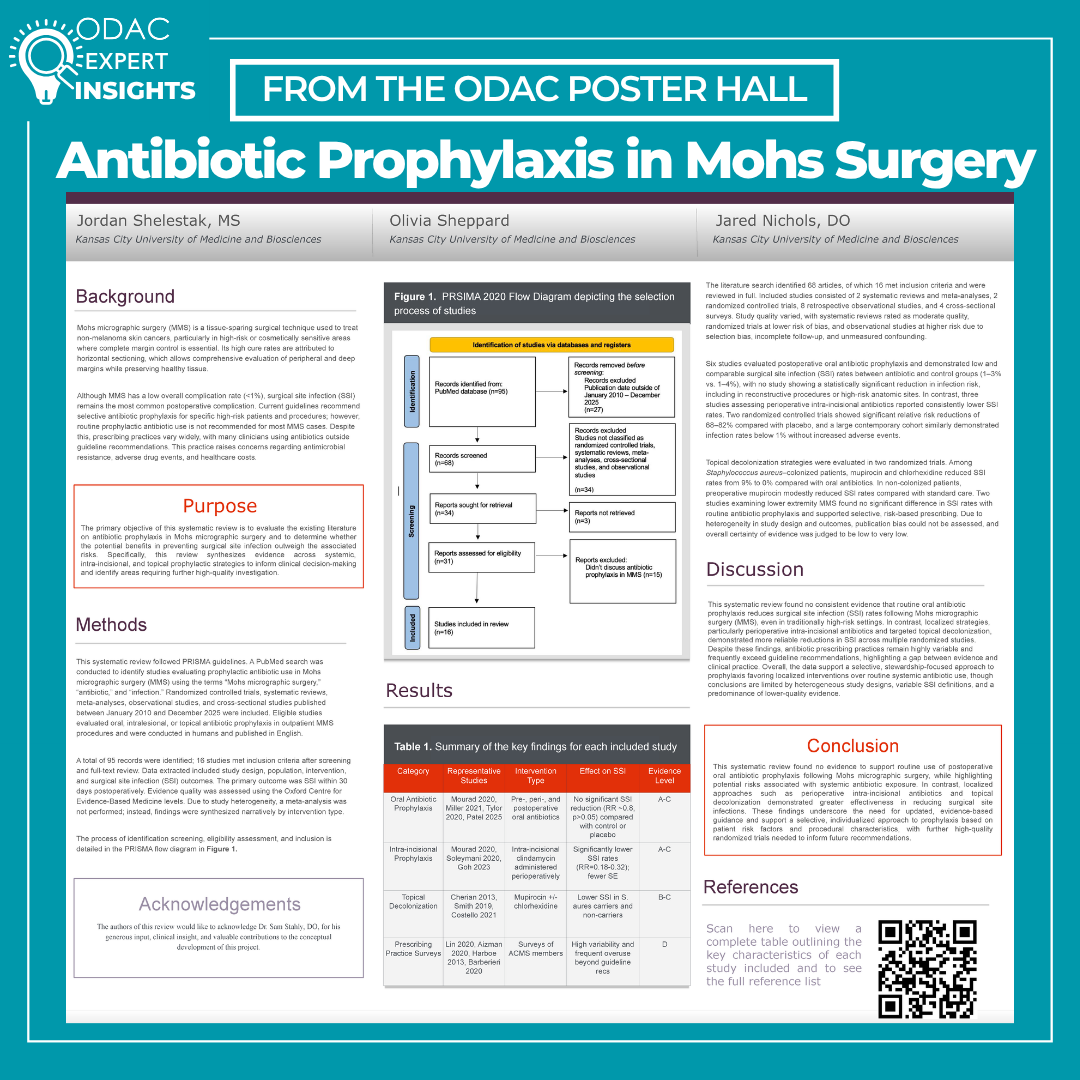 Antibiotics are commonly prescribed before, during, or after Mohs surgery as a means of preventing infection. Postoperative oral antibiotics are frequently used for prophylaxis, and some clinicians also administer perioperative intra-incisional antibiotics or use topical agents for surgical site decolonization. Yet infections as a result of Mohs surgery are rare – only 2% of Mohs surgeries resu …
Antibiotics are commonly prescribed before, during, or after Mohs surgery as a means of preventing infection. Postoperative oral antibiotics are frequently used for prophylaxis, and some clinicians also administer perioperative intra-incisional antibiotics or use topical agents for surgical site decolonization. Yet infections as a result of Mohs surgery are rare – only 2% of Mohs surgeries resu … Continue reading "From the ODAC Poster Hall | Antibiotic Prophylaxis in Mohs Surgery"
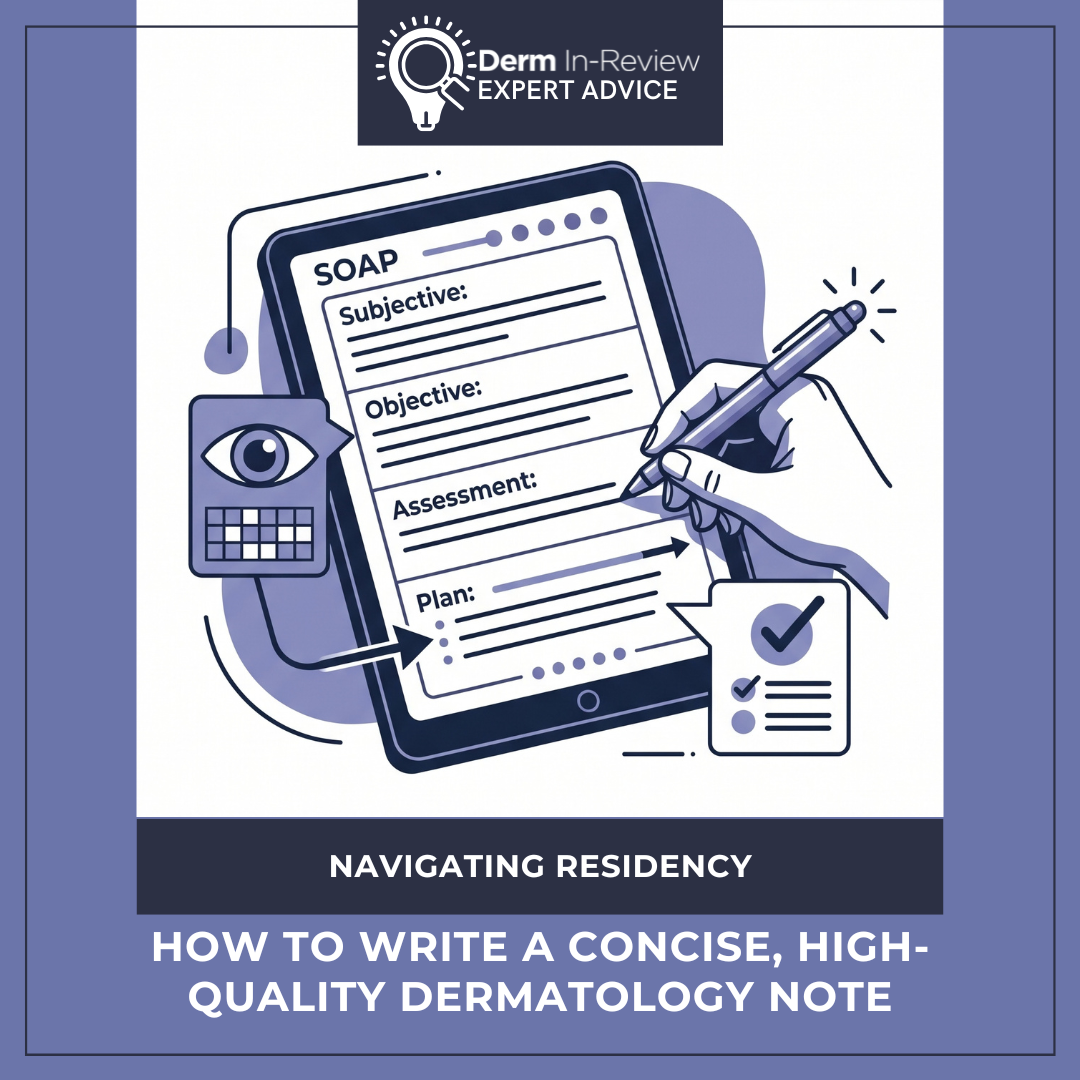 We are taught early in medical school about the SOAP note as the scaffolding for our documentation. In case you need a quick refresher, SOAP stands for Subjective, Objective, Assessment, and Plan. A good note should capture all four components.
As a quick recap:
Subjective: The patient’s history, including the history of present illness and chief complaint, relevant medical and sur …
We are taught early in medical school about the SOAP note as the scaffolding for our documentation. In case you need a quick refresher, SOAP stands for Subjective, Objective, Assessment, and Plan. A good note should capture all four components.
As a quick recap:
Subjective: The patient’s history, including the history of present illness and chief complaint, relevant medical and sur … 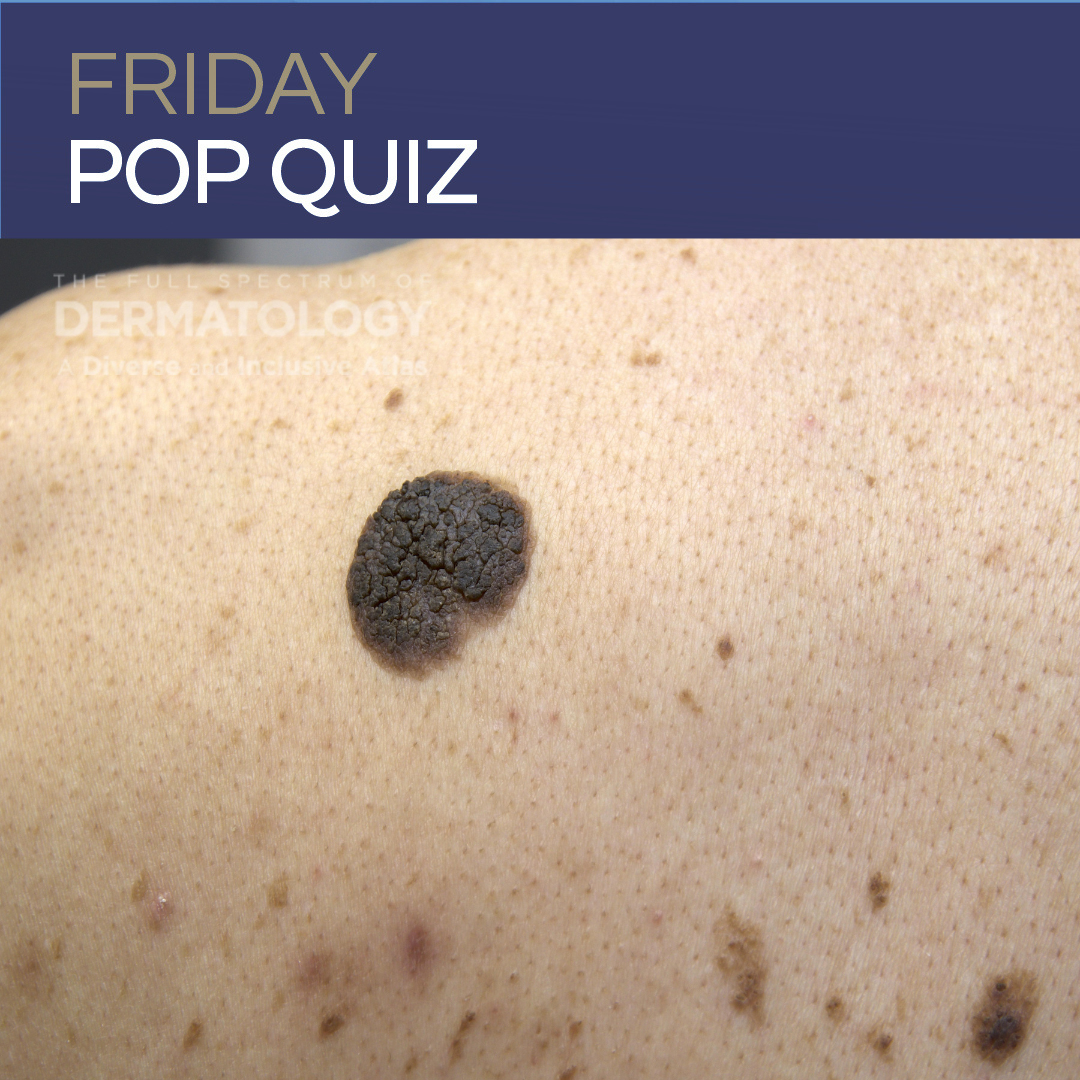 A 75 year old male patient presents with a sudden eruption of the shown finding (see photo) all throughout his back and chest. What is this finding called and what is the most commonly associated condition?
A. Leser-Trélat sign and gastric adenocarcinoma
B. Sister Mary Joseph nodule and pelvic tumor
C. Necrolytic migratory erythema and glucagonoma
D. Leser-Trélat sign and psorias …
A 75 year old male patient presents with a sudden eruption of the shown finding (see photo) all throughout his back and chest. What is this finding called and what is the most commonly associated condition?
A. Leser-Trélat sign and gastric adenocarcinoma
B. Sister Mary Joseph nodule and pelvic tumor
C. Necrolytic migratory erythema and glucagonoma
D. Leser-Trélat sign and psorias … 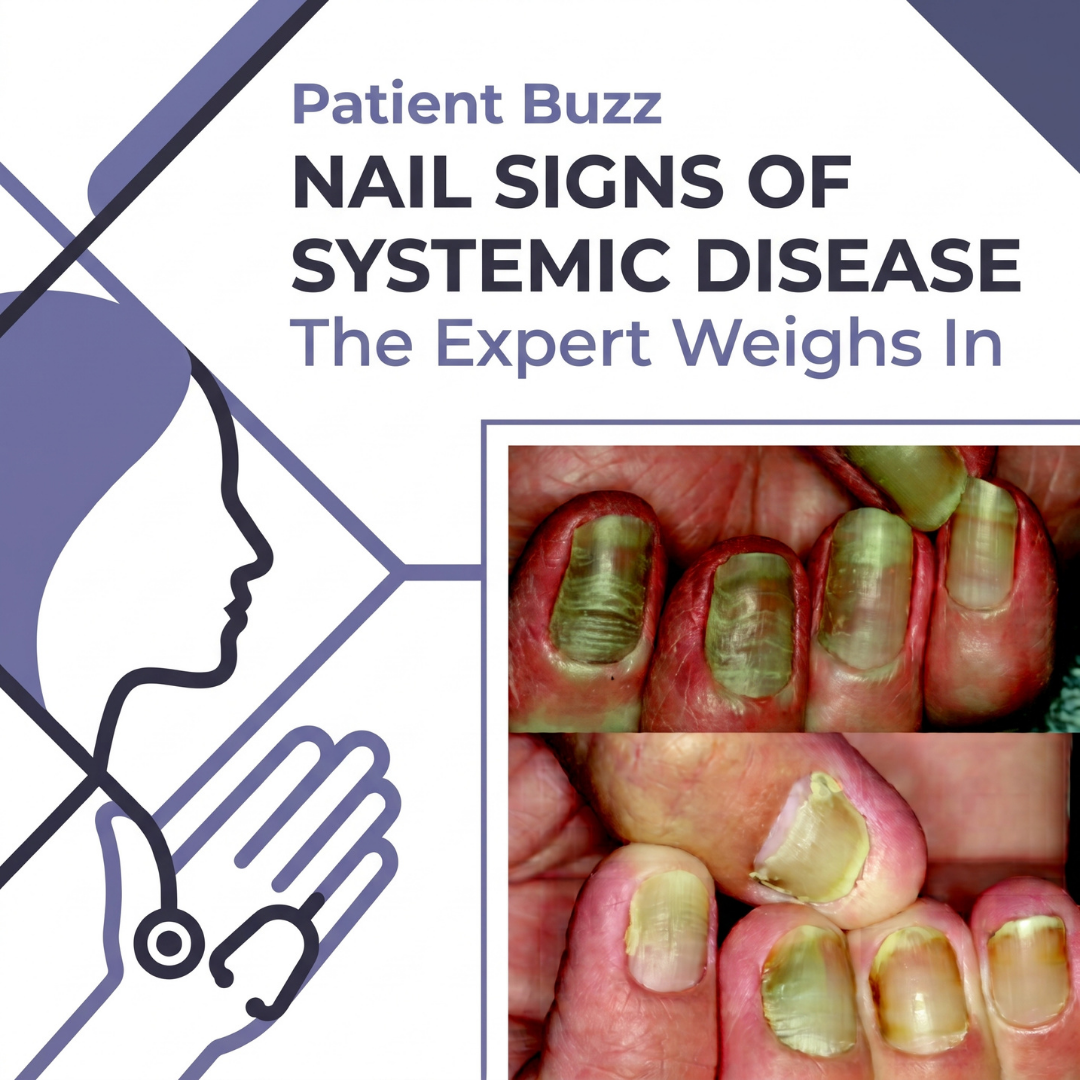 Nail disorders have a variety of causes, from wet work to fungi to trauma. Two recent articles in the consumer press highlighted the common – and uncommon – causes of nail disorders, including systemic health issues. Verywell Health wrote about the nail signs of high blood sugar, while Women’s Health wrote about the dermatological and systemic causes of white spots on the nails.
For what …
Nail disorders have a variety of causes, from wet work to fungi to trauma. Two recent articles in the consumer press highlighted the common – and uncommon – causes of nail disorders, including systemic health issues. Verywell Health wrote about the nail signs of high blood sugar, while Women’s Health wrote about the dermatological and systemic causes of white spots on the nails.
For what … 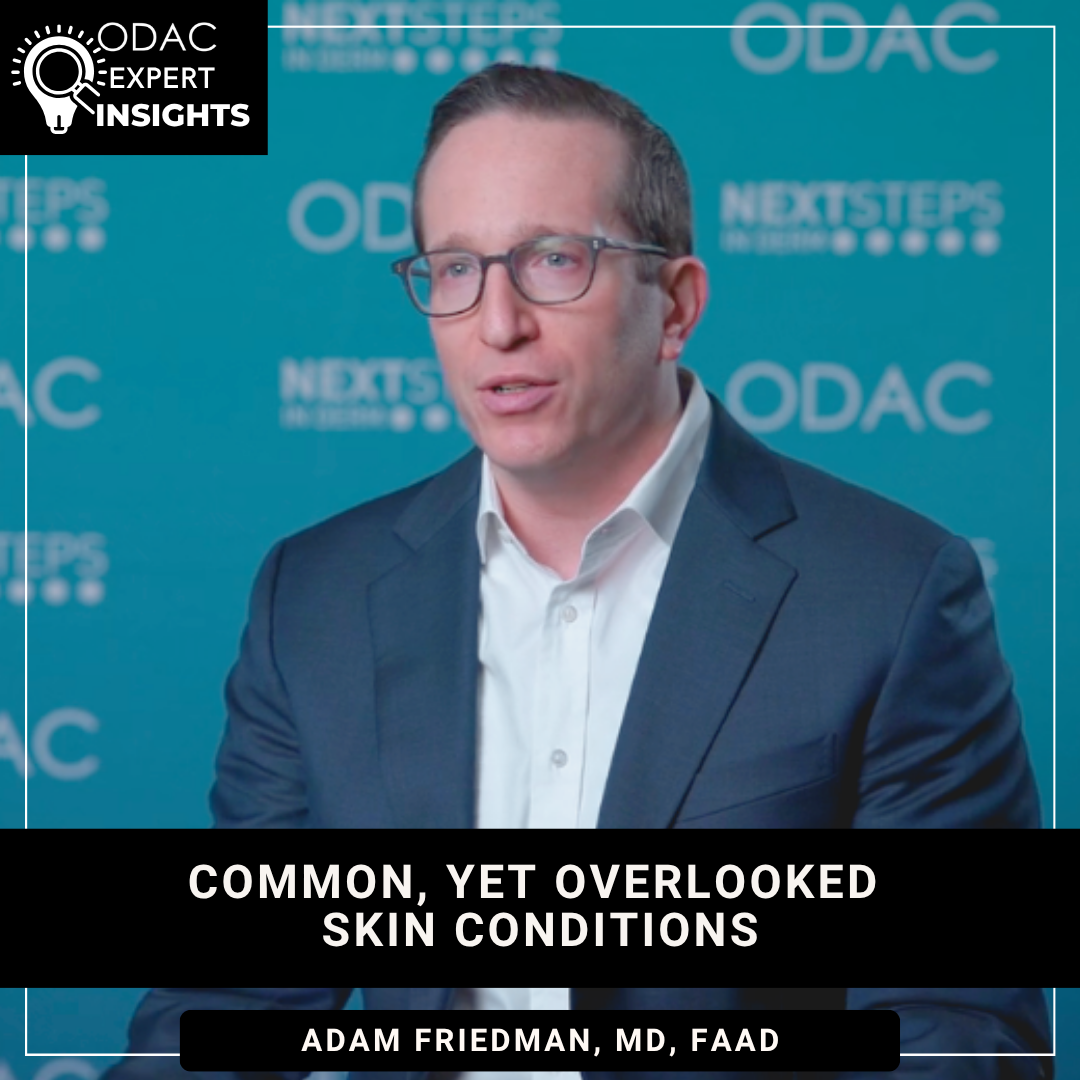 Dermatologists treat more than 3,000 conditions, but not all of them receive equal attention. In this Next Steps in Derm video interview, in partnership with the ODAC Dermatology Conference, ODAC Conference Co-Chair Adam Friedman, MD, FAAD, addresses common, yet overlooked skin conditions, most of which do not have FDA-approved therapies. Watch and learn tips for the creative management of lichen …