



















Brown Skin Lesions – Friday Pop Quiz 12/3/21
 This baby does not have any systemic symptoms and these red-brown skin lesions heal on their own. What would this lesion stain positively with?
A. CD68
B. VVG
C. Thioflavin T
D. CD4
E. Langerin
To find out the correct answer and read the explanation, click here.
Brought to you by our brand partner Derm In-Review. A product of SanovaWorks.
…
This baby does not have any systemic symptoms and these red-brown skin lesions heal on their own. What would this lesion stain positively with?
A. CD68
B. VVG
C. Thioflavin T
D. CD4
E. Langerin
To find out the correct answer and read the explanation, click here.
Brought to you by our brand partner Derm In-Review. A product of SanovaWorks.
…
This baby does not have any systemic symptoms and these red-brown skin lesions heal on their own. What would this lesion stain positively with?
A. CD68
B. VVG
C. Thioflavin T
D. CD4
E. Langerin
To find out the correct answer and read the explanation, click here.
Brought to you by our brand partner Derm In-Review. A product of SanovaWorks.
… Continue reading "Brown Skin Lesions – Friday Pop Quiz 12/3/21"
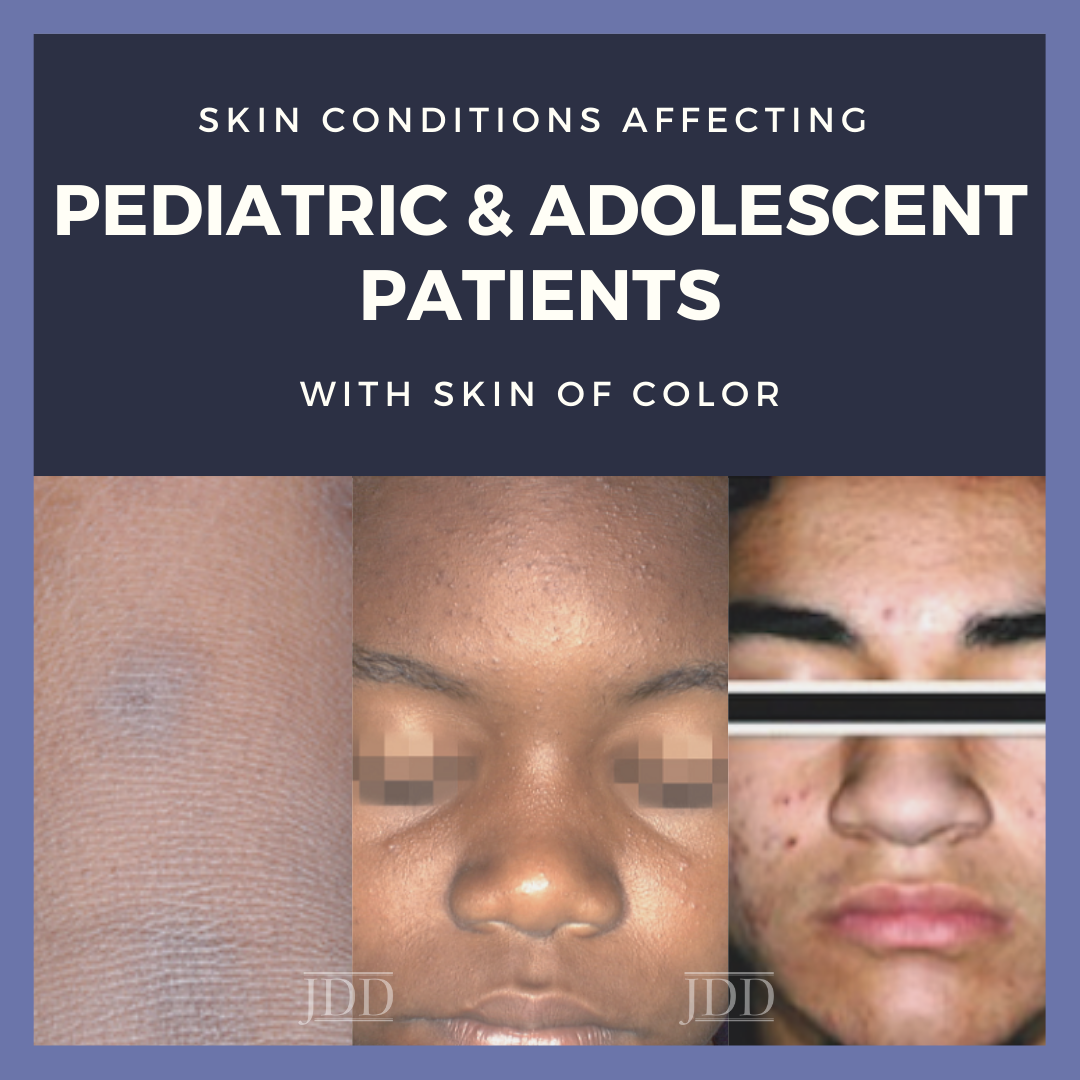 Sprinkled with many clinical pearls, Dr. Candrice Heath gave us an informative, case-based lecture at the 2021 Skin of Color Update: “Skin Conditions Disproportionately Affecting Pediatric & Adolescent Patients with Skin of Color.” Dr. Heath is an Assistant Professor and Director of Pediatric Dermatology at Lewis Katz School of Medicine at Temple University and is active on social media @D …
  New Beauty wrote an article about why some dermatologists say lip filler needs a PR agency, as many people incorrectly assume that filling the lips always results in overfilled duck lips.
For tips on achieving a natural appearance with lip filler, I reached out to Roberta Del Campo, MD, a dermatologist in North Miami, Fla. Dr. Del Campo will be presenting, “A Deep Dive into the World of In …
New Beauty wrote an article about why some dermatologists say lip filler needs a PR agency, as many people incorrectly assume that filling the lips always results in overfilled duck lips.
For tips on achieving a natural appearance with lip filler, I reached out to Roberta Del Campo, MD, a dermatologist in North Miami, Fla. Dr. Del Campo will be presenting, “A Deep Dive into the World of In …  In support of Hyperhidrosis Awareness , let's test your knowledge of Hyperhidrosis and Sweat with a few quizzes!
If a person has the medical condition of hyperhidrosis (excessive sweating), their risk of skin infections increases by how much?
A. 100%
B. 200%
C. 300%
D. 0%
Correct Answer: view here.
___________________________________________________________________ …
In support of Hyperhidrosis Awareness , let's test your knowledge of Hyperhidrosis and Sweat with a few quizzes!
If a person has the medical condition of hyperhidrosis (excessive sweating), their risk of skin infections increases by how much?
A. 100%
B. 200%
C. 300%
D. 0%
Correct Answer: view here.
___________________________________________________________________ … 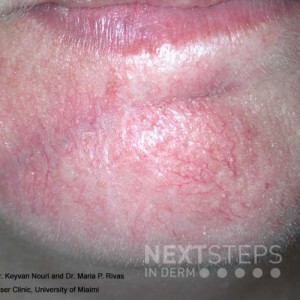 A 40 year-old female patient presents with the following lesion (see image). The biopsy report shows duct-like structures and tadpole structures within a fibrotic stroma. According to the aforementioned information, the most likely diagnosis is:
A. Microcystic adnexal carcinoma
B. Melanoma
C. Dermatofibrosarcoma protuberans
D. Merkel cell carcinoma
E. Squamous cell carcinoma
To …
A 40 year-old female patient presents with the following lesion (see image). The biopsy report shows duct-like structures and tadpole structures within a fibrotic stroma. According to the aforementioned information, the most likely diagnosis is:
A. Microcystic adnexal carcinoma
B. Melanoma
C. Dermatofibrosarcoma protuberans
D. Merkel cell carcinoma
E. Squamous cell carcinoma
To …