



















Safely Reopening Derm Practices with Dr. Nazanin Saedi
 Dr. Jeffrey S. Dover, in partnership with the Journal of Drugs in Dermatology, invited a panel of dermatology Key Opinion Leaders to share their experience as they reopen their practices. If you missed the first video in the series, you can watch it here. We continue the series with Dr. Nazanin Saedi, Associate Professor and Director of Laser Surgery and Cosmetic Dermatology in the Department o …
Dr. Jeffrey S. Dover, in partnership with the Journal of Drugs in Dermatology, invited a panel of dermatology Key Opinion Leaders to share their experience as they reopen their practices. If you missed the first video in the series, you can watch it here. We continue the series with Dr. Nazanin Saedi, Associate Professor and Director of Laser Surgery and Cosmetic Dermatology in the Department o … Continue reading "Safely Reopening Derm Practices with Dr. Nazanin Saedi"
 Join Dr. Jeffrey S. Dover, Director of SkinCare Physicians in Chestnut Hill, Massachusetts as he discusses how the COVID-19 pandemic has affected dermatology practices across the country and around the world. In the face of a change that no one was really prepared for, Dr. Dover and an esteemed panel of experts from the fields of Infectious Disease, Immunology, Public Health Policy, Dermatology, …
 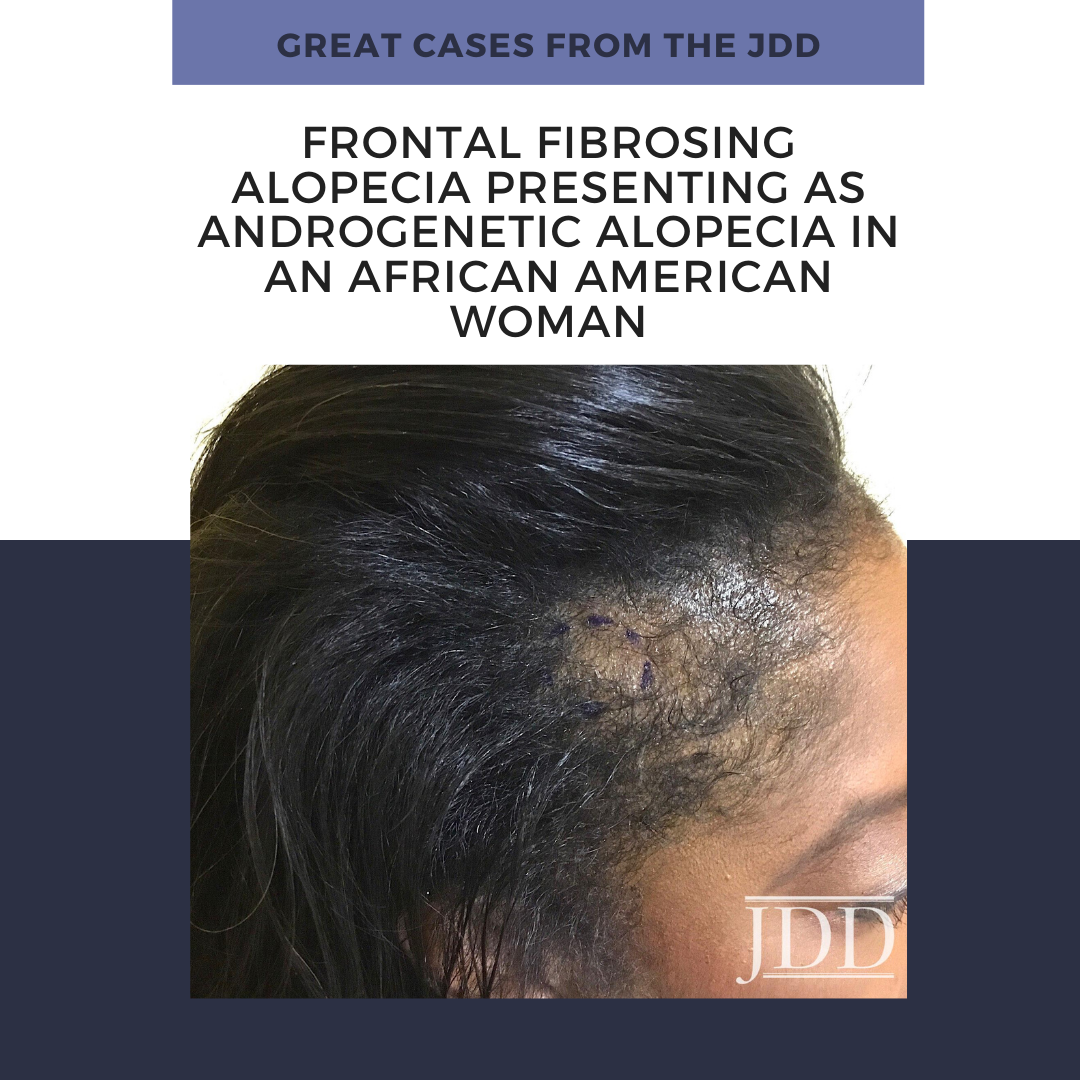 Frontal fibrosing alopecia (FFA) is a primary lymphocytic cicatricial alopecia that is currently regarded as a variant of lichen planopilaris. FFA has historically been considered rare in black patients, in whom traction alopecia, central centrifugal cicatricial alopecia, and androgenetic alopecia are frequently assumed to be more common. JDD author Kimberly Huerth, MD, ME describes a case of FFA …
 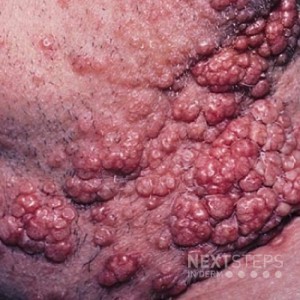 Which of the following is the least likely cause of the below lesion?
A. Cryptococcosis
B. Histoplasmosis
C. Coccidiodomycosis
D. Penicilliosis
E. Lobomycosis
To find out the correct answer and read the explanation, click here.
Brought to you by our brand partner Derm In-Review. A product of SanovaWorks.
…
Which of the following is the least likely cause of the below lesion?
A. Cryptococcosis
B. Histoplasmosis
C. Coccidiodomycosis
D. Penicilliosis
E. Lobomycosis
To find out the correct answer and read the explanation, click here.
Brought to you by our brand partner Derm In-Review. A product of SanovaWorks.
…  Hosted by George Washington University, in Partnership with Orlando Dermatology and Aesthetics Conference (ODAC) and Next Steps in Derm
Even during a global pandemic we cannot forget that Acne Vulgaris is one of if not THE most common skin condition afflicting our patients and the general populace. With the disruption of clinics and conferences, innovative vehicles for the dissemination of the …
Hosted by George Washington University, in Partnership with Orlando Dermatology and Aesthetics Conference (ODAC) and Next Steps in Derm
Even during a global pandemic we cannot forget that Acne Vulgaris is one of if not THE most common skin condition afflicting our patients and the general populace. With the disruption of clinics and conferences, innovative vehicles for the dissemination of the …