












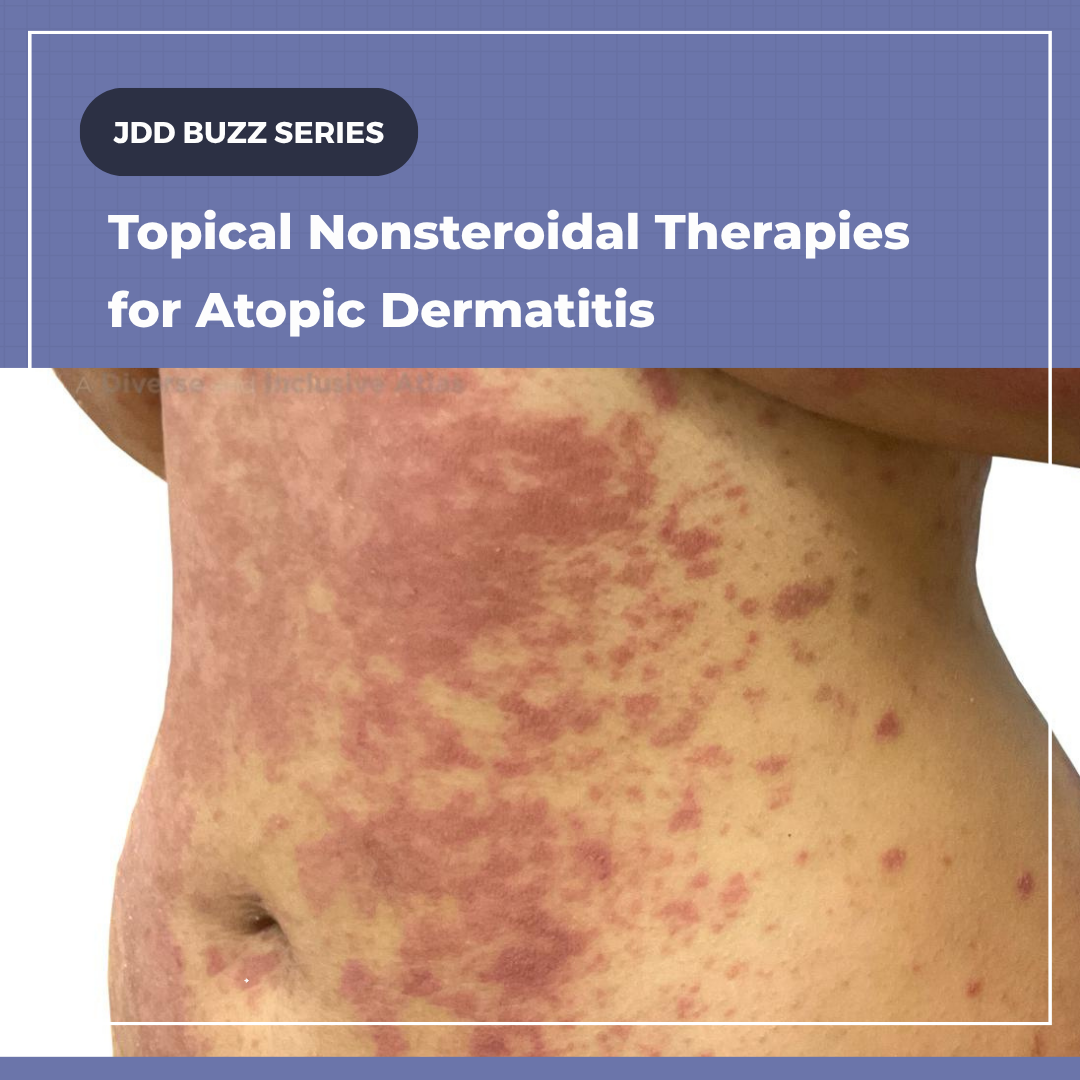
Topical corticosteroids have been a mainstay of frontline therapy for atopic dermatitis (AD) for more than half a century. Now therapeutic advances are challenging that standard of care. Nonsteroidal topicals — topical JAK inhibitors, aryl hydrocarbon receptor agonists, and PDE-4 inhibitors — are expanding pathways of addressing the signs and symptoms of AD.
An article in the March Journal of Drugs in Dermatology shares the results of a seven-member expert panel who created consensus statements for the use of nonsteroidal therapies in AD. To help dermatology clinicians better understand these options and how to incorporate them into treatment algorithms, I interviewed author Christopher G. Bunick, MD, PhD, associate professor of dermatology at the Yale University School of Medicine.
What’s the need for consensus statements on using nonsteroidal topicals for AD? How is this need evident in your clinical practice?
Over the last couple years, there have been several new advanced nonsteroidal topicals enter the atopic dermatitis treatment landscape. The need for consensus statements comes from the need to provide clinicians with clear guidance on how to use the new topicals. They ensure clinicians have practical guidance on how to incorporate these new nonsteroidal topicals into the treatment algorithm of atopic dermatitis, which is evermore complex with the topicals, biologics, and small molecules now available.
You were part of a panel of dermatologists specializing in inflammatory dermatoses and their topical treatments that gathered to generate evidence-based consensus statements. Describe the process the panel took to review research and write statements. Did most panelists agree readily, or was the process more involved?
Significant time and effort was put into literature review by all experts, reviewing and grading the quality of evidence (levels 1,2, or 3) using the Strength of Recommendation Taxonomy (SORT) framework. This work preceded a face-to-face meeting between the experts where the research was discussed, statements written and revised, and finally consensus votes obtained. The consensus statements were then assigned a Strength of Recommendation (Grade A, B, C) based on the SORT framework.
For decades, steroids have been first-line agents for treating inflammatory skin conditions. However, the panel’s first consensus statement says topical nonsteroidal therapies should take that place. Why should dermatology clinicians make this paradigm shift?
Very simply, newer advanced topicals are more effective and safer than topical steroids at controlling the inflammation and the symptoms that come with it, such as itch. They provide a greater benefit-risk profile, and can be used on all parts of the body for longer periods of time, including the face or other thin skin areas where steroids can be problematic. The paradigm shift is very similar to transitioning from traditional immunosuppressants like methotrexate to advanced systemic therapies like biologics or small molecule inhibitors, which also have a greater benefit-risk profile than steroids, topical or oral, in atopic dermatitis.
Adverse events are always a concern when patients transition from a known entity (topical corticosteroids) to a new therapy. What consensus did the panel reach about the safety of nonsteroidal topicals?
Statements 5 and 6 address the safety issue. Just because topical steroids are a known entity does not mean they are safe. The expert panel felt that newer, advanced topical nonsteroidals offer a higher degree of safety over topical steroids because they avoid well-known corticosteroid-associated adverse events even over long-term use. This is a desired outcome for atopic dermatitis patients.
Statement 3 addresses quality of life and sleep. What’s unique about these agents’ ability to improve these areas that are often compromised during AD flares?
Advanced nonsteroidal topicals have the ability to reduce skin inflammation, reduce itch, and improve skin barrier function by tackling the critical immune pathways driving atopic dermatitis. Together, this improves quality of life, and reduction of itch is a major factor enabling improved sleep.
Statement 7 addresses convenience. How are these nonsteroidal therapies easier for patients to incorporate into their daily lives?
Convenience means a couple things here. First, there is reticence to use topical steroids on the face or delicate skin areas like eyelids, skin folds, and genitalia. Advanced nonsteroidal therapies can be used on these areas without hesitation, providing treatment convenience to the provider and patient. Second, the safety of advanced nonsteroidal therapies allows them to be used over longer periods of time, providing patients with a means to knock-out atopic dermatitis flares when needed, but also comfortably use the advanced nonsteroidal medicines for long-term maintenance of disease control.
What else should dermatology clinicians know about topical nonsteroidal therapies for AD?
Innovation in atopic dermatitis medicines is occurring at all levels, from topicals to small molecules to biologics. This consensus provides up-to-date guidance on how to think about and incorporate the advanced nonsteroidal topicals into daily management strategies for atopic dermatitis patients.
Did you enjoy this JDD Buzz series article? You can find more here.