












Friday Pop Quiz #321
The correct answer is B. COL7A1 (Dystrophic epidermolysis bullosa).
B (COL7A1) Dystrophic epidermolysis bullosa is caused by a mutation in COL7A1, that leads to a lack or dysfunction of type VII collagen, which is essential for anchoring fibrils that stabilize the dermoepidermal junction. Absent type VII collagen is pathognomonic for recessive dystrophic EB (RDEB), caused by COL7A1 mutation …
 Surgical exposure varies tremendously between residency programs. For those interested in a career in Mohs surgery, additional training in more complex techniques can be helpful before you start (or even during) your fellowship. Even for residents interested in general or pediatric dermatology, having expert guidance on surgical fundamentals can help ensure you are comfortable after you finish tra …
 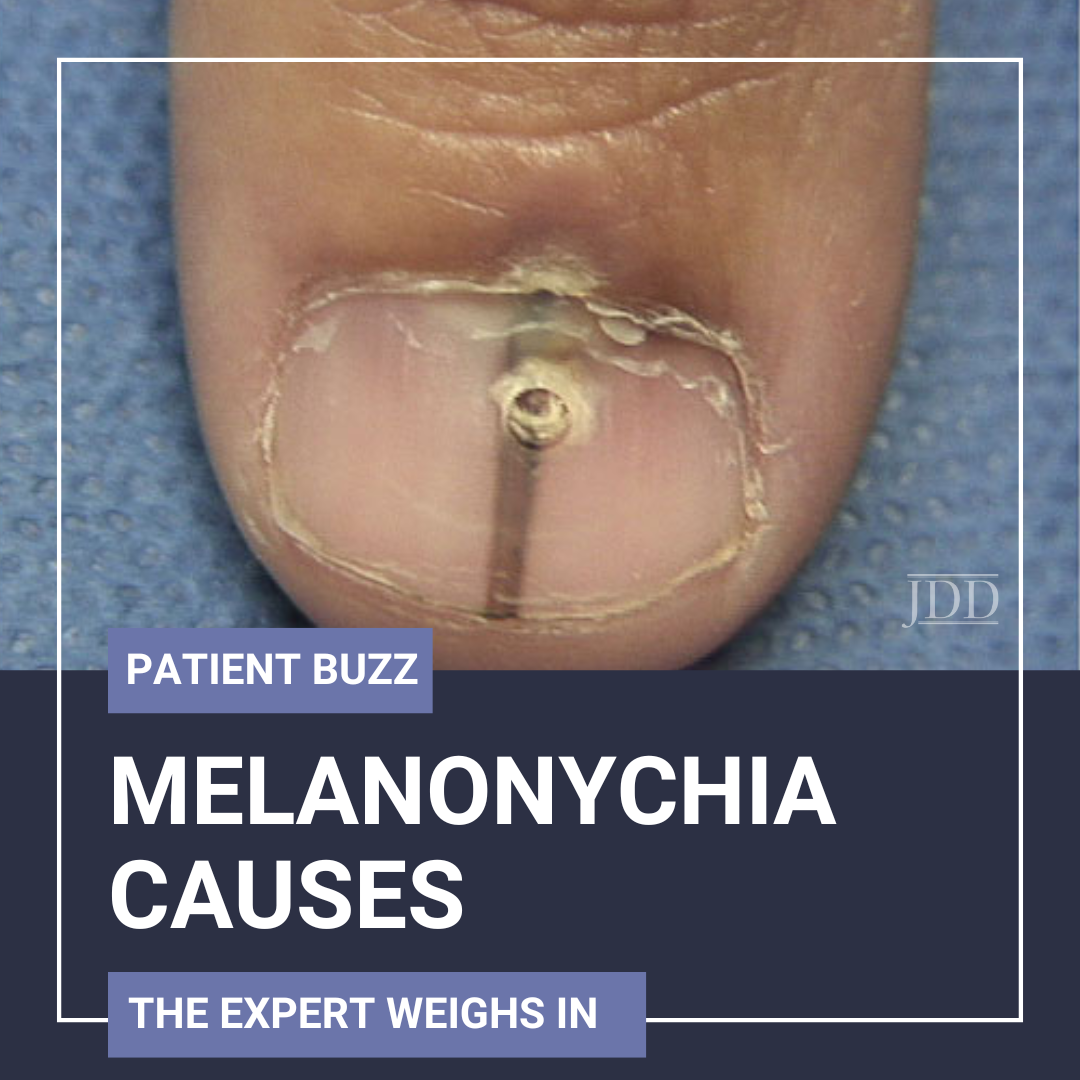 Health recently posted an article on the causes of melanonychia. While a black line on a patient’s nail is a common presentation, melanonychia may have a harmless cause or it may be a sign of a more serious health condition. How should a dermatology clinician conduct a workup for melanonychia, and when is a biopsy necessary?
For an expert’s take, I reached out to Molly Hinshaw, MD, profes …
Health recently posted an article on the causes of melanonychia. While a black line on a patient’s nail is a common presentation, melanonychia may have a harmless cause or it may be a sign of a more serious health condition. How should a dermatology clinician conduct a workup for melanonychia, and when is a biopsy necessary?
For an expert’s take, I reached out to Molly Hinshaw, MD, profes … 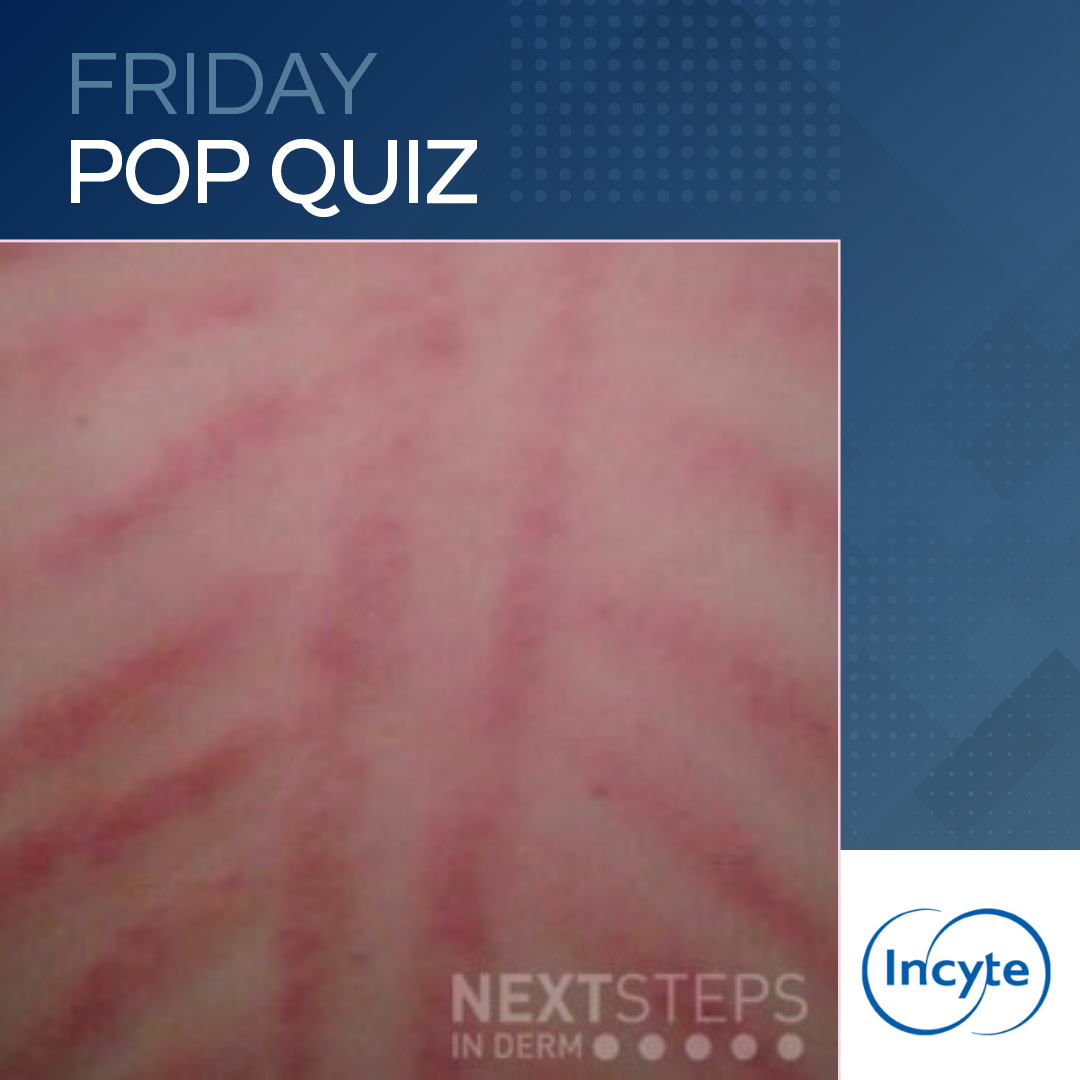 A 7-year-old girl is brought to the pediatrician for a well-child check. During the examination, the pediatrician notes the shown lesions on the patient's back. The patient’s parents report a recent respiratory illness for which their community healer performed treatment with mild improvement. Which of the following is the most appropriate next step?
A. Apply topical corticosteroid daily
…
A 7-year-old girl is brought to the pediatrician for a well-child check. During the examination, the pediatrician notes the shown lesions on the patient's back. The patient’s parents report a recent respiratory illness for which their community healer performed treatment with mild improvement. Which of the following is the most appropriate next step?
A. Apply topical corticosteroid daily
…