












Key Steps for Conducting a Hair & Scalp Exam
 Ronda S. Farah, MD, FAAD, knows the impact of hair and scalp disorders on patients’ quality of life. Dr. Farah is an associate of professor of dermatology at the University of Minnesota and founder of Alluma Dermatology. For Dr. Farah, quality care begins with a thorough hair and scalp exam. In this Next Steps in Derm video interview, conducted in partnership with the ODAC Dermatology Conference …
Ronda S. Farah, MD, FAAD, knows the impact of hair and scalp disorders on patients’ quality of life. Dr. Farah is an associate of professor of dermatology at the University of Minnesota and founder of Alluma Dermatology. For Dr. Farah, quality care begins with a thorough hair and scalp exam. In this Next Steps in Derm video interview, conducted in partnership with the ODAC Dermatology Conference … Continue reading "Key Steps for Conducting a Hair & Scalp Exam"
 Dermatology clinicians have a plethora of treatment options to consider for their psoriasis patients, from topicals to phototherapy to systemics. Yet there’s a non-prescription, adjunctive strategy that clinicians may hesitate to broach in office visits for psoriasis. Research shows dietary strategies that reduce energy intake, such as a low-calorie diet or intermittent fasting, may reduce psori …
  Periorbital hyperpigmentation is common in patients with skin of color, though understanding the condition – and selecting an effective treatment – can be a challenge. Darkening around the eyes can appear as brown, blue-grey, blue, violet, or purple -- all signs of the root causes -- which include extra deposits of melanin, inflammation, prominent veins, and structural changes. Periorbital hyp …
  Diagnosing systemic disease requires connecting the dots from the microscope to the bedside, according to Mayo Clinic dermatologist and dermatopathologist Olayemi Sokumbi, MD, FAAD.
In this Next Steps in Derm interview, in partnership with the ODAC Dermatology Conference, Dr. Sokumbi outlines how she makes diagnostic decisions, including thinking beyond the skin. As a dermatologic detective of …
Diagnosing systemic disease requires connecting the dots from the microscope to the bedside, according to Mayo Clinic dermatologist and dermatopathologist Olayemi Sokumbi, MD, FAAD.
In this Next Steps in Derm interview, in partnership with the ODAC Dermatology Conference, Dr. Sokumbi outlines how she makes diagnostic decisions, including thinking beyond the skin. As a dermatologic detective of … 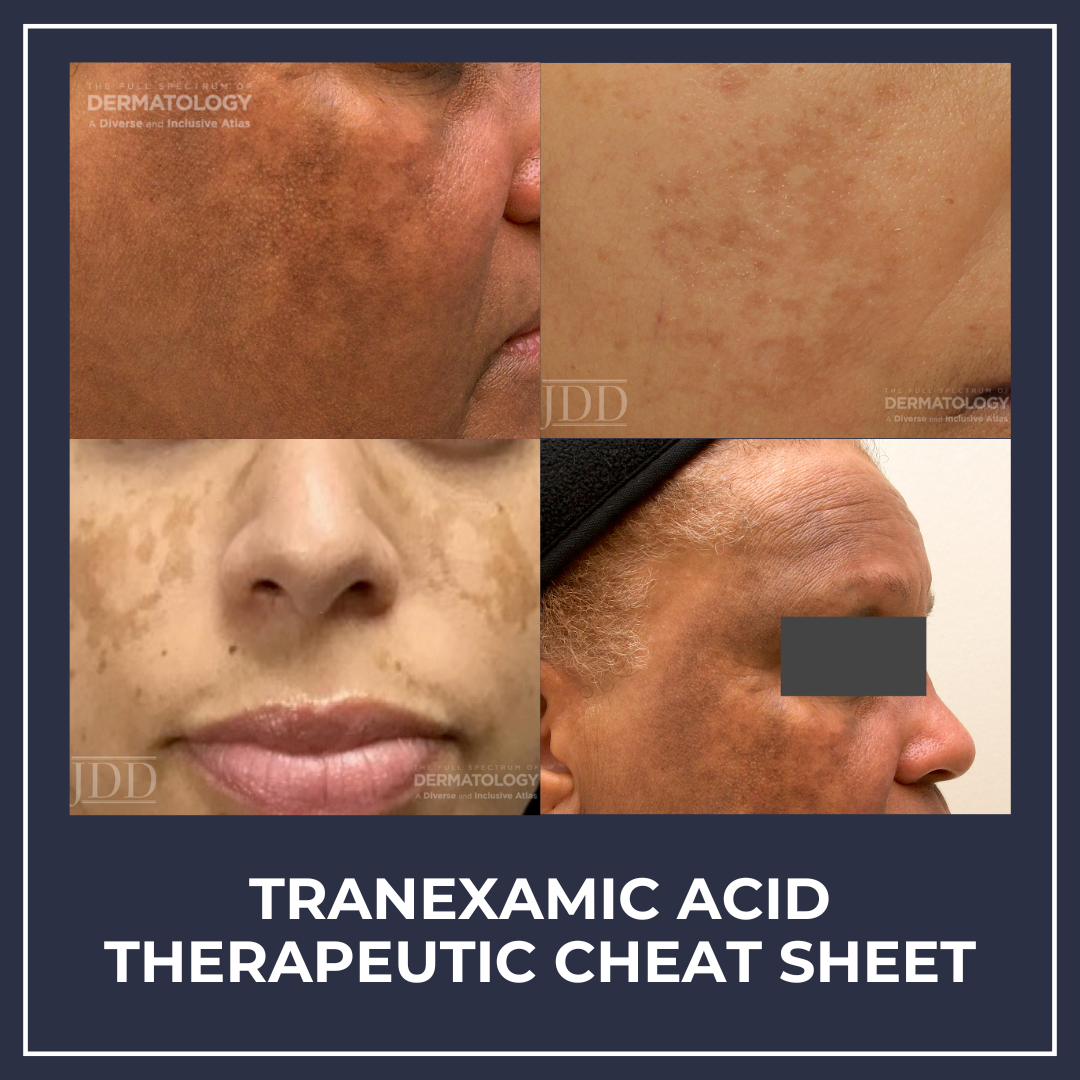 Tranexamic acid (TXA) is a synthetic lysine derivative that reversibly blocks the lysine-binding site on plasminogen, preventing conversion to plasmin. While originally developed as an antifibrinolytic agent to reduce bleeding, TXA has several downstream effects that make it useful in dermatology, particularly for pigmentary disorders, with emerging evidence in inflammatory disorders as well. TX …