












Friday Pop Quiz 11/20/2026
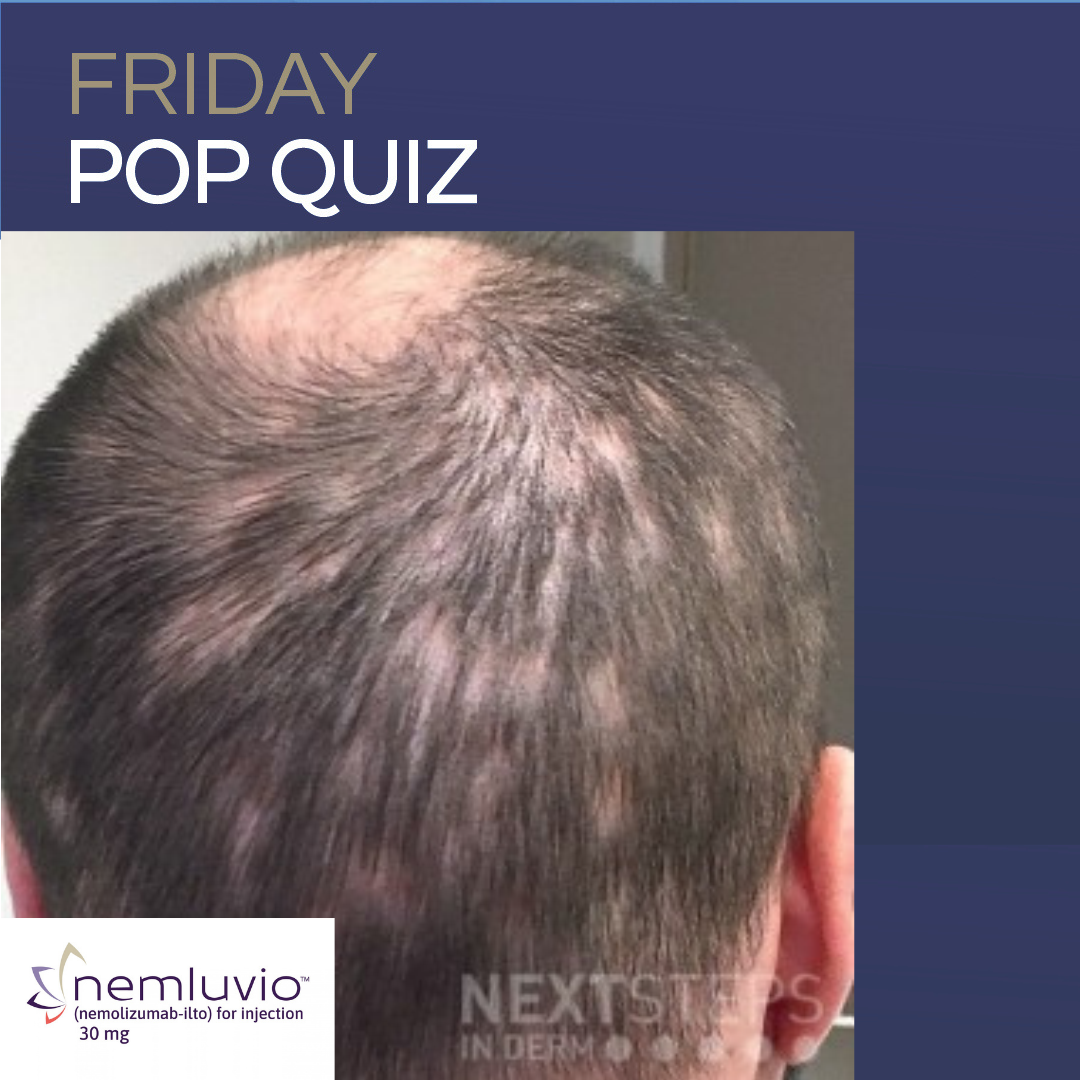 What test should be performed for our patient with the hair loss pictured?
A. Serum zinc level
B. RPR
C. ESR and CRP
D. Serum copper level
E. Free and total testosterone levels
To find out the correct answer and read the explanation, click here.
Brought to you by our brand partner
Brand partners had no involvement in the content of the questions or answers.
…
What test should be performed for our patient with the hair loss pictured?
A. Serum zinc level
B. RPR
C. ESR and CRP
D. Serum copper level
E. Free and total testosterone levels
To find out the correct answer and read the explanation, click here.
Brought to you by our brand partner
Brand partners had no involvement in the content of the questions or answers.
… 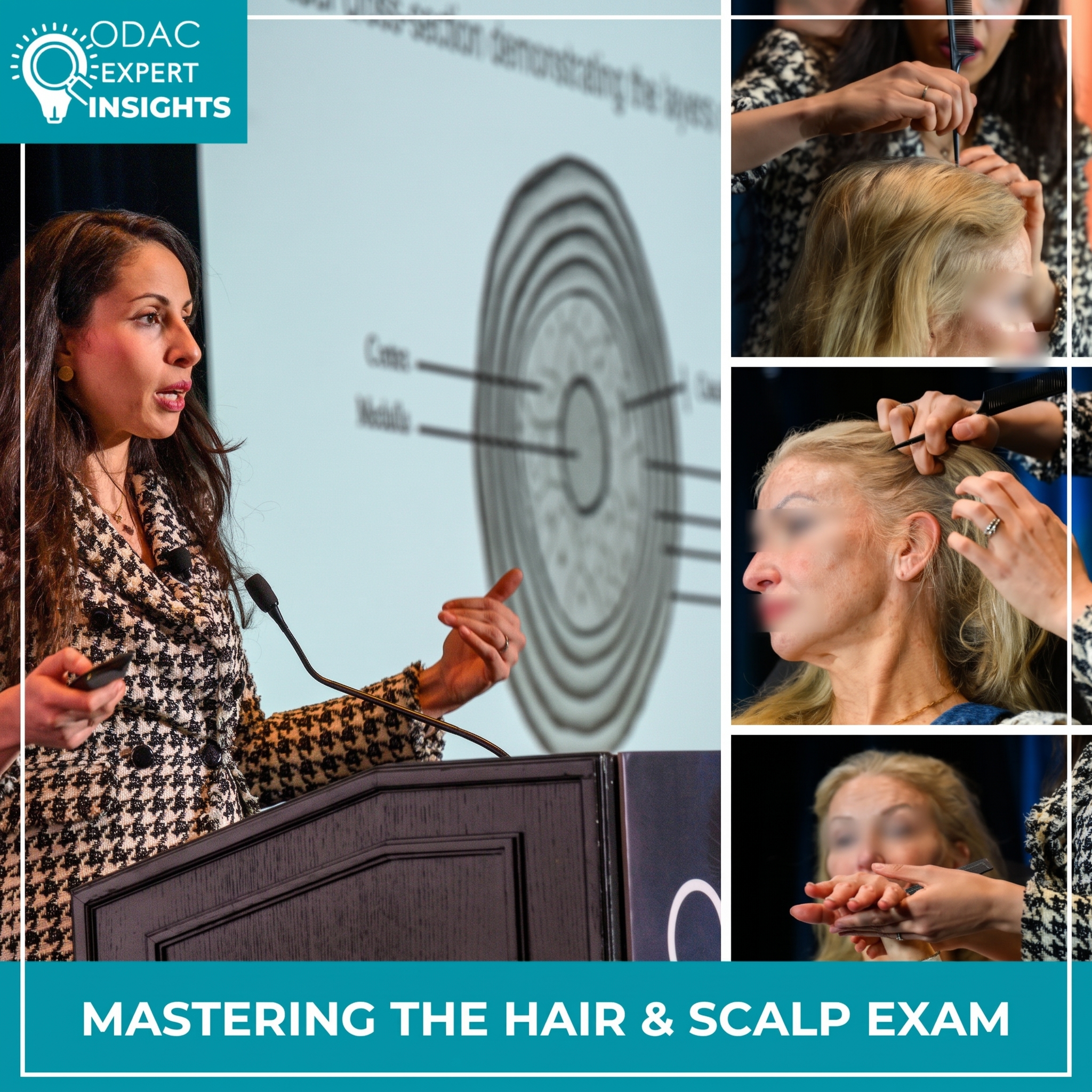 Hair loss visits are common but, if you’re like me, it can still give pause in a busy clinic. During a session titled Strands of Clarity: Mastering the Hair & Scalp Exam at the ODAC Dermatology conference, Dr. Ronda Farah— nationally and internationally recognized in hair loss and serving as an Associate Professor in the Department of Dermatology at the University of Minnesota—focused on …
 Parade asked the question consumers often ponder in the skincare aisle: Does expensive skin care work better? Dermatologists quoted in the article say no – formula matters more than price. They say a higher price can reflect high-quality ingredients, scientific research, and a more cosmetically elegant scent or texture. However, the increased costs can also reflect marketing expenditures, includ …
 New treatments are giving alopecia patients hope, according to ODAC Medical Dermatology Advisor Jennifer Soung, MD, FAAD. Next Steps in Derm, in partnership with the ODAC Dermatology Conference, interviewed Dr. Soung, who shares her pearls for the medical treatment of alopecia. Watch as Dr. Soung outlines the AST tool to determine alopecia severity. Hear a summary of approved JAK inhibitors for al …
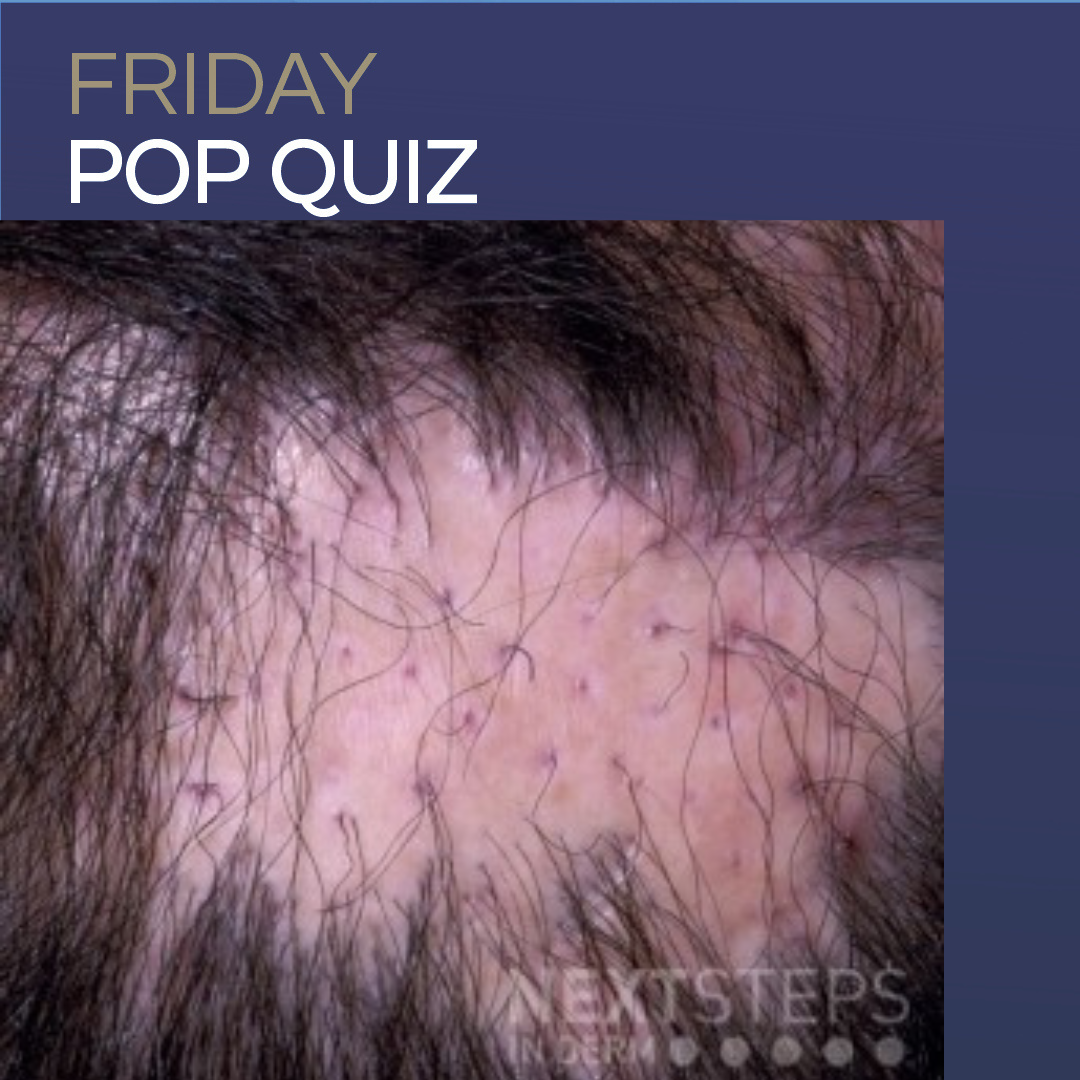 Which of the following is the most likely diagnosis in this 56-year-old woman with pruritic hair loss for 3 months?
A. Lichen planopilaris
B. Androgenetic alopecia
C. Central centrifugal cicatricial alopecia
D. Discoid lupus erythematosus
E. Folliculitis decalvans
F. Alopecia areata
To find out the correct answer and read the explanation, click here. …