












Daily Hot Takes from SOCU 2026: Day 1 Highlights
 Day 1 of the 17th Annual Skin of Color Update (SOCU 2026) opened with a historic sense of community, reflection, and relentless dedication to advancing dermatologic care for patients with skin of color.
Co-Chairs Andrew F. Alexis, MD, MPH, FAAD, and Eliot F. Battle, MD, welcomed attendees from across the globe—spanning Europe, the Caribbean, the UK, and across the United States—marking 17 y …
Day 1 of the 17th Annual Skin of Color Update (SOCU 2026) opened with a historic sense of community, reflection, and relentless dedication to advancing dermatologic care for patients with skin of color.
Co-Chairs Andrew F. Alexis, MD, MPH, FAAD, and Eliot F. Battle, MD, welcomed attendees from across the globe—spanning Europe, the Caribbean, the UK, and across the United States—marking 17 y … Continue reading "Daily Hot Takes from SOCU 2026: Day 1 Highlights"
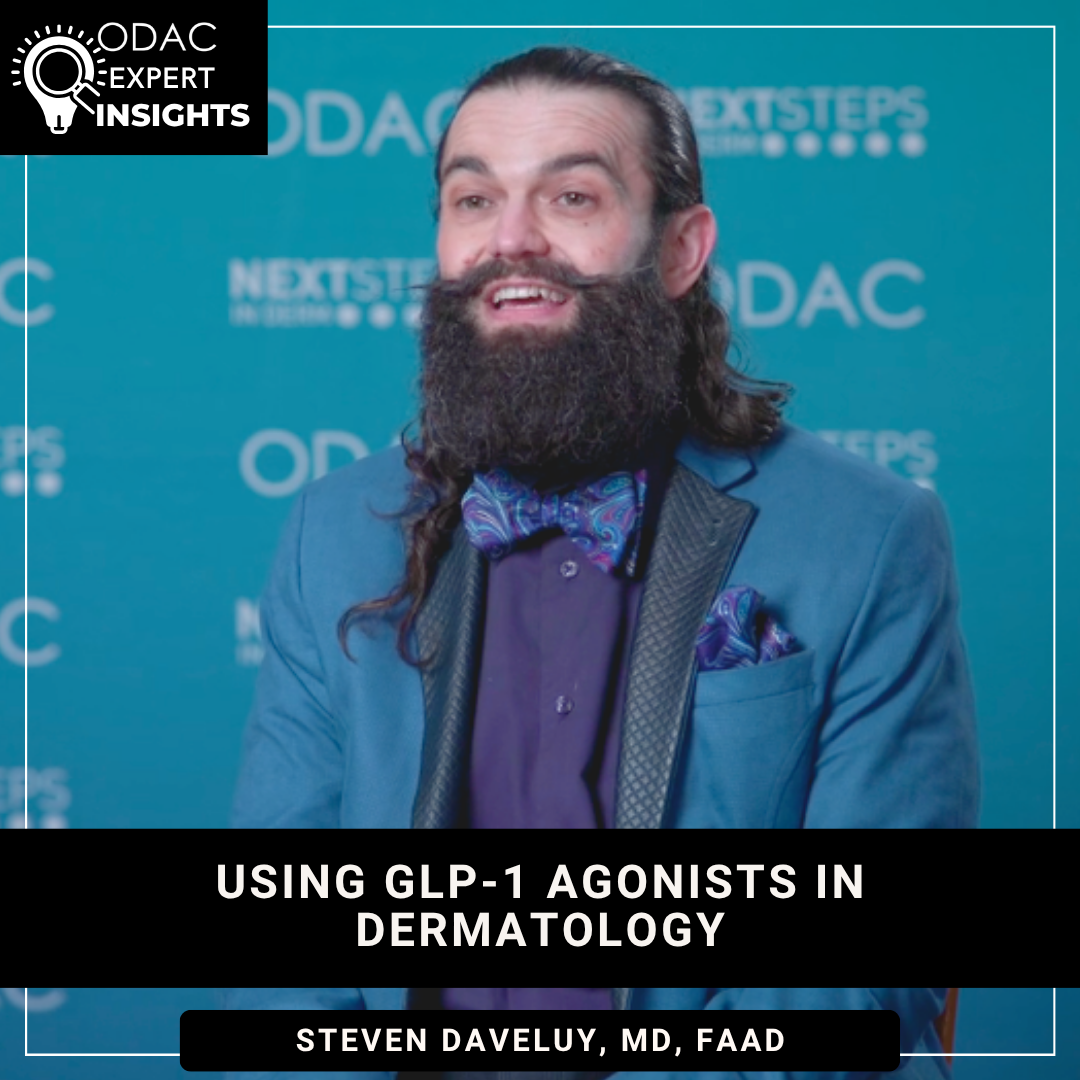 The weight loss benefits of GLP-1 agonists have long been established, yet could these drugs have a secondary anti-inflammatory impact? Steven Daveluy, MD, FAAD, director of the Wayne State Dermatology Residency Program, gives the latest in GLP-1s in the treatment of hidradenitis suppurativa (HS) and psoriasis, in this Next Steps in Derm video interview, conducted in partnership with the ODAC Derm …
 Clinicians treating adults with hidradenitis suppurativa (HS) can use a variety of strategies, from topical and oral medications, to deroofing and laser therapy, as research supports their use. However, choosing an appropriate treatment isn’t as easy when the patient is a developing child. Data on the long-term safety of systemic medications for HS in children isn’t well known. Yet treating pe …
 Children with dermatologic conditions, ranging from eczema to psoriasis to hidradenitis suppurativa, are benefitting from advances in biologic therapy with several FDA-approved treatment options. However, real-life clinical experience reveals biologic therapy is not always initiated when prescribed. In addition, even when biologic therapy is initiated, adherence is often not maintained. Therefore, …
 Dermatologists must become comfortable prescribing JAK inhibitors in patients with skin of color in order to provide high-quality dermatologic care. That’s according to Dr. Brett King, a dermatologist in Fairfield, Conn., who was the first dermatologist to show that JAK inhibitors as a medicine class were effective in treating a spectrum of dermatologic conditions, including alopecia areata and …