












Friday Pop Quiz 7/31/2026
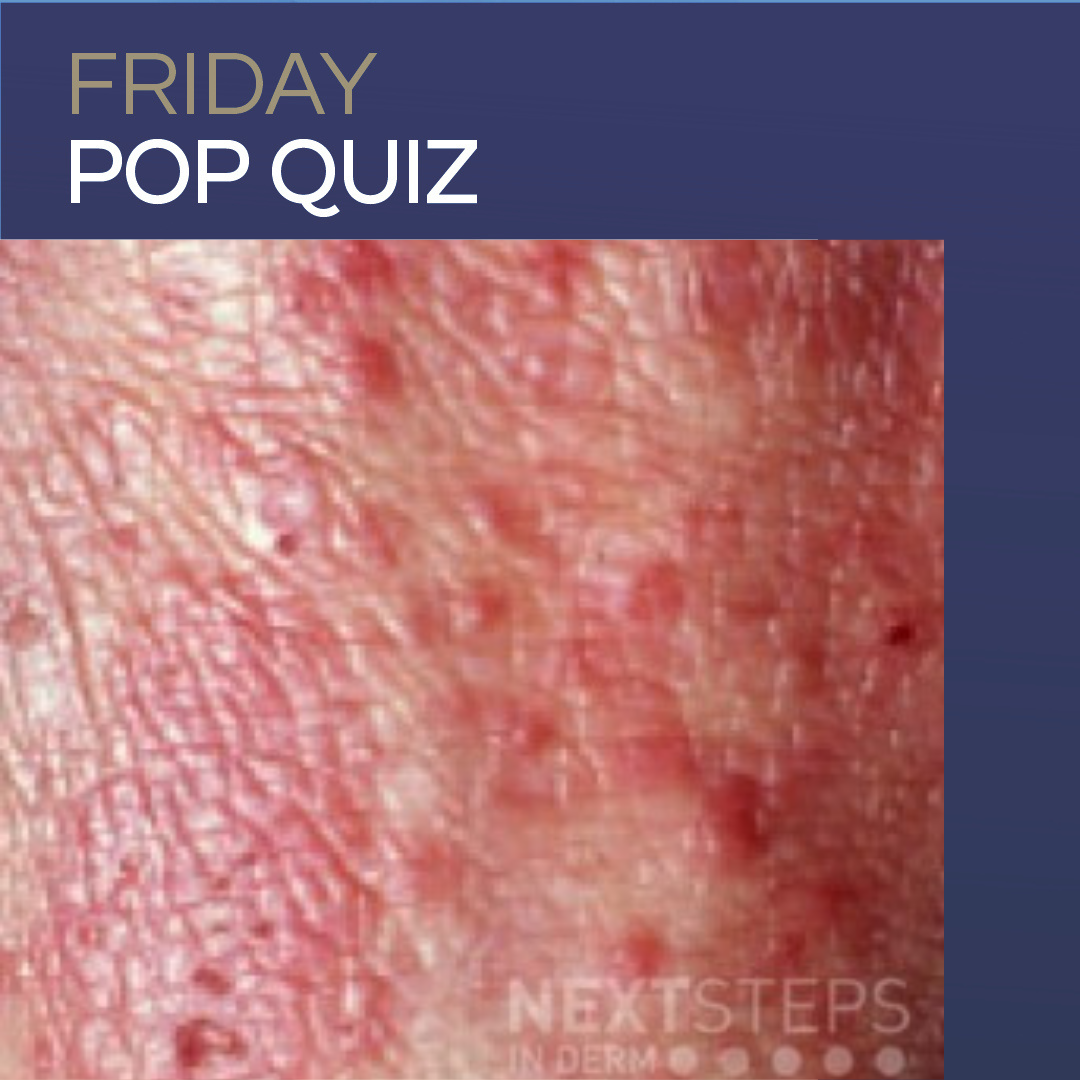 A 29-year-old woman with Fitzpatrick skin type III presents with a history of recurrent erythematous plaques on her forearms after brief sun exposure, especially during the spring and early summer. She reports no systemic symptoms and no photosensitizing medications. Biopsy confirms findings consistent with polymorphous light eruption (PMLE). She wants a sunscreen that will minimize her flares …
A 29-year-old woman with Fitzpatrick skin type III presents with a history of recurrent erythematous plaques on her forearms after brief sun exposure, especially during the spring and early summer. She reports no systemic symptoms and no photosensitizing medications. Biopsy confirms findings consistent with polymorphous light eruption (PMLE). She wants a sunscreen that will minimize her flares … 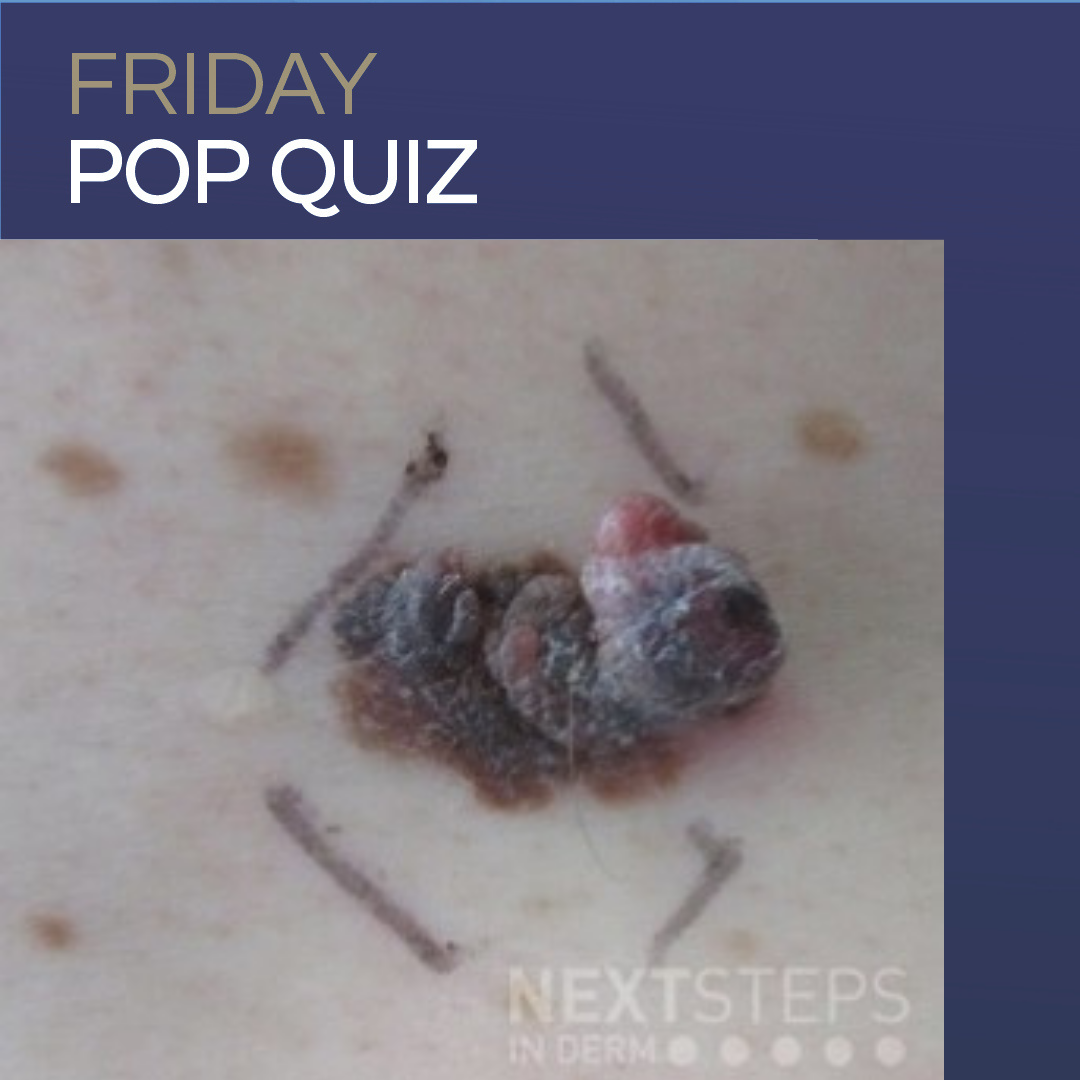 An otherwise healthy 50-year-old male presents with the pictured neoplasm on his trunk. Biopsy reveals melanoma, 2.3mm, ulcerated. Wide local excision and sentinel lymph node biopsy is performed, which is negative. What is the best next step?
A. Observation with skin checks q3 months and symptom-guided imaging
B. Adjuvant pembrolizumab
C. Adjuvant dabrafenib + trametinib
D. Adjuv …
An otherwise healthy 50-year-old male presents with the pictured neoplasm on his trunk. Biopsy reveals melanoma, 2.3mm, ulcerated. Wide local excision and sentinel lymph node biopsy is performed, which is negative. What is the best next step?
A. Observation with skin checks q3 months and symptom-guided imaging
B. Adjuvant pembrolizumab
C. Adjuvant dabrafenib + trametinib
D. Adjuv … 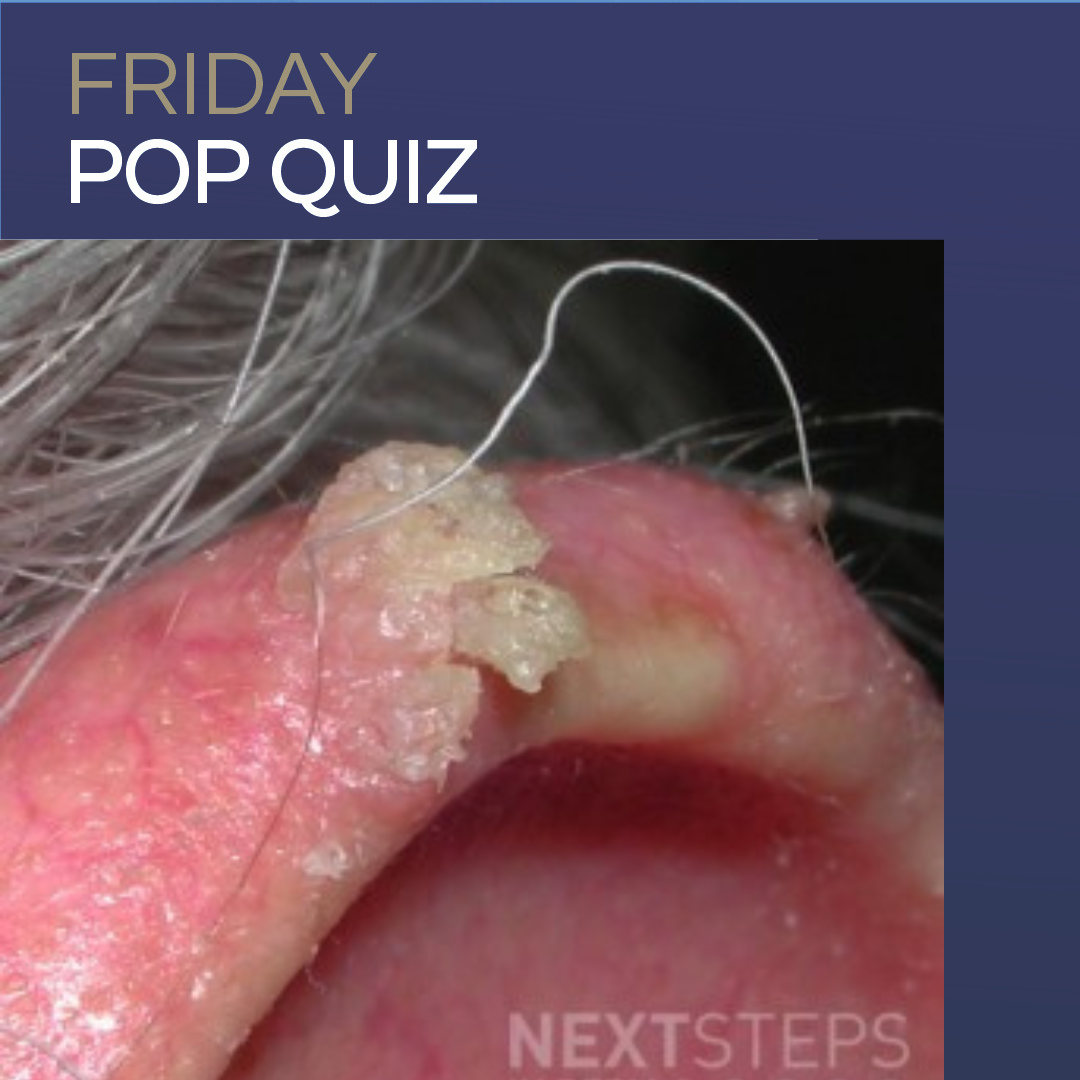 Mutations in which gene would likely be found in the neoplastic cells of this lesion?
A. PATCH
B. p53
C. Fumarate hydratase
D. CREBBP
E. p63
To find out the correct answer and read the explanation, click here.
Brought to you by our brand partner
*Brand partners had no involvement in the content of the questions or answers. …
Mutations in which gene would likely be found in the neoplastic cells of this lesion?
A. PATCH
B. p53
C. Fumarate hydratase
D. CREBBP
E. p63
To find out the correct answer and read the explanation, click here.
Brought to you by our brand partner
*Brand partners had no involvement in the content of the questions or answers. … 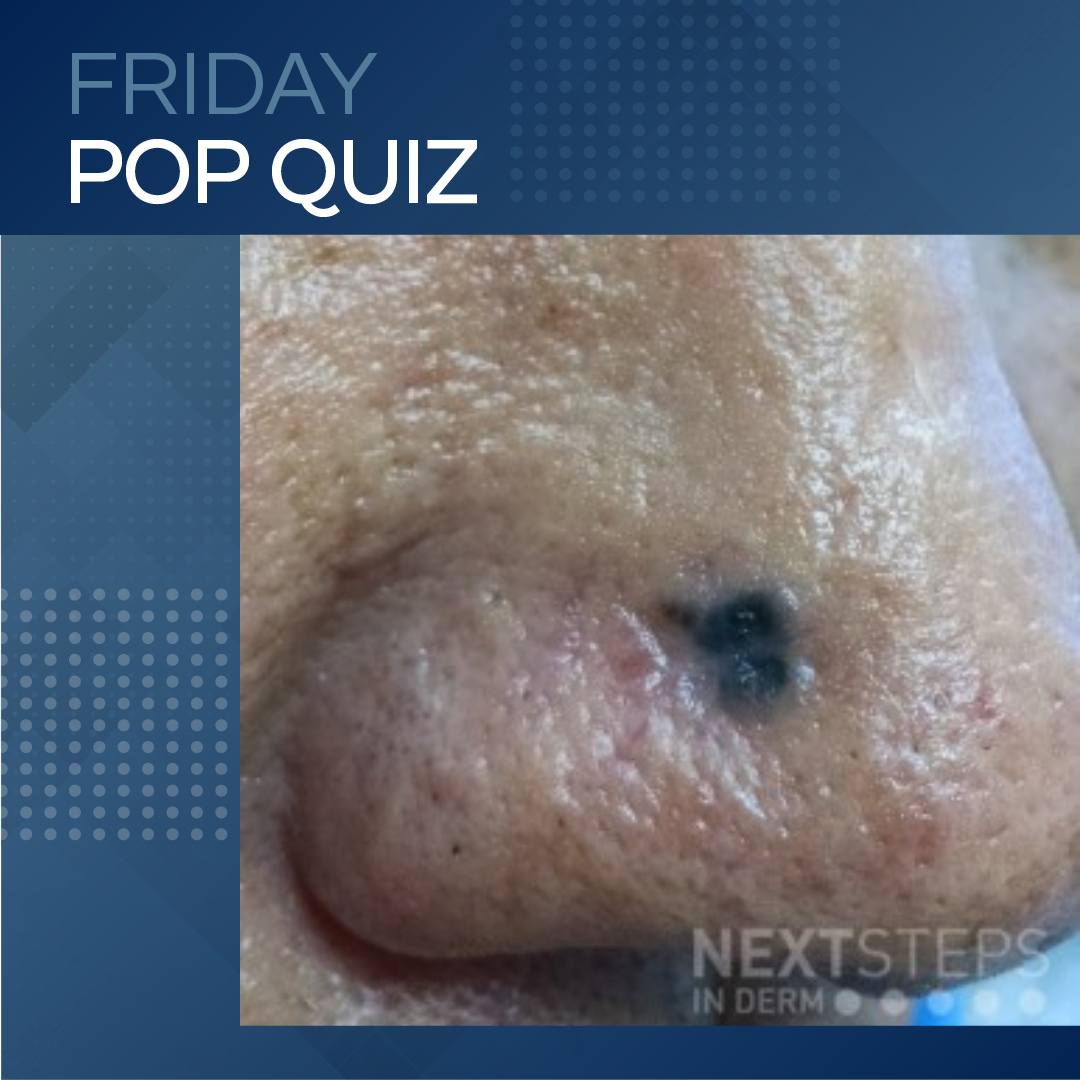 On dermoscopy, which of the following findings most strongly supports the correct diagnosis?
A. Starburst pattern
B. Blue-whitish veil
C. Maple leaf structures
D. Regression structures
E. Irregular streaks
To find out the correct answer and read the explanation, click here.
Brought to you by our brand partne …
On dermoscopy, which of the following findings most strongly supports the correct diagnosis?
A. Starburst pattern
B. Blue-whitish veil
C. Maple leaf structures
D. Regression structures
E. Irregular streaks
To find out the correct answer and read the explanation, click here.
Brought to you by our brand partne …  This month’s Journal of Drugs in Dermatology issue brings forward a diverse collection of studies spanning surgical, medical, and therapeutic dermatology. The May Editor’s Pick presents a robust cost-effectiveness analysis on placental allograft use for same-day Mohs reconstruction, offering insights from more than 2,000 patients.
Also featured are a systematic review of cyl …
This month’s Journal of Drugs in Dermatology issue brings forward a diverse collection of studies spanning surgical, medical, and therapeutic dermatology. The May Editor’s Pick presents a robust cost-effectiveness analysis on placental allograft use for same-day Mohs reconstruction, offering insights from more than 2,000 patients.
Also featured are a systematic review of cyl …