












Scarring Alopecias: Pathophysiology, Diagnostic Clues, and Medical Treatment Options
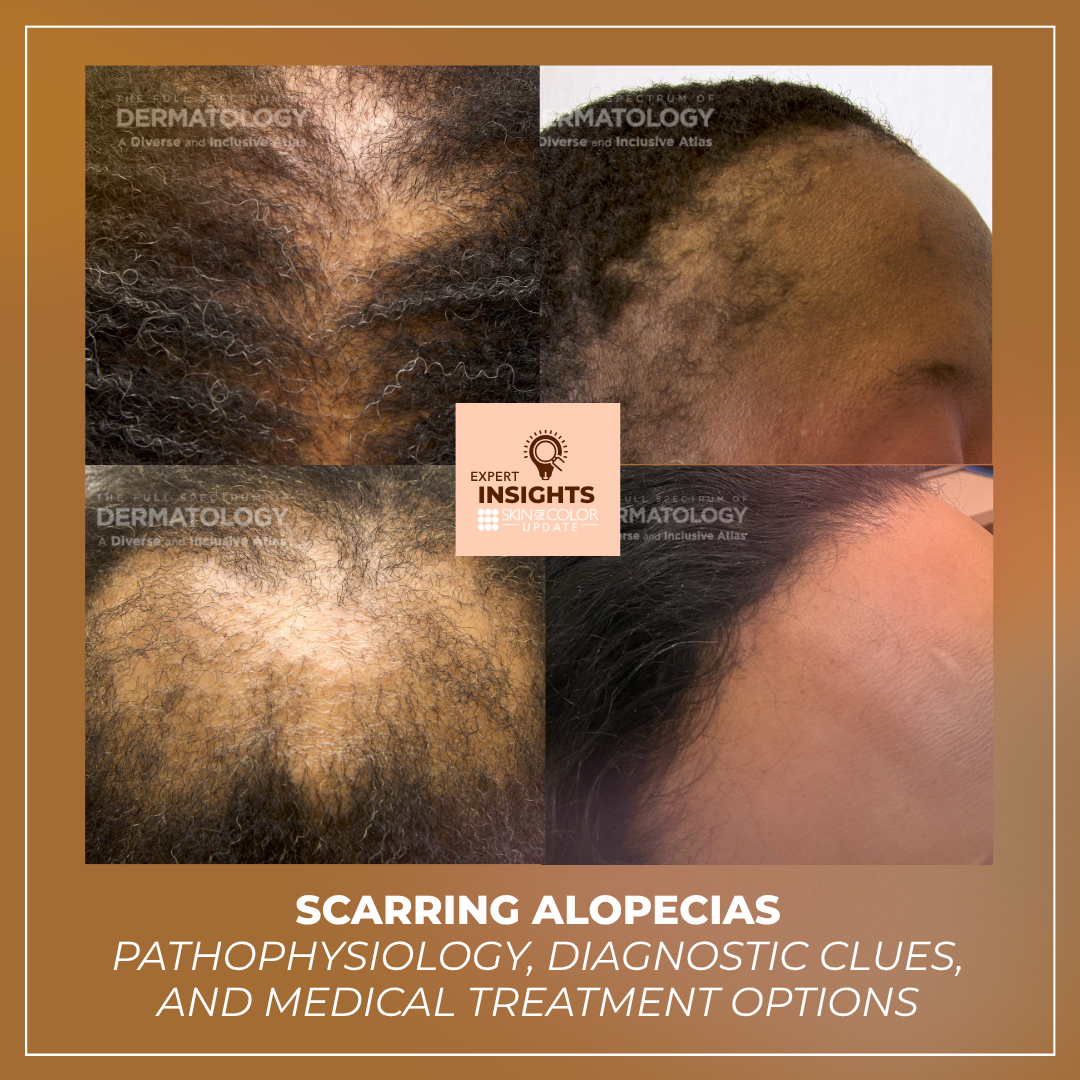 Scarring alopecias in skin of color are increasingly recognized and remain a major cause of irreversible hair loss. During the 2025 Skin of Color Update in New York City, Susan C. Taylor, MD, presented an updated clinical approach to identifying and managing lichen planopilaris (LPP), frontal fibrosing alopecia (FFA), and central centrifugal cicatricial alopecia (CCCA) with a focus on early detect …
Scarring alopecias in skin of color are increasingly recognized and remain a major cause of irreversible hair loss. During the 2025 Skin of Color Update in New York City, Susan C. Taylor, MD, presented an updated clinical approach to identifying and managing lichen planopilaris (LPP), frontal fibrosing alopecia (FFA), and central centrifugal cicatricial alopecia (CCCA) with a focus on early detect … 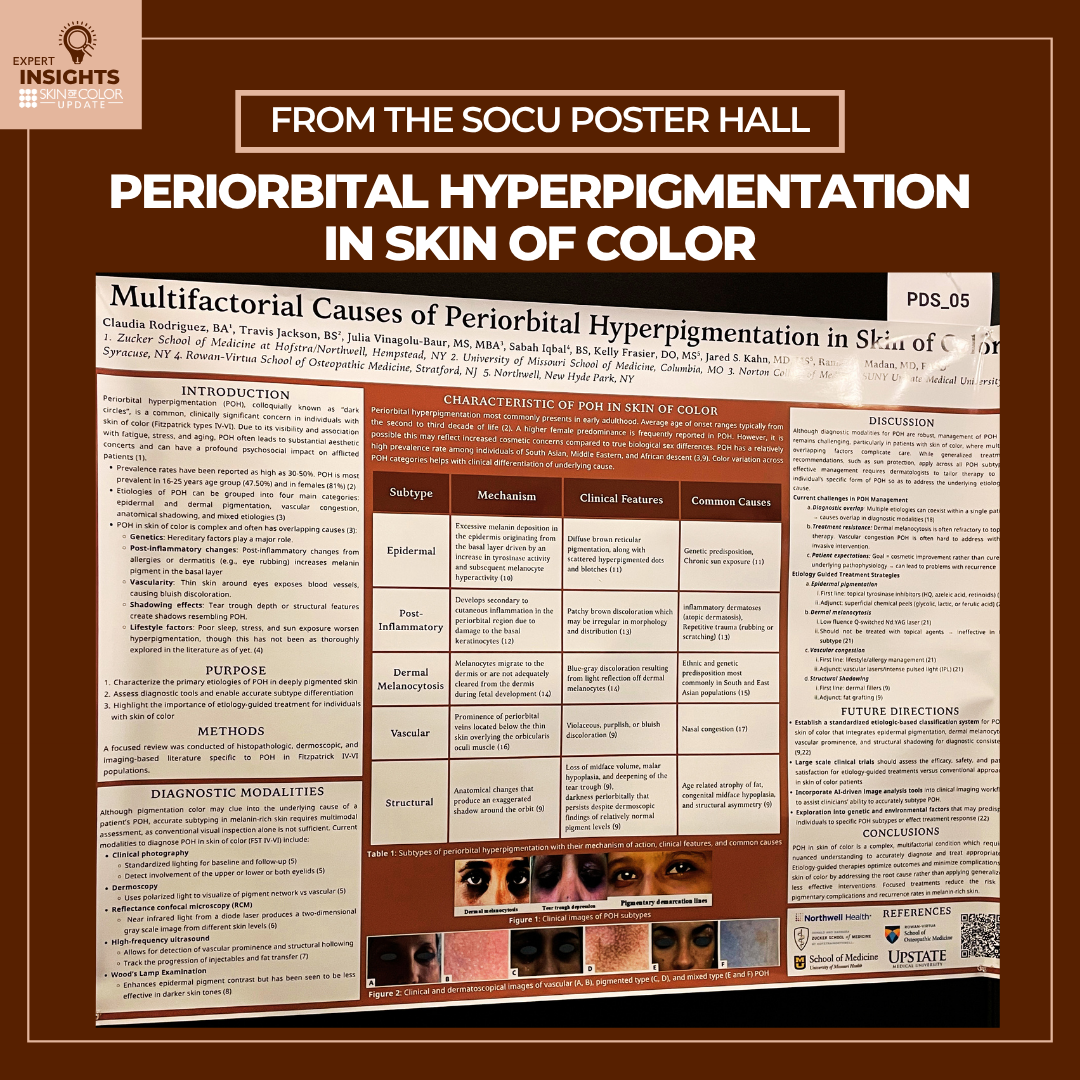 Periorbital hyperpigmentation is common in patients with skin of color, though understanding the condition – and selecting an effective treatment – can be a challenge. Darkening around the eyes can appear as brown, blue-grey, blue, violet, or purple -- all signs of the root causes -- which include extra deposits of melanin, inflammation, prominent veins, and structural changes. Periorbital hyp …
  When treating pediatric patients, knowing how to appropriately use topical steroids in this patient population is essential, according to Dr. Karan Lal, a dermatologist in Scottsdale, Ariz. Next Steps in Derm, in partnership with Skin of Color Update, interviewed Dr. Lal, who shares how to taper topical steroids and the role of non-steroidal agents. Hear the latest in the safety profile of topica …
 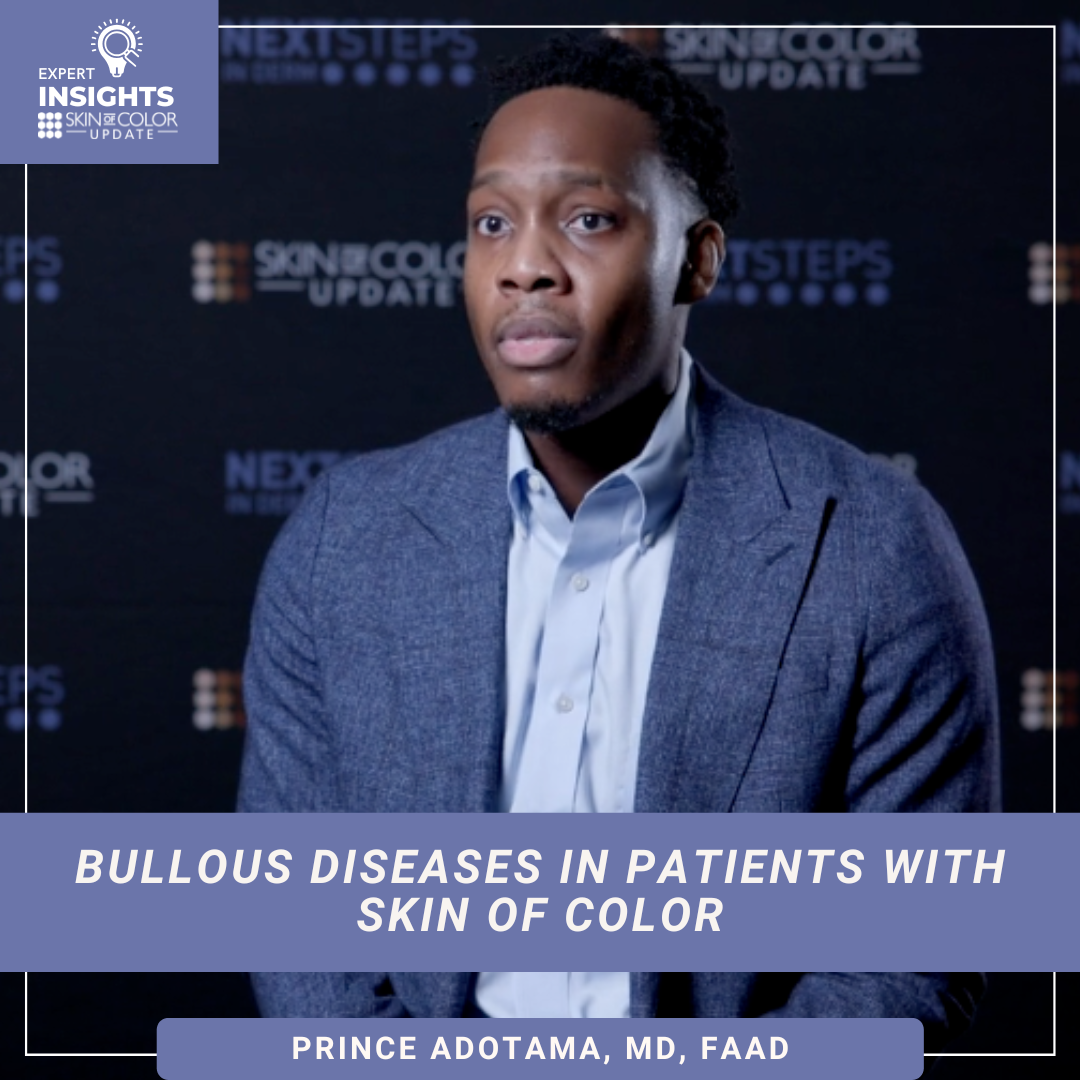 Bullous diseases, including bullous pemphigoid, may present differently in patients with darker skin tones. Next Steps in Derm, in partnership with Skin of Color Update, interviewed Dr. Prince Adotama, assistant professor at NYU Langone’s Ronald O. Perelman Department of Dermatology. Watch as Dr. Adotama outlines what clinicians need to know about bullous pemphigoid. Learn how the treatment lan …
  Hyperpigmentation often drives dermatology visits for patients with skin of color as an uneven skin tone can be distressing for patients. In fact, in cases where hyperpigmentation is a sequelae of an inflammatory skin condition, the hyperpigmentation can be more concerning for patients than the skin condition that caused it. Globally and in the U.S., this distress can lead patients to self-treat w …