












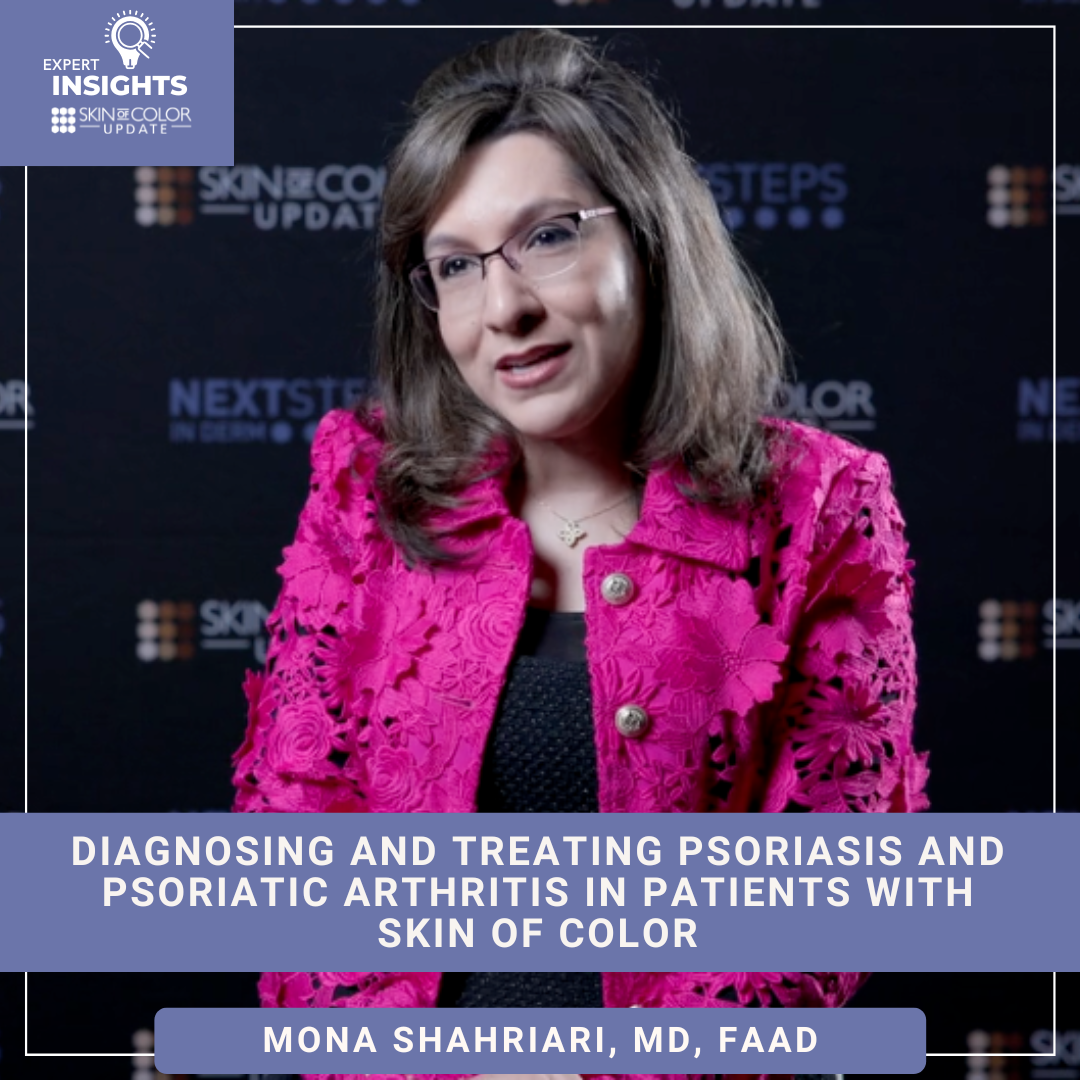
Dr. Mona Shahriari, associate clinical professor of dermatology at Yale University School of Medicine, encourages clinicians to broaden their psoriasis color palette. Next Steps in Derm, in partnership with Skin of Color Update, interviewed Dr. Shahriari, who outlined how to diagnose psoriasis in patients with darker skin tones. Learn the domains of psoriatic arthritis and how that knowledge can help reduce diagnostic and treatment delays in this patient population. Plus hear research insights on the treatment of scalp psoriasis and the impact of pigmentary sequelae on quality of life.
Further Reading
If you want to read more about psoriasis in patients with skin of color, check out the following articles published in the Journal of Drugs in Dermatology:
ABSTRACT
Background: There is a paucity of data on the treatment of psoriasis in patients with skin of color – a diverse population among whom variations in clinical features and higher quality of life impact have been reported. This single-center, open-label clinical study evaluated the safety and efficacy of secukinumab in the treatment of moderate-to-severe plaque psoriasis in adults with Fitzpatrick skin types IV-VI.
Methods: A total of 20 male and female subjects (ages 18 or older, BSA 10% or greater, PASI Score 12 or greater, IGA 3 or greater) completed this study. The total study duration was 28 weeks. During the treatment period, subjects received secukinumab 300 mg subcutaneously at weeks 0, 1, 2, 3, and 4, then monthly through week 20.
Results: 73% of patients achieved at least 90% improvement in PASI score (PASI90) at week 16 compared to baseline (P=0.0592). There was a statistically significant proportion of patients achieving PASI75, IGA of clear or almost clear, and a change from baseline in DLQI total score at weeks 12, 16, and 24. A statistically significant reduction in IGAxBSA-75 score was achieved between week 16 and baseline.
Limitations: The sample size was small and underpowered to detect statistically significant changes in some endpoints. Furthermore, the study period was interrupted by the COVID-19 pandemic, which contributed to numerous missing data points.
Conclusion: Secukinumab 300 mg administered monthly was safe, well-tolerated, and efficacious in treating skin of color patients with psoriasis and improving health-related quality of life. Larger studies involving skin of color populations with psoriasis are warranted.
Racial Disparities in Primary Therapy for Newly Diagnosed Psoriasis Patients
ABSTRACT
Psoriasis treatments have been shown to vary by race, but racial differences in initial psoriasis treatment has not been adequately studied.1,2 Our objectives were to compare the initial prescription treatments received by different racial groups and examine trends over time.
Did you enjoy this video interview? Find more here.