












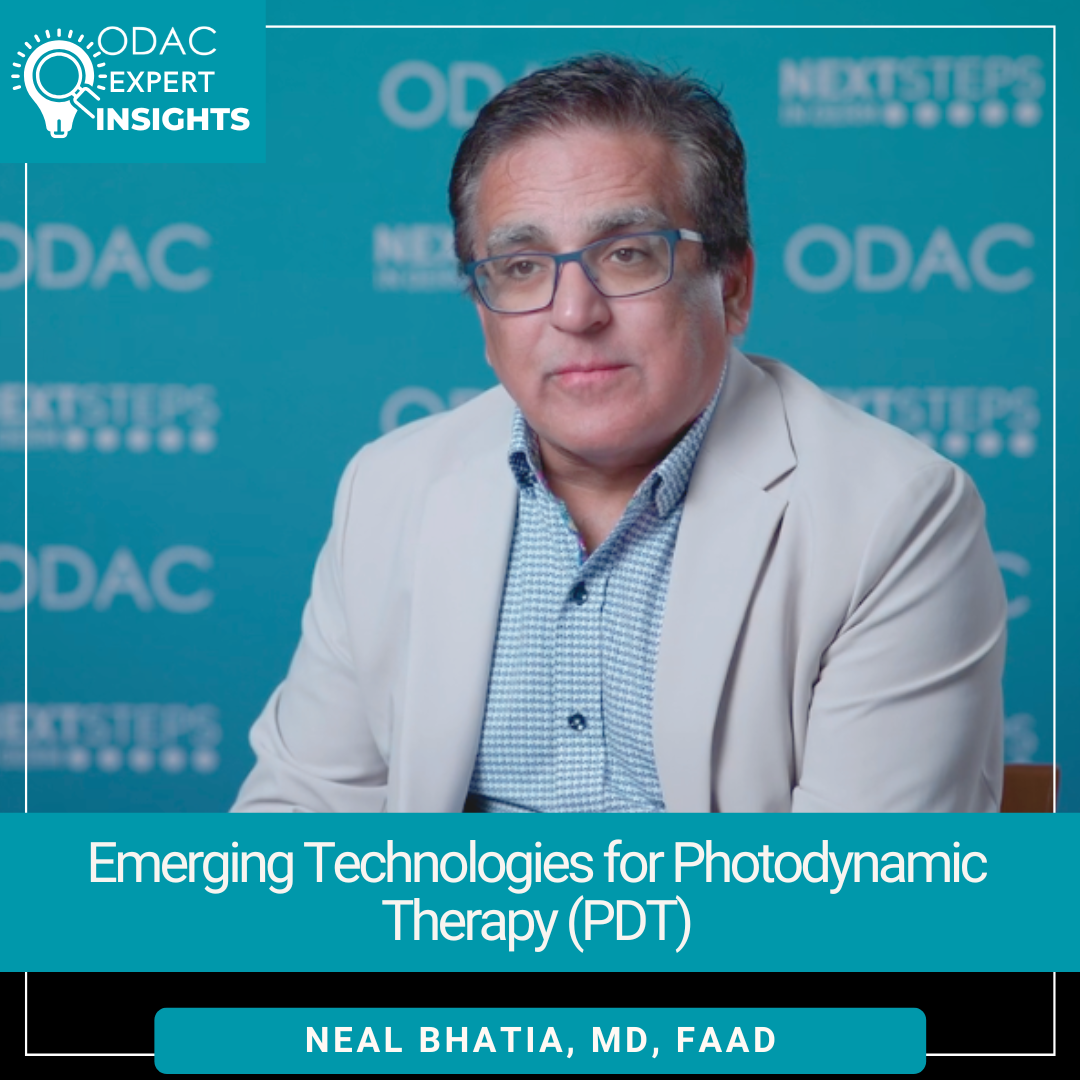
A photodynamic therapy revolution (PDT) is upon us, according to San Diego dermatologist Neal Bhatia, MD, FAAD. In an interview with Next Steps in Derm, in partnership with the ODAC Dermatology Conference, Dr. Bhatia outlines new PDT devices that are on the market and their benefits for both the clinician and patient. Watch as Dr. Bhatia shares his advice for an efficient and effective PDT scheduling sequence. Hear his perspective on how long aminolevulinic acid (ALA) should sit on the skin before light therapy begins. Still not on team PDT? Dr. Bhatia says recent updates should encourage you to reconsider.
Further Reading
If you want to read more about photodynamic therapy, check out the following articles published in the Journal of Drugs in Dermatology:
ABSTRACT
Actinic keratosis is a prevalent skin condition associated with prolonged exposure to ultraviolet radiation and serves as a precursor to squamous cell carcinoma. This condition arises from DNA mutations and abnormal cell growth triggered by ultraviolet rays. While uncertainties persist regarding the progression rate of actinic keratosis (AK) to squamous cell carcinoma, the significance of nonmelanoma skin cancers underscores the need for safe, efficient, cost-effective, and accessible treatment options. Factors such as number of lesions, skin type, and sun exposure increase the risk of progression into squamous cell carcinoma. Available therapeutics include cryosurgery, topical medications, laser ablation, field ablative treatments, and photodynamic therapy (PDT). PDT has emerged as a frontline choice for addressing widespread damage, demonstrating its effectiveness in impeding the carcinogenic progression of actinic keratosis. PDT utilizes topical photosensitizers such as 5-aminolevulinic acid or methyl aminolevulinate, followed by an incubation period and subsequent exposure to either red or blue light. Both light sources exhibit similar efficacy in treating actinic keratosis and are likely to possess distinct advantages and disadvantages. Conventional PDT presents the challenge of causing significant pain and inflammation. In contrast, ‘painless’ PDT minimizes incubation time and extends light exposure, showing similar efficacy and improved patient comfort. Insights into pain management during photodynamic therapy reveal a correlation to protoporphyrin IX tissue accumulation. Limiting the incubation time has demonstrated a decrease in protoporphyrin IX accumulation, thus reducing pain. Further research through larger trials is imperative to establish standardized protocols and validate the potential of ‘painless’ PDT in reducing patient discomfort during AK treatment while preserving effectiveness.
ABSTRACT
Photosensitization with 5-aminolevulinic acid (ALA) combined with photodynamic therapy (PDT) is approved in the United States for the treatment of actinic keratosis (AK) and is used off-label for other indications including acne treatment and photo rejuvenation. However, pain, particularly during the initial illumination period, limits the utility of this highly efficacious therapy. Although modifications to conventional ALA-PDT protocols that improve tolerability without diminishing efficacy have been identified, few have been evaluated in randomized, controlled trials, and the number of variables involved in ALA incubation (eg, duration, occlusion, ALA formulation, and strength) and PDT illumination (eg, light source, fluence rate, irradiance, and duration) confounds standardization.
Perhaps the most promising modifications to date involve continuous activation of low levels of protoporphyrin IX, the photoactive metabolite of ALA, as well as using shorter incubation times (with or without prolongation of illumination), lower irradiance, and daylight or combined (daylight and conventional) PDT. However, reimbursement of PDT with alternative light sources in the US is hampered by the US Food and Drug Administration (FDA) labeling, which specifies the blue or red light devices approved for use with corresponding marketed ALA 20% solution and 10% gel, respectively. This review summarizes the existing evidence with respect to pain control in patients undergoing ALA-PDT, recommendations from clinical experience, and goals for future research.
Did you enjoy this video interview? Find more here.