












Hypochlorous Acid for a Persistent Filler Nodule: A Case Report
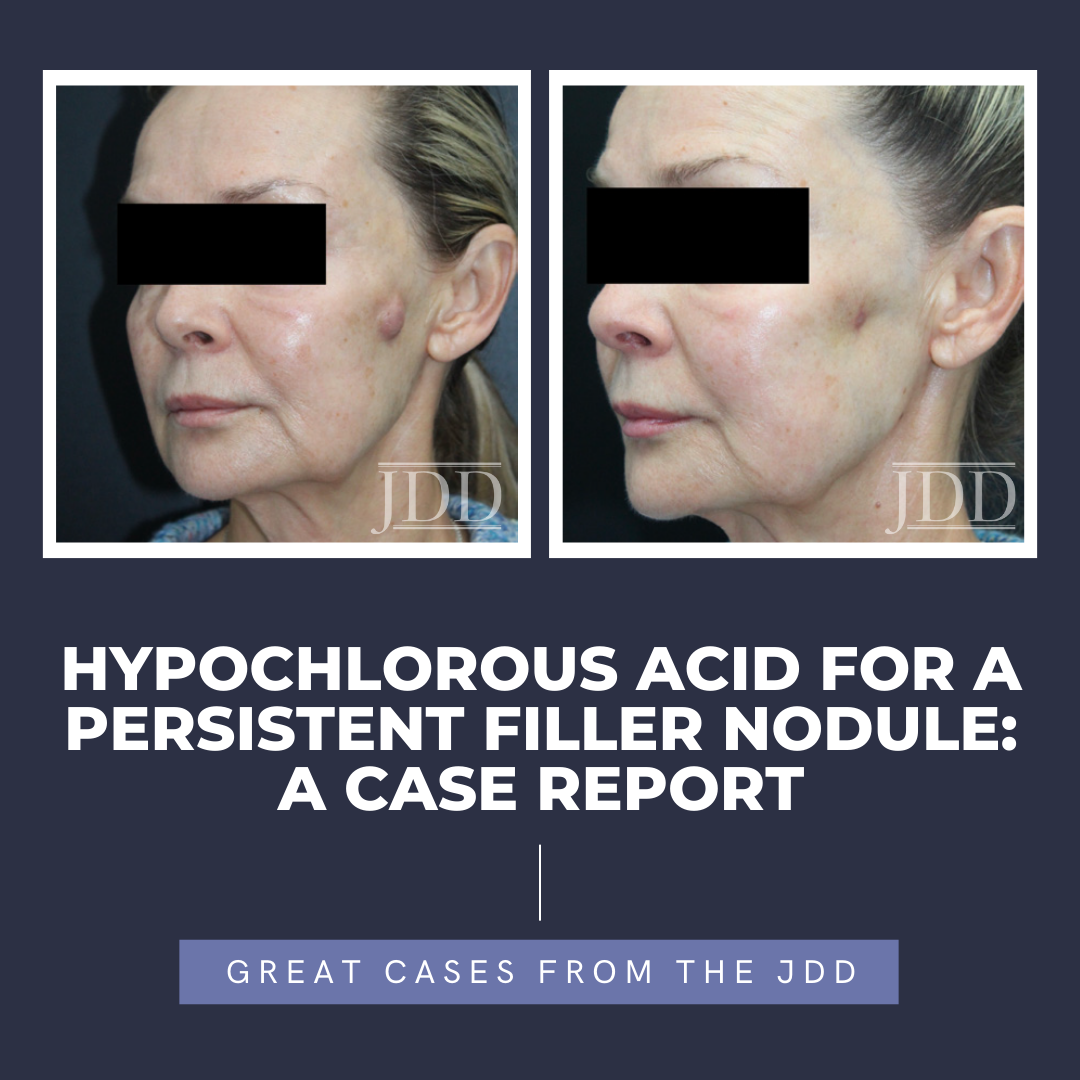 Hyaluronic acid (HA) fillers are widely used in aesthetic medicine for facial rejuvenation, volumization, and wrinkle treatment. Noninflammatory nodules after HA filler injection are a relatively common phenomenon and a result of poor technique or a large volume bolus in one area.¹ Unlike these nodules, delayed-onset nodules (DON) occur in 0.5% of injections and can be inflammatory, granulomatou …
Hyaluronic acid (HA) fillers are widely used in aesthetic medicine for facial rejuvenation, volumization, and wrinkle treatment. Noninflammatory nodules after HA filler injection are a relatively common phenomenon and a result of poor technique or a large volume bolus in one area.¹ Unlike these nodules, delayed-onset nodules (DON) occur in 0.5% of injections and can be inflammatory, granulomatou … Continue reading "Hypochlorous Acid for a Persistent Filler Nodule: A Case Report"
 Hair loss can carry significant psychosocial consequences, especially when hair is significant to a person’s spirituality and community. Among head-covering women, alopecia may lead to substantial emotional distress. Many also delay or avoid dermatologic evaluation because clinical encounters can feel exposing or disrespectful. As a result, head-covering women with hair loss are frequently under …
  Women's Health/AOL and Marie Claire have recently written articles on oils and juices to treat hair loss. Moringa oil is lauded for its ability to nourish the scalp and protect against hair breakage. Rosemary oil is noted for its ability to increase blood flow to the scalp, while fans of onion juice say it improves scalp health. Is there any value to adding these oils and juices to a hair loss …
  My dermatology training has prepared me well clinically, surgically, and academically. Yet, as I started thinking about what comes next, I felt confused and anxious. There wasn’t a decision tree or a Bolognia chart to help me through the uncertainty of how to actually find my first job; instead, this transition from residency to attendinghood felt like a complete unknown. Many people from my p …
 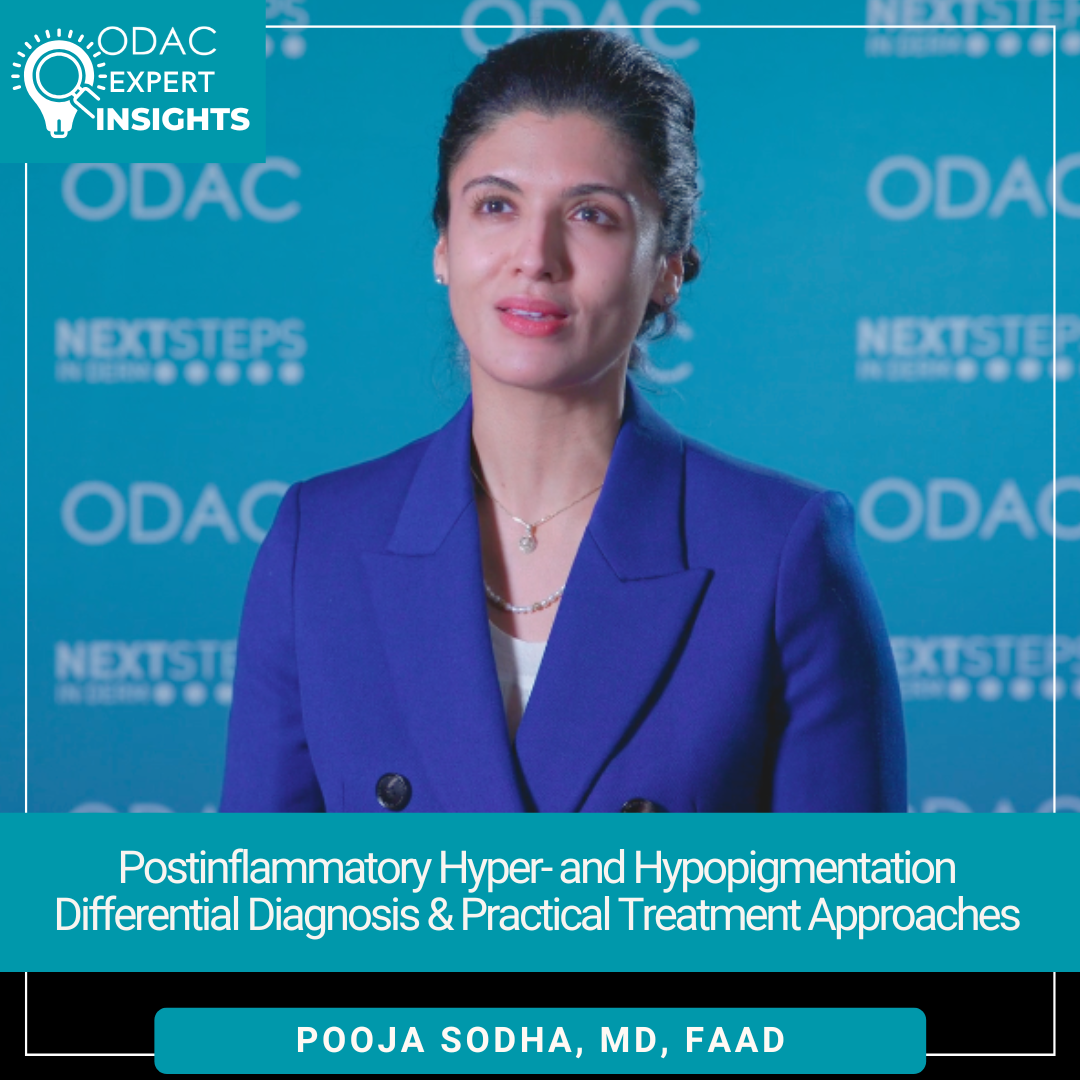 Post-inflammatory hyperpigmentation and hypopigmentation can be tricky to treat. Next Steps in Derm, in partnership with the ODAC Dermatology Conference, interviewed Dr. Pooja Sodha, associate professor of dermatology at GW School of Medicine & Health Sciences. Watch as Dr. Sodha outlines her strategies for treating post-inflammatory hyperpigmentation (PIH) and hypopigmentation. Learn why it� …