












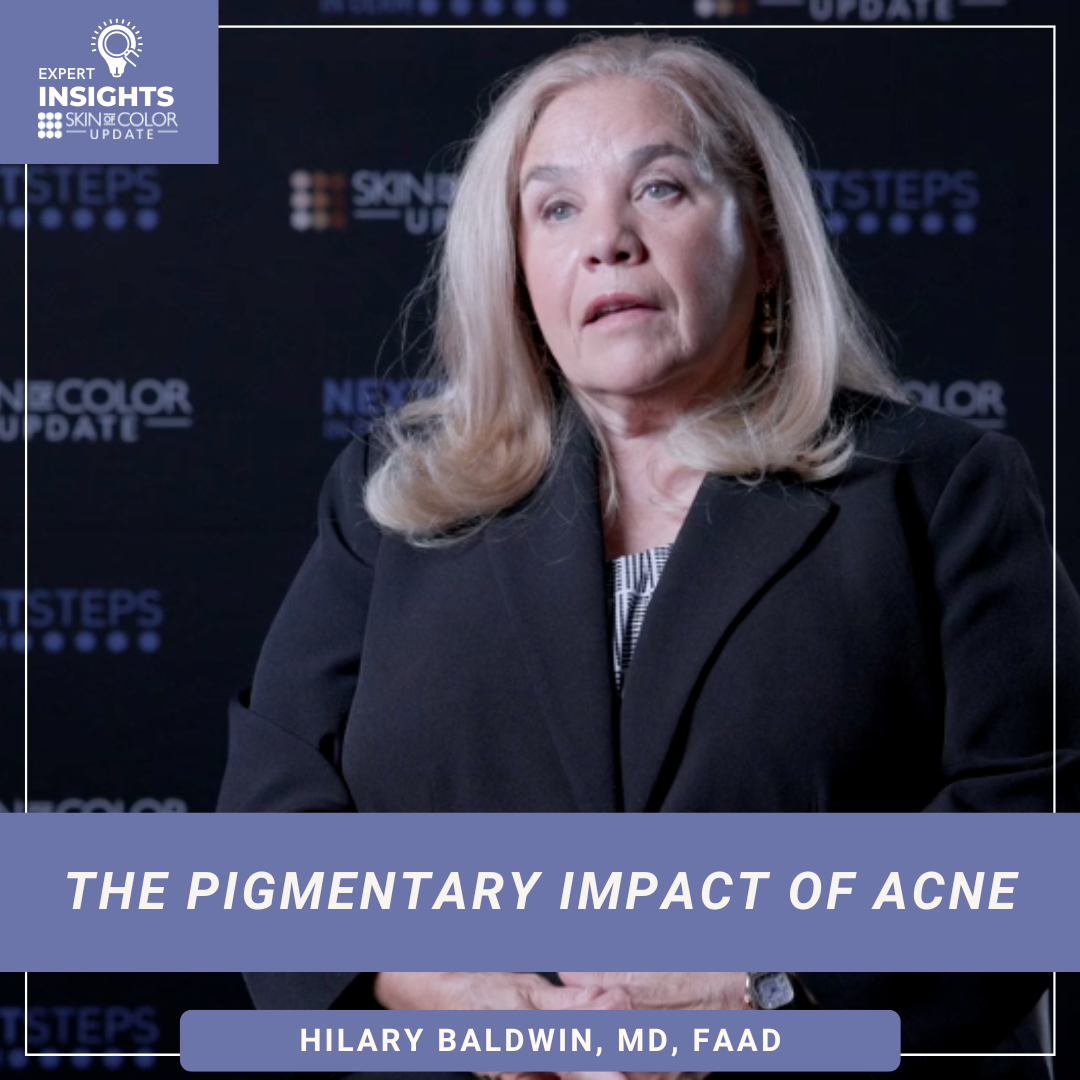
Pigmentary sequelae from acne flares can be more distressing to patients than acne itself, according to Brooklyn, N.Y., dermatologist Dr. Hilary Baldwin. Next Steps in Derm, in partnership with Skin of Color Update, interviewed Dr. Baldwin, who shares how her treatment approach has changed over the years. Find out if dermatology clinicians should take an acne-first approach or treat hyperpigmentation and acne simultaneously. Learn why Dr. Baldwin says “scars” isn’t accurate nomenclature for some of the skin changes from acne. And hear how Dr. Baldwin incorporates new over-the-counter topicals into a patient’s skincare routine that can address pigmentary alterations.
Further Reading on New Innovations in Acne-Induced Hyperpigmentation Treatment
If you want to read more about acne’s pigmentary impact, check out the following articles published in the Journal of Drugs in Dermatology:
ABSTRACT
Acne-induced macular hyperpigmentation (AMH) is a common issue among patients with highly melanated skin, particularly those with Fitzpatrick Skin Types (FST) V – VI, which includes nonwhite patients with ‘brown’ and ‘black’ skin types. Despite the significant physical, emotional, and social harm caused by AMH, many clinical trials either fail to report FST data or do not include patients with FST V to VI. This scoping review summarizes current research on AMH treatment for patients with FST V to VI. Our review underscores the need for more data on the efficacy, safety, and tolerability of AMH treatments for patients with FST V to VI. Dermatologists who treat AMH should routinely collect data on patient FST, race, and ethnicity. Clinical trials should enroll more patients with FST V to VI from diverse racial and ethnic backgrounds to generate data that better informs clinical practice. This approach will ensure that treatment strategies are based on data relevant to the patient populations most in need of effective AMH care.
Thiamidol: A Breakthrough Innovation in the Treatment of Hyperpigmentation
ABSTRACT
Cutaneous hyperpigmentation, including melasma, solar lentigines, and post-inflammatory hyperpigmentation (PIH), results in a significant impact on patients’ quality of life. Unfortunately, many currently available over-the-counter (OTC) options have been limited by efficacy, safety, and tolerability concerns. Additionally, limited patient awareness and education on disease manifestation and root causes of hyperpigmentation often leave patients undiagnosed and untreated. Melanogenesis is driven by a complex pathway resulting in the ultimate production and deposition of melanin in the skin. The major rate-limiting step of melanogenesis centers on the conversion of L-Dopa to the final melanin product mediated by a cellular tyrosinase, causing the overproduction of melanin clinically resulting in hyperpigmentation. Recently, isobutylamido thiazolyl resorcinol (Thiamidol) has been identified as the most effective inhibitor of human tyrosinase out of 50,000 compounds screened, and thus, a novel ingredient for inclusion in OTC products to address hyperpigmentation. We describe here the current pre-clinical and clinical safety and efficacy data of Thiamidol formulations aimed at educating the dermatology community on a safe and effective OTC option for use as part of the overall management of hyperpigmentation in patients.
Did you enjoy this video interview? Find more here.