












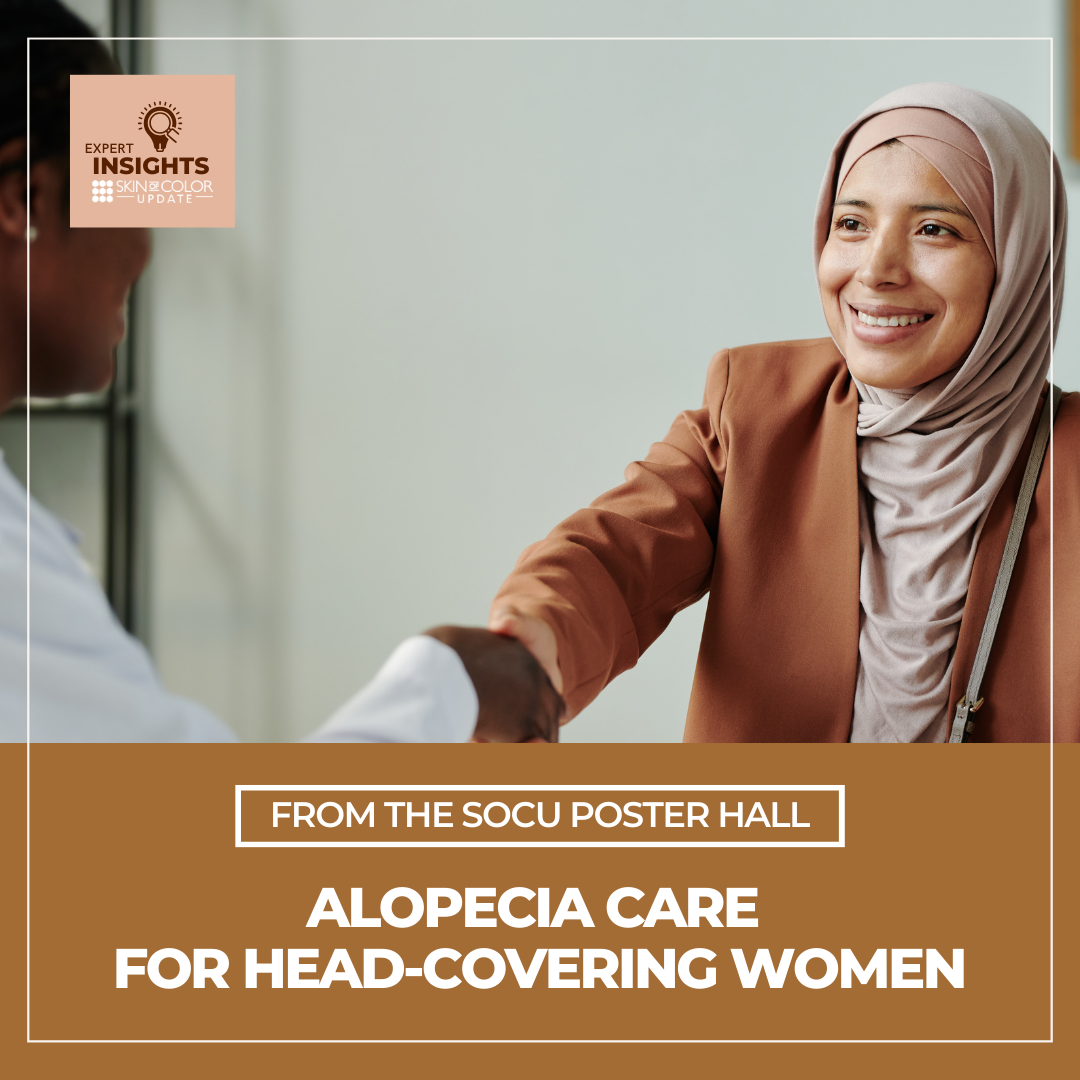
Hair loss can carry significant psychosocial consequences, especially when hair is significant to a person’s spirituality and community. Among head-covering women, alopecia may lead to substantial emotional distress. Many also delay or avoid dermatologic evaluation because clinical encounters can feel exposing or disrespectful. As a result, head-covering women with hair loss are frequently underdiagnosed and may develop mistrust toward dermatology providers, leading to fragmented or inconsistent care.
A poster presented at Skin of Color Update shared a comprehensive understanding of what these patients experience and what changes dermatology clinicians can make to provide culturally sensitive care. I interviewed the poster’s presenting author, Alex Silberzweig, BA, of the Donald and Barbara Zucker School of Medicine at Hofstra/Northwell.
What led you to explore the lived experience of alopecia patients who are head-covering women?
I chose to explore the lived experience of head-covering women with alopecia because their voices are underrepresented in dermatologic literature, even though they have distinct psychosocial and clinical needs.
For women in communities where hair is tied to modesty, identity, or spiritual practice, alopecia carries consequences that differ significantly from other patients. Head-covering may mask visible loss in public, but it often heightens private distress, complicates disclosure, and introduces unique barriers to seeking medical care, such as a reluctance to uncover hair or discomfort with photography. I found that understanding these experiences would be essential for designing care models that acknowledge both medical and religious dimensions of hair loss.
What are some of the religious and cultural contexts that influence the experience of head-covering women who seek alopecia care?
Head-covering women often observe traditions in which hair is spiritually charged. The concealment of hair reflects modesty, humility, and personal covenant. For example, in Orthodox Jewish culture, wigs or scarves symbolize marital status and religious observance. Likewise, Muslim women may cover their hair as an expression of faith and modesty, while some Christian and Rastafarian women cover their hair as a sign of reverence or cultural identity. As such, removing a head covering in front of a clinician may feel emotionally and spiritually significant. These contexts also affect comfort with male clinicians, clinical photography, and examinations conducted without full privacy. As a result, their pathways to care often differ from those of women who do not wear head coverings.
One might think that hair loss would not cause as much of a burden in groups where the hair loss is not as noticeable due to head-covering practices. What do previous studies show about this assumption?
Although it is sometimes assumed that head coverings reduce the psychosocial impact of alopecia because they cover hair loss, studies consistently show otherwise. Qualitative research consistently demonstrates that hair loss can be more distressing for head-covering women because hair carries spiritual, marital, and communal significance. Several studies report that women experience intense private grief, fear of judgment from their community or spouse, and anxiety about unveiling their hair to clinicians. Head coverings may limit how visible hair loss is to others, but they do not ease, and may even intensify, the emotional, spiritual, and social impact of alopecia.
You conducted a comprehensive review. What data did you include, and what were you looking for?
For this review, we gathered data from qualitative interviews, ethnographic work, patient testimonials, survey studies, and dermatology literature focusing on alopecia in communities where hair has religious or cultural meaning. I looked specifically for evidence describing how women interpret hair loss within their traditions, what challenges they face during clinical encounters, and how their values shape decisions about diagnosis and treatment. I also extracted information on practical barriers, such as discomfort uncovering hair before male clinicians, lack of private exam spaces, and reluctance toward photography, as well as proposed solutions.
What did your review reveal?
Our review showed that alopecia in head-covering women is not just a medical issue but a deeply personal, cultural, and spiritual experience. In the communities we studied, there was an evident psychosocial and emotional burden that persisted even when hair loss was hidden from public view. The review also revealed consistent barriers to care, including challenges with modesty during exams, discomfort with male providers, and concerns around scalp photography or diagnostic procedures. At the same time, the literature offered practical solutions, such as female examiners, private rooms, wig- and hijab-compatible management strategies, and culturally aware communication, that can make dermatology settings more welcoming and effective.
What are some of the deterrents to seeking alopecia care in this population?
Women in head-covering communities often describe several obstacles that make it difficult to pursue alopecia care. Many worry about having to remove their head covering in front of male providers or non-essential staff. Others note that exam rooms lack adequate privacy or that clinic photography feels invasive without clear consent. Some fear stigma within their community or feel that clinicians don’t appreciate the religious and emotional significance of their hair. As a result, they may postpone appointments, and decline recommended follow-up.
What can dermatology clinicians improve to provide more compassionate and respectful alopecia care in these patients?
Dermatology clinicians can improve care for head-covering women by adopting practices that explicitly respect modesty norms and the spiritual significance of hair. This includes offering same-gender examiners whenever possible, ensuring fully private exam spaces, and asking permission before removing head coverings or taking photographs. Clinicians should also communicate clearly about each step of the exam, minimize the number of people present in the room, and document patient preferences for future visits. At the systems level, training staff in culturally responsive communication can help create predictable, respectful experiences. These interventions build trust, reduce delays in care, and support a more compassionate approach to alopecia management.
Is there anything else dermatology clinicians should know about alopecia care in head-covering women?
Clinicians should understand that alopecia in head-covering women often carries emotional and spiritual meaning that may not be immediately visible during the encounter. Hair loss can affect marital dynamics, religious identity, and participation in community life, even when hidden beneath a covering. Many women also worry about being misunderstood or having their needs for modesty dismissed, which can impact the clinician-patient relationship. Recognizing these broader contexts, and inviting patients to share any cultural or religious considerations relevant to their care, can help clinicians deliver treatment plans that are both clinically appropriate and personally meaningful.
Additional authors of the poster include:
Kelly Frasier, DO, MS, Northwell
Alexander T. Velaoras, BS, Drexel University College of Medicine
Rachel Aronov, BS, Zucker School of Medicine at Hofstra/Northwell
Julia Vinagolu-Baur, MS, MBA, Norton College of Medicine, SUNY Upstate Medical University
Jared S. Kahn, MD, MS, Northwell
Sarah Ahmed, MD, Northwell