












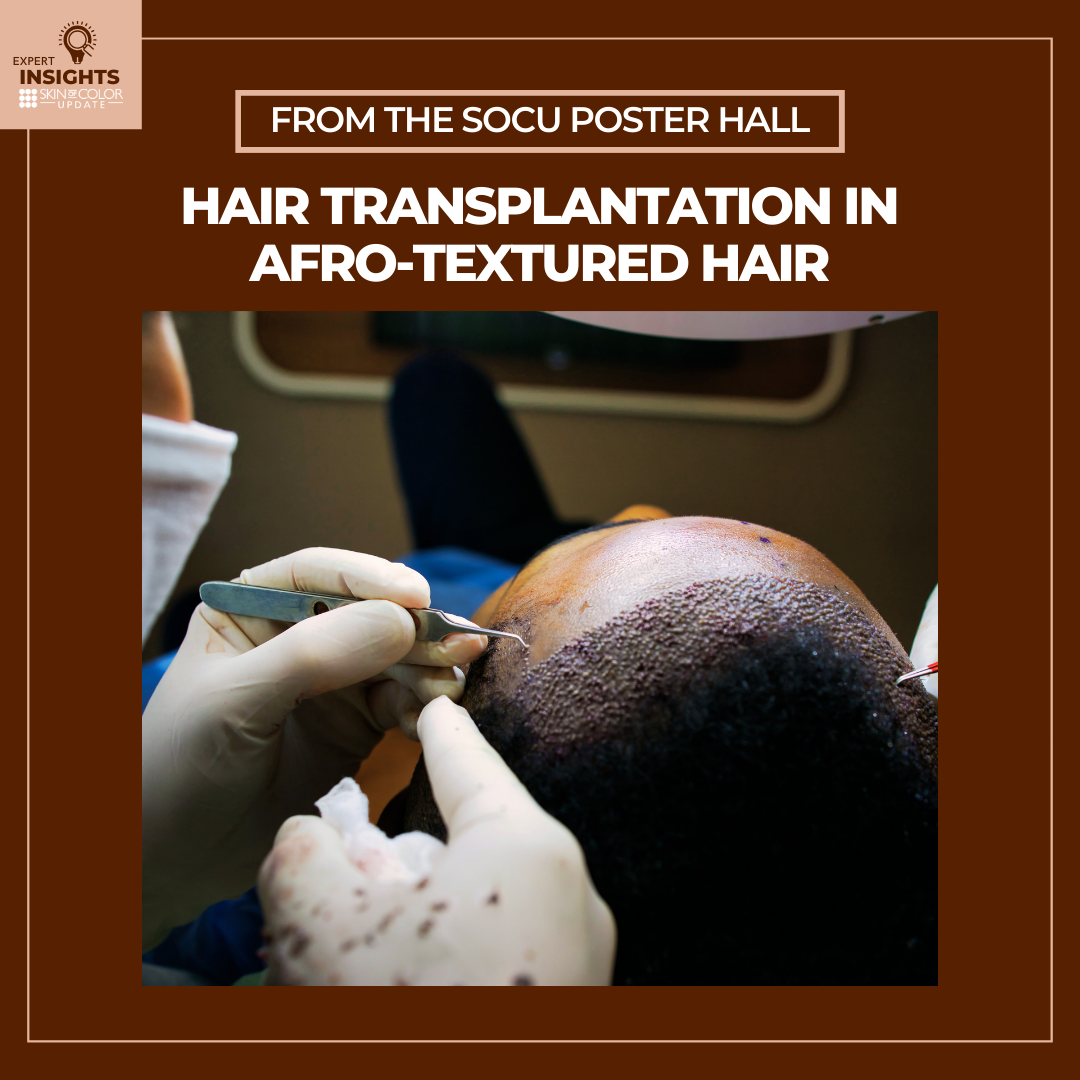
Hair transplantation is becoming a more popular means of addressing hair loss. Social media is fueling the trend with an increase in women, men, and young adults seeking hair transplantation. Among people with afro-textured hair, rising alopecia rates are driving more interest in surgical restoration, though the approach is not without concern. Afro-textured hair tends to grow more slowly compared with other hair types. In addition, styling practices used too soon after hair transplantation may destroy newly grafted hair and cause additional hair loss.
A poster presented at Skin of Color Update outlines available research on hair transplantation in patients with afro-textured hair and shares recommended guidelines for care both before and after transplantation. I interviewed the poster’s lead author, Rachel Lubinga, DO, of the Boston Medical Center Department of Family Medicine/BUMC.
What led you to investigate whether there are hair transplantation educational guidelines for patients with afro-textured hair?
Amongst people of African descent there has been a rise in patients seeking medical attention and guidance for hair loss within the United States and around the world. Hair transplantation being at the forefront as an option that many patients consider. The responsibility for hair transplantation education is therefore left to the physician’s discretion. There was a notable absence of a standardized approach that is particularly relevant for individuals with skin of color, due to the unique nature of their hair structure and the historical difference in hair care and styling practices. This further emphasizes the subjective nature of transplantation pre- and post-care, underscoring the need for personalized guidance and a tailored approach in the management of hair care practices for these individuals.
What are some unique attributes about afro-textured hair that both contribute to hair loss and can also make transplantation after-care more challenging?
Within the United States, there has been a gradual increase in hair loss (alopecia) affecting communities of color. For some individuals their alopecia diagnosis was strongly correlated to hair care practices and styling while for others it is connected to genetic predisposition or a combination which can make it difficult for the physician to possibly pinpoint the true etiology of their patient’s hair loss. Either way hair loss can be extremely devastating to the individual, their families, and how society views them. Amongst patients of African descent, traction alopecia, chemical alopecia, and central centrifugal cicatricial alopecia (CCCA) are some of the most common dermatologic scalp and hair conditions that patients come to the dermatologist for a consultation. Hair care practices and styling play a role and make an overall impact on the degree of hair loss leading some patients to pursue a hair transplant. Practices among individuals with afro-textured hair include protective styles like cornrows, braids, and wigs. Additionally, the common use of straighteners and hair relaxers for time-saving purposes poses increased risk.
One of the most common challenges with transplantation aftercare is patients getting adequate education to prevent recurrent hair loss after the procedure specifically with hair styling practices. Patients may return to high risk hair styling practices that can cause loss of newly grafted hair, increase risk of developing scarring alopecia, or worsen hair loss compared to prior to the procedure.
How did you conduct your review, and what were your findings? Did your findings surprise you?
We conducted a literature review using both PubMed and Google Scholar platforms focusing on afro-textured hair loss, transplant candidacy, aftercare, and management from 1990–present. We found that there were no formal guidelines regarding hair transplant pre- and post-care and management for afro-textured hair individuals. As a team we wanted to provide clinical and practical recommendations by skin of color providers who care for patients experiencing hair loss and perform transplantation procedures.
What is the current state of hair transplantation in patients with afro-textured hair? Is the procedure underutilized or overutilized?
With the advancement of technology and gradual increase in skin of color hair transplant providers, there has been an increase of patients seeking care in the United States instead of abroad for their hair loss care and management. This is beneficial for continuity of care. Given high demand and popularity of the procedure, it has been considered to be overutilized when it comes to patients being considered but are unsuitable candidates, providing unrealistic hair regrowth expectations, and excessive grafting that can lead to poor outcomes. If patients receive through assessment and evaluation, the procedure is not overutilized.
Are patients with afro-textured hair receiving transplantation care that is not appropriate for the unique qualities of this type of hair?
Patients with afro-textured hair are not necessarily getting inappropriate care after transplantation but moreover lack of education on how to care and manage hair after transplantation procedure. A tailored approach emphasizing safe styling, avoidance of damaging practices, and patient engagement in hair maintenance is essential to optimize outcomes and prevent poor surgical results.
What are your proposed recommendations for hair transplant providers when treating patients with afro-textured hair?
Pre- Hair Transplantation Recommendations
-
- Discuss hair diagnosis and transplantation technique options
- Discuss hair/scalp coverage during post procedural healing and early hair growth
- Plan long-term hair styling options that avoids tension and potential future hair loss
- If patient has a diagnosis of a scarring alopecia, they need a medication regimen pre-and post- transplantation
- Collaborate with patient + hairstylist to create a hair routine
Post- Hair transplantation Recommendations
-
- Advise waiting 2 – 4 weeks after transplantation procedure before incorporating any afro-hair texture styling
- Emphasize safe wig use (avoid tightness, lace glue, direct friction)
- Advised to consider headband wigs
- Wearing satin/silk caps under wig
- Avoid relaxers/harsh chemicals on healing scalp
- Educate on cultural hair practices + cosmetic risks
Is there anything else dermatology clinicians should know about hair transplantation in patients with afro-textured hair?
It is imperative for the dermatologic provider to emphasize the role of the patients’ participation to help facilitate follicular growth, hair maintenance, longevity, and avoidance of damaging hair care and styling methods to prevent the loss of hair re-growth and poor surgical outcomes.
Additional authors of the poster include:
Chinenye Onejeme, MD, University of Texas Medical Branch Department of Internal Medicine
Achiamah Osei-Tutu, MD, Osei-Tutu Dermatology & Hair Restoration
Did you enjoy this article? Find more on Skin of Color Dermatology here.