



















The Burden of Long-Standing UV-Radiation Exposure: Treatment Options for AKs and NMSC
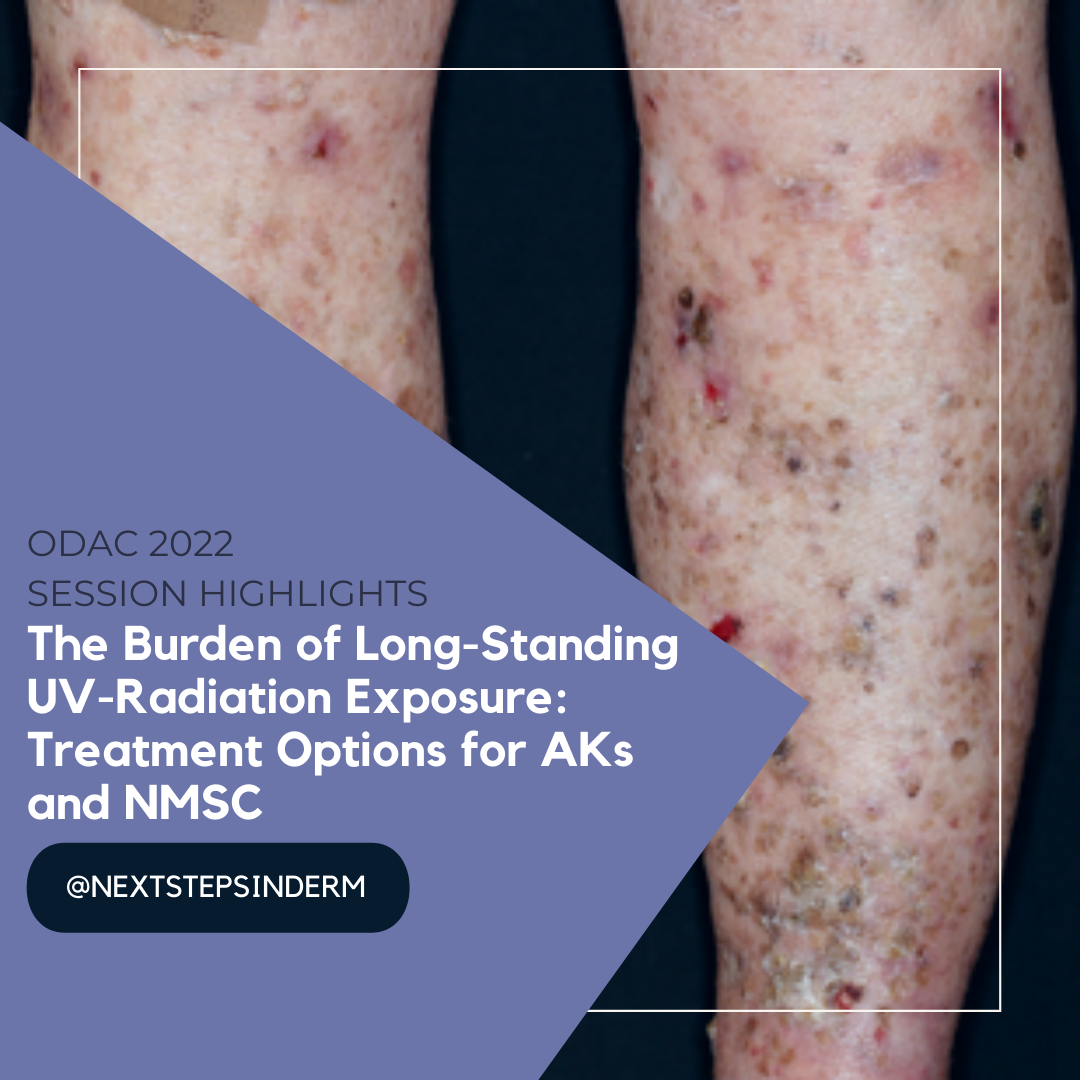 The numbers are staggering when it comes to the management of skin cancer in the United States and worldwide. Signs of chronic exposure to ultraviolet (UV) rays from the sun and/or indoor tanning bed use include solar lentigines, hyperpigmentation, wrinkles and pre-cancerous lesions called actinic keratoses. Actinic Keratoses (AKs) best identified as scaly, pink macules and papules, result from lo …
The numbers are staggering when it comes to the management of skin cancer in the United States and worldwide. Signs of chronic exposure to ultraviolet (UV) rays from the sun and/or indoor tanning bed use include solar lentigines, hyperpigmentation, wrinkles and pre-cancerous lesions called actinic keratoses. Actinic Keratoses (AKs) best identified as scaly, pink macules and papules, result from lo … 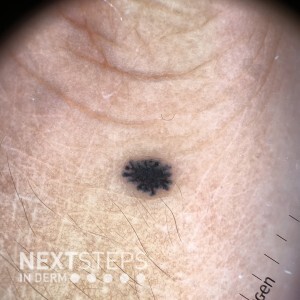 The dermoscopic findings depicted in this image are most consistent with what diagnosis?
A. Epidermal nevus
B. Spitz nevus
C. Melanoma
D. Lentigo
E. Ephelide
To find out the correct answer and read the explanation, click here.
Brought to you by our brand partner Derm In-Review. A product of SanovaWorks.
…
The dermoscopic findings depicted in this image are most consistent with what diagnosis?
A. Epidermal nevus
B. Spitz nevus
C. Melanoma
D. Lentigo
E. Ephelide
To find out the correct answer and read the explanation, click here.
Brought to you by our brand partner Derm In-Review. A product of SanovaWorks.
… 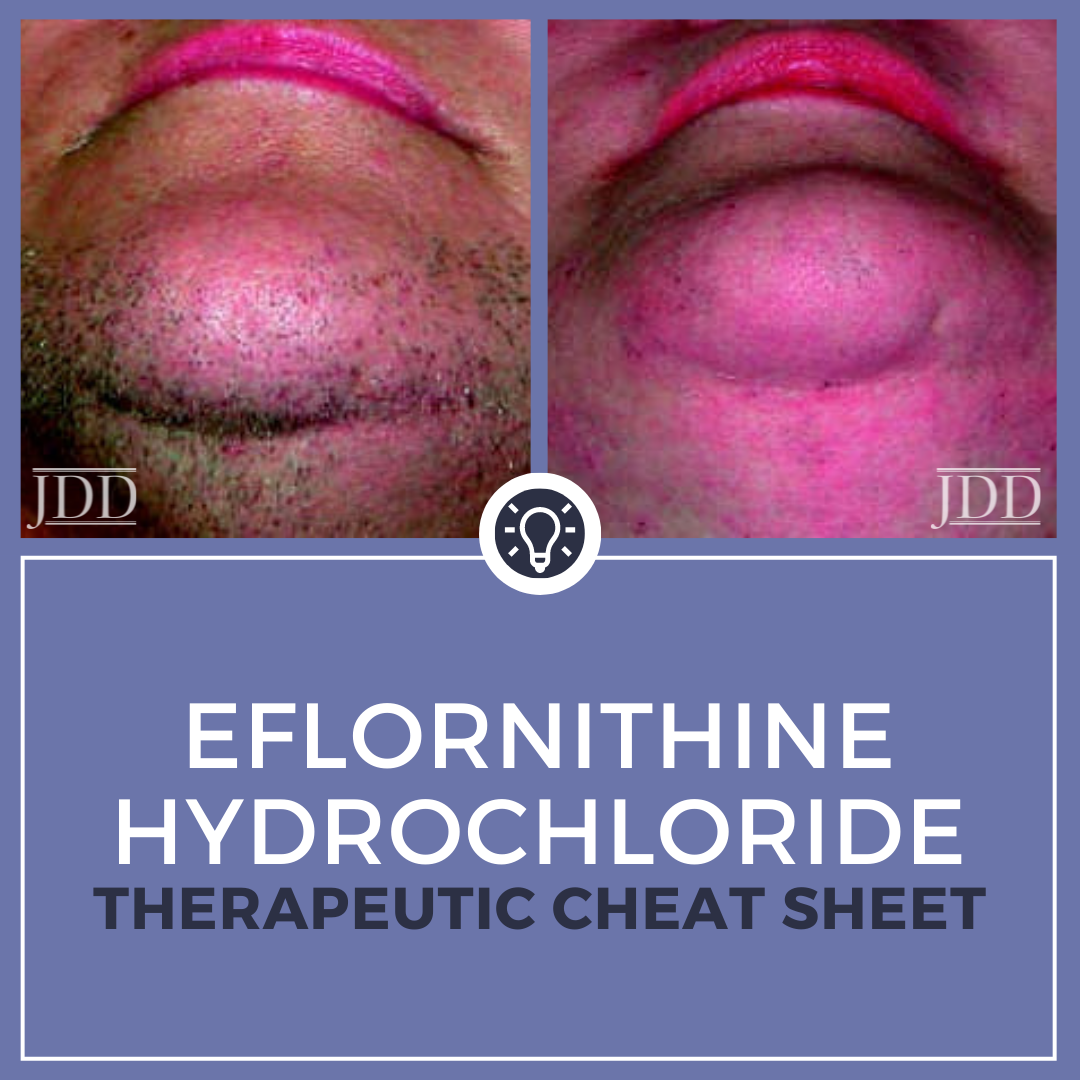 Millions of patients experience unwanted facial hair, severely impacting their quality of life. Laser hair removal is often the treatment of choice, but this therapy is uncomfortable, requires multiple treatments, and risks pigmentary changes. Therefore, an effective topical therapy for reduction of unwanted hair is a valuable addition to our therapeutic repertoire. We continue our series, Therape …
  NEW YORK, Jan. 25, 2022 /PRNewswire/ -- WebMD Health Corp., an Internet Brands company and a leader in health information services for physicians, other healthcare professionals and consumers, today announced that it has acquired SanovaWorks, a global multiplatform company focused on delivering targeted educational offerings and learning solutions for dermatologists.
Sanovaworks hosts leading …
NEW YORK, Jan. 25, 2022 /PRNewswire/ -- WebMD Health Corp., an Internet Brands company and a leader in health information services for physicians, other healthcare professionals and consumers, today announced that it has acquired SanovaWorks, a global multiplatform company focused on delivering targeted educational offerings and learning solutions for dermatologists.
Sanovaworks hosts leading … 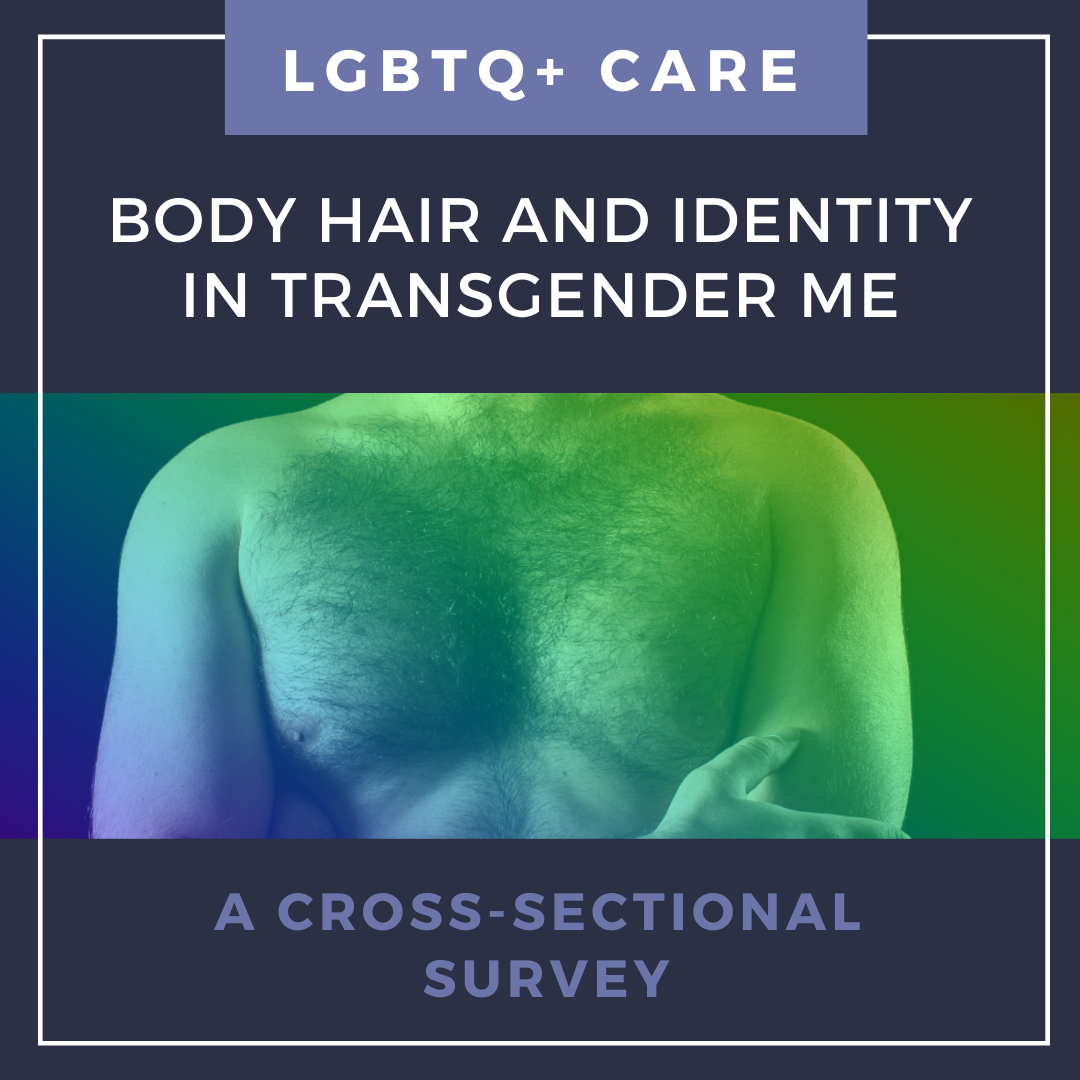 Transgender and gender diverse people can experience increased depression, anxiety, suicidal ideation, and suicide from gender dysphoria (GD).1 GD occurs due to a discrepancy between a person’s gender identity, assigned gender, and physical characteristics.2 Gender affirming medical care, including dermatologic care, can increase body-gender congruence and decrease negative outcomes associ …