












Pediatric Hair Loss: Nuances in Clinical Presentation
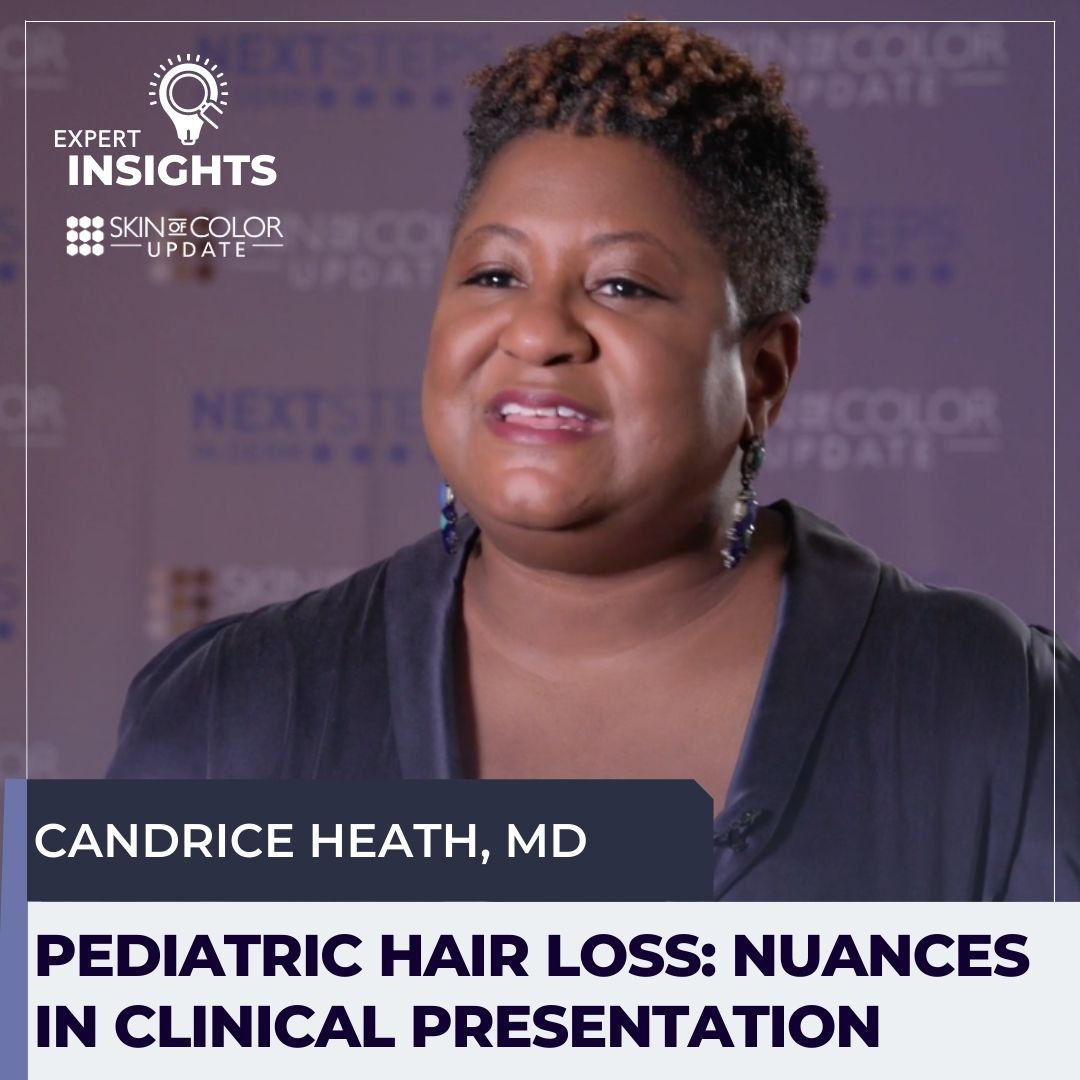 Next Steps in Derm, in partnership with Skin of Color Update, interviewed Dr. Candrice Heath, assistant professor of dermatology at the Lewis Katz School of Medicine at Temple University. Every dermatology clinician should know some very specific things about hair loss, according to Dr. Heath, including that children can present with adult hair conditions. Watch as Dr. Heath outlines three condit …
Next Steps in Derm, in partnership with Skin of Color Update, interviewed Dr. Candrice Heath, assistant professor of dermatology at the Lewis Katz School of Medicine at Temple University. Every dermatology clinician should know some very specific things about hair loss, according to Dr. Heath, including that children can present with adult hair conditions. Watch as Dr. Heath outlines three condit … Continue reading "Pediatric Hair Loss: Nuances in Clinical Presentation"
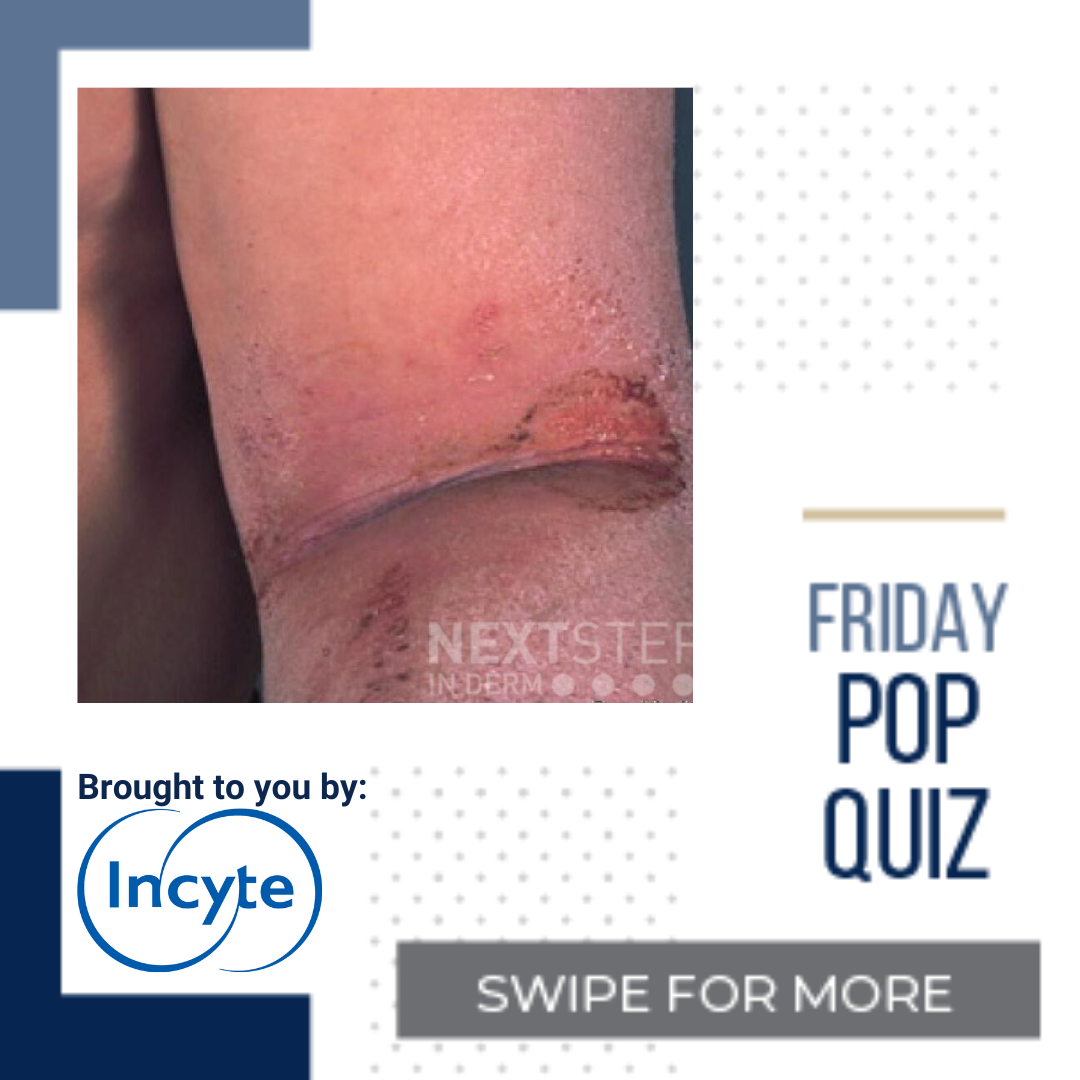 A 13-year-old girl is brought to the office because she has had the pruritic rash shown for the past 11 months. Her parents say none of the small tubes of moisturizers provided relief, including hydrocortisone 1%, which they applied for 4 days with minimal improvement. Daily bathing and petrolatum application are performed at home. Her medical history is unremarkable except for a peanut allergy, …
 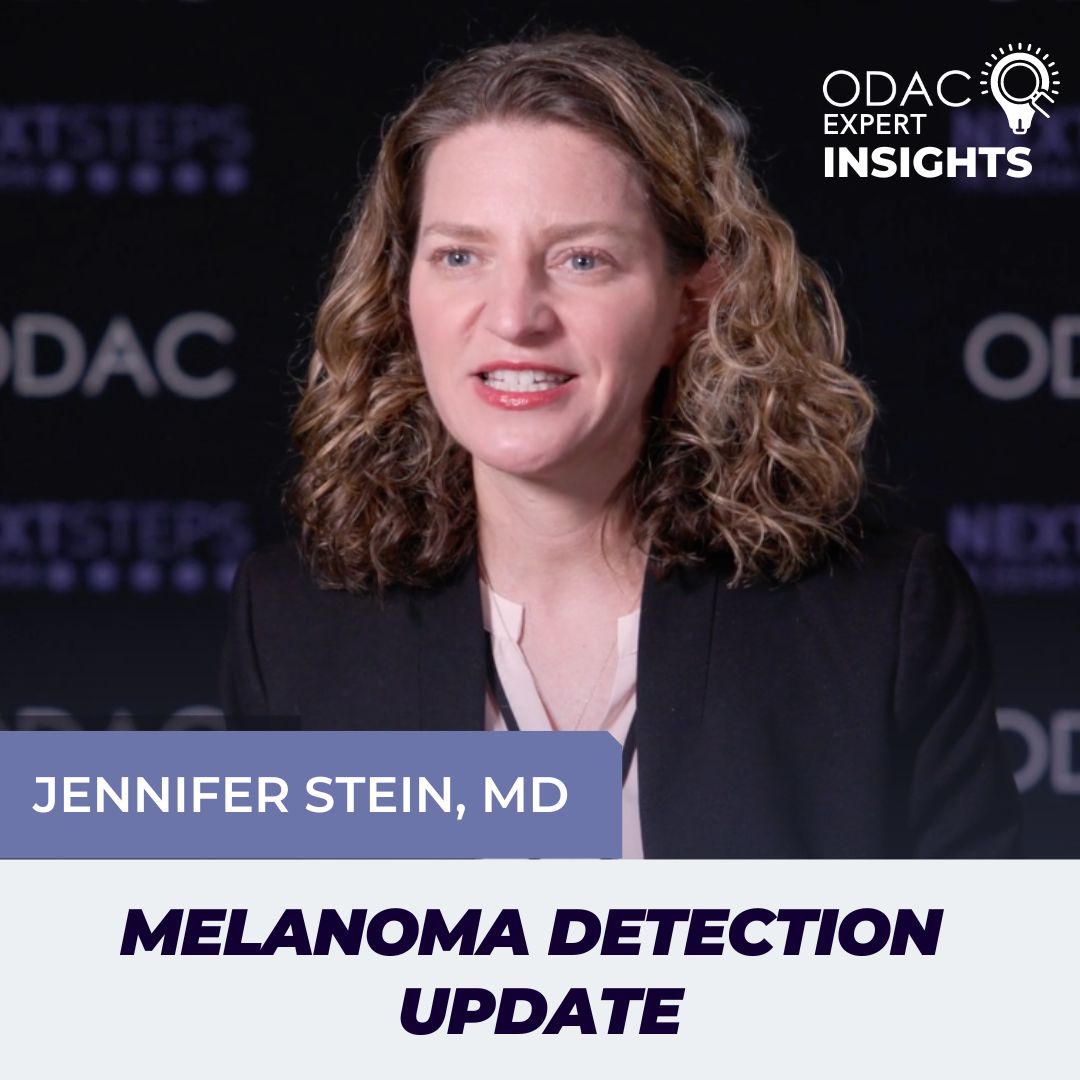 Next Steps in Derm, in partnership with ODAC Dermatology, Aesthetic & Surgical Conference, interviewed Dr. Jennifer Stein, professor of dermatology at the Ronald O. Perelman Department of Dermatology at NYU Grossman School of Medicine. While there are new techniques to detect melanoma, Dr. Stein says some of the best techniques are actually old techniques that are reliable and useful. Watch a …
  At the 2023 ODAC Dermatology, Aesthetic & Surgical Conference, we were lucky to learn about the management of vitiligo from the renowned researcher and clinician, Dr. John Harris, Professor and Chair of Dermatology at the University of Massachusetts. When a new patient with vitiligo presents to my clinic, I always pull out my phone to consult Dr. Harris’ treatment protocol – I am sure I …
 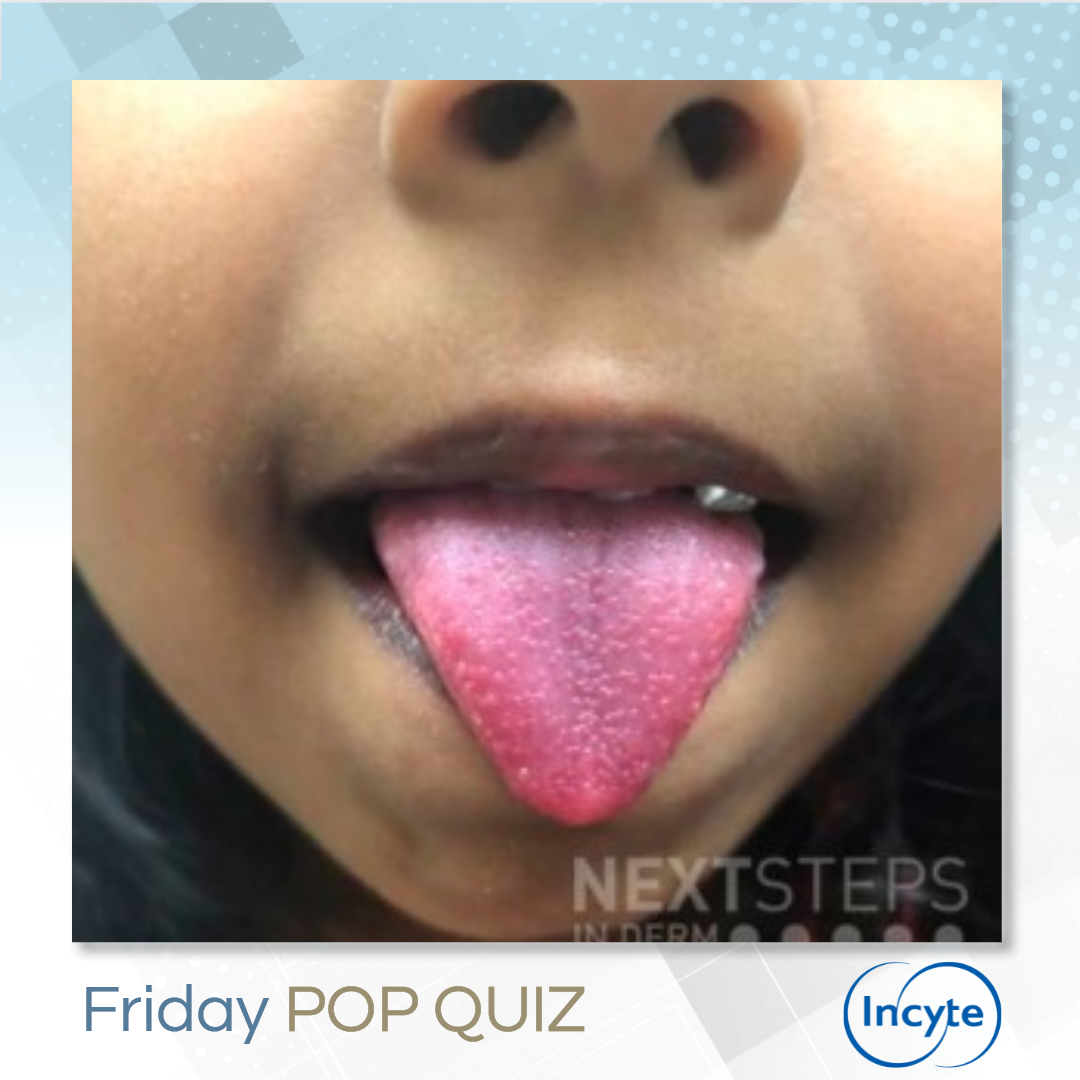 A 6-year-old girl is taken to the emergency department by her parents for a fever, which the patient has had for a 5 day duration. She has bilateral bulbar conjunctival injection without exudate, edema of the feet, and no lymphadenopathy. Her skin exam reveals scattered, dusky erythematous macules and patches, many of which were targetoid, on the torso and extremities. She also has the picture …