












Abrocitinib Therapeutic Cheat Sheet
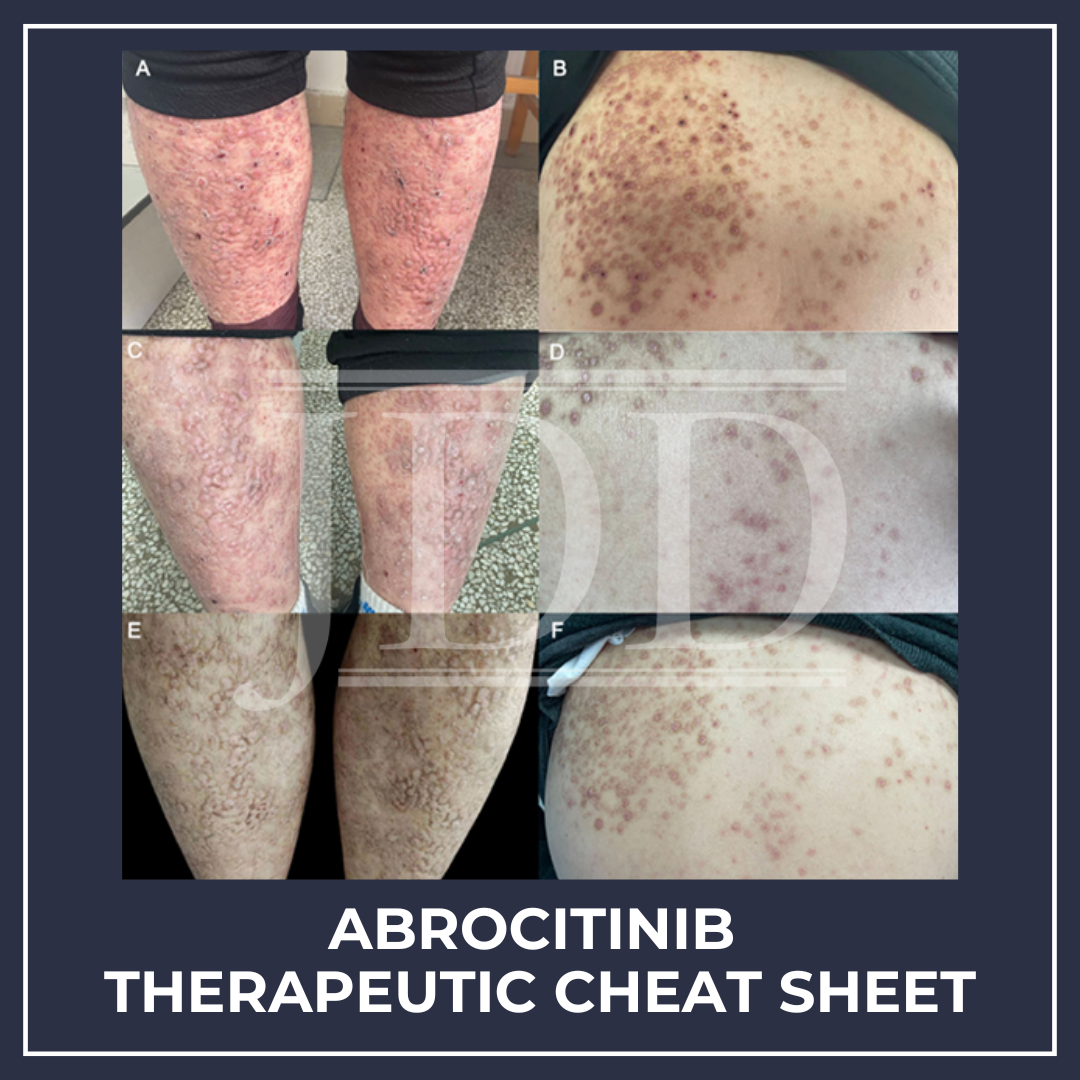 Abrocitinib is an oral, once-daily selective Janus kinase 1 (JAK1) inhibitor approved for moderate-to-severe atopic dermatitis. It can provide rapid improvement in pruritus and skin disease and is a useful treatment option for many patients. As an oral medication, it may also be preferred by patients who want to avoid injections. When prescribing abrocitinib, it is important to discuss laboratory …
Abrocitinib is an oral, once-daily selective Janus kinase 1 (JAK1) inhibitor approved for moderate-to-severe atopic dermatitis. It can provide rapid improvement in pruritus and skin disease and is a useful treatment option for many patients. As an oral medication, it may also be preferred by patients who want to avoid injections. When prescribing abrocitinib, it is important to discuss laboratory …  When treating pediatric patients, knowing how to appropriately use topical steroids in this patient population is essential, according to Dr. Karan Lal, a dermatologist in Scottsdale, Ariz. Next Steps in Derm, in partnership with Skin of Color Update, interviewed Dr. Lal, who shares how to taper topical steroids and the role of non-steroidal agents. Hear the latest in the safety profile of topica …
 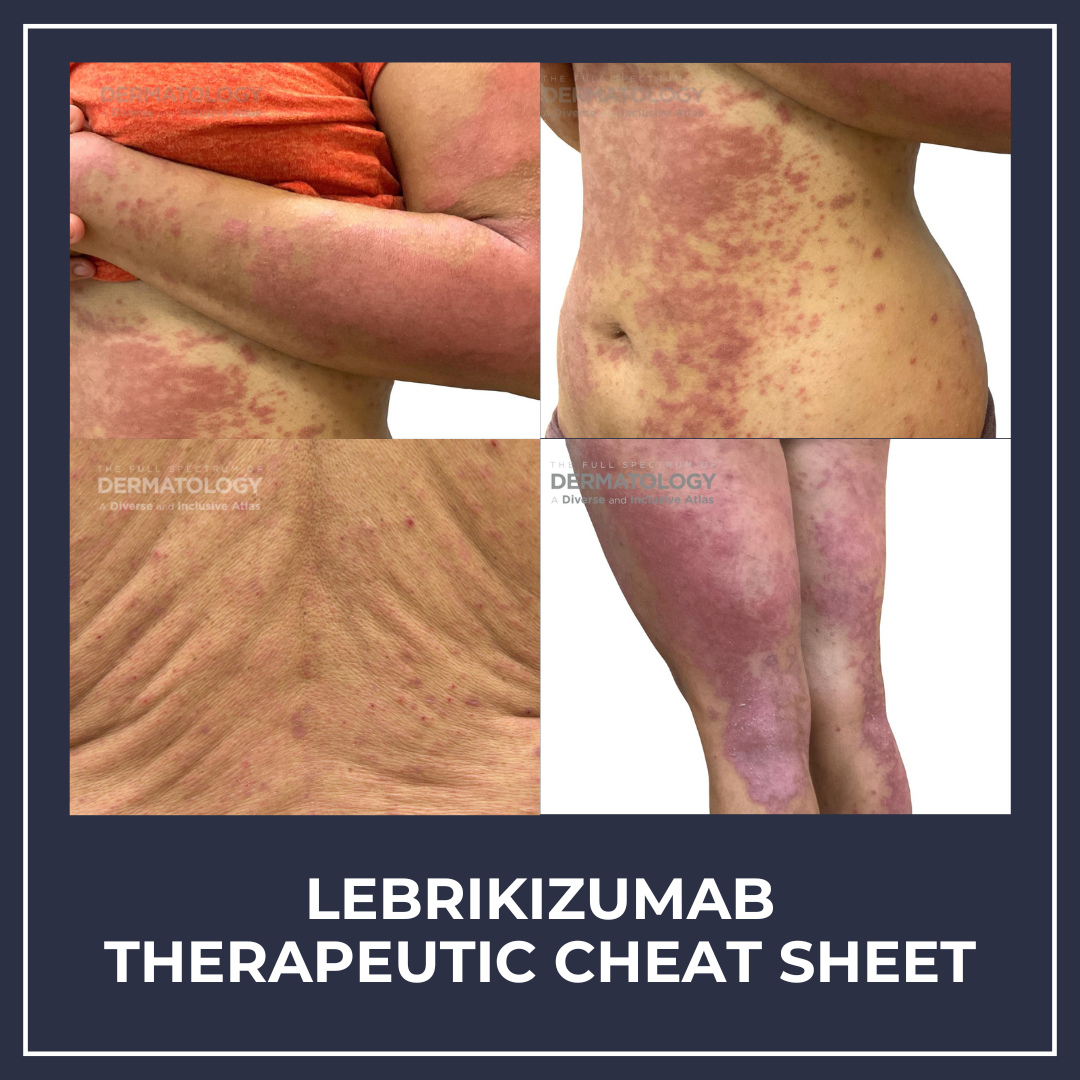 Lebrikizumab is a humanized immunoglobulin G4 (IgG4) monoclonal antibody that selectively targets IL-13, a key cytokine implicated in the pathogenesis of type 2 inflammatory diseases.1 Lebrikizumab binds IL-13 with high affinity and a slow dissociation rate, which prevents heterodimerization of the IL-13 receptor alpha-1 subunit (IL-13Rα1) with the IL-4 receptor alpha (IL-4Rα) signaling complex. …
  Topical calcineurin inhibitors may offer several benefits over topical steroids in treating the scaly, lichenified periorbital plaques in this patient with atopic dermatitis, including:
A. More cost effective
B. Quicker onset of action
C. Decreased irritant potential
D. Absence of reports of cutaneous atrophy
E. Once daily application
To find out the correct answer and read the …
Topical calcineurin inhibitors may offer several benefits over topical steroids in treating the scaly, lichenified periorbital plaques in this patient with atopic dermatitis, including:
A. More cost effective
B. Quicker onset of action
C. Decreased irritant potential
D. Absence of reports of cutaneous atrophy
E. Once daily application
To find out the correct answer and read the … 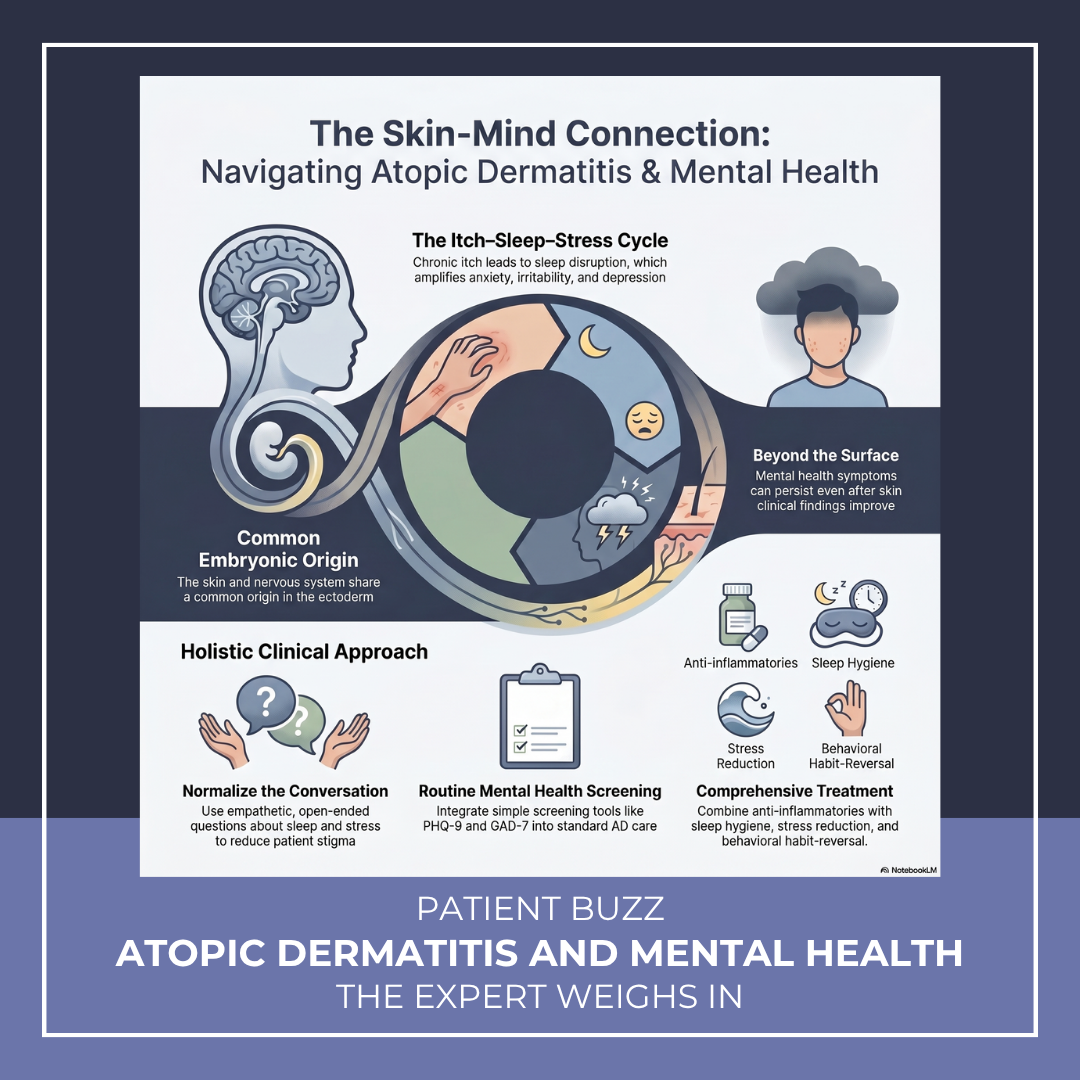 Everyday Health recently addressed the "invisible burden of atopic dermatitis" – the impact of the condition on a patient’s mental health. As a psychophysiological disorder, psychological stress can worsen atopic dermatitis (AD) flares, which in turn creates more inflammation in the body that stresses the nervous system. Chronic itch and sleep disturbances compound the distress, contributing …