












From the SOCU Poster Hall | Periorbital Hyperpigmentation in Skin of Color
 Periorbital hyperpigmentation is common in patients with skin of color, though understanding the condition – and selecting an effective treatment – can be a challenge. Darkening around the eyes can appear as brown, blue-grey, blue, violet, or purple -- all signs of the root causes -- which include extra deposits of melanin, inflammation, prominent veins, and structural changes. Periorbital hyp …
Periorbital hyperpigmentation is common in patients with skin of color, though understanding the condition – and selecting an effective treatment – can be a challenge. Darkening around the eyes can appear as brown, blue-grey, blue, violet, or purple -- all signs of the root causes -- which include extra deposits of melanin, inflammation, prominent veins, and structural changes. Periorbital hyp … Continue reading "From the SOCU Poster Hall | Periorbital Hyperpigmentation in Skin of Color"
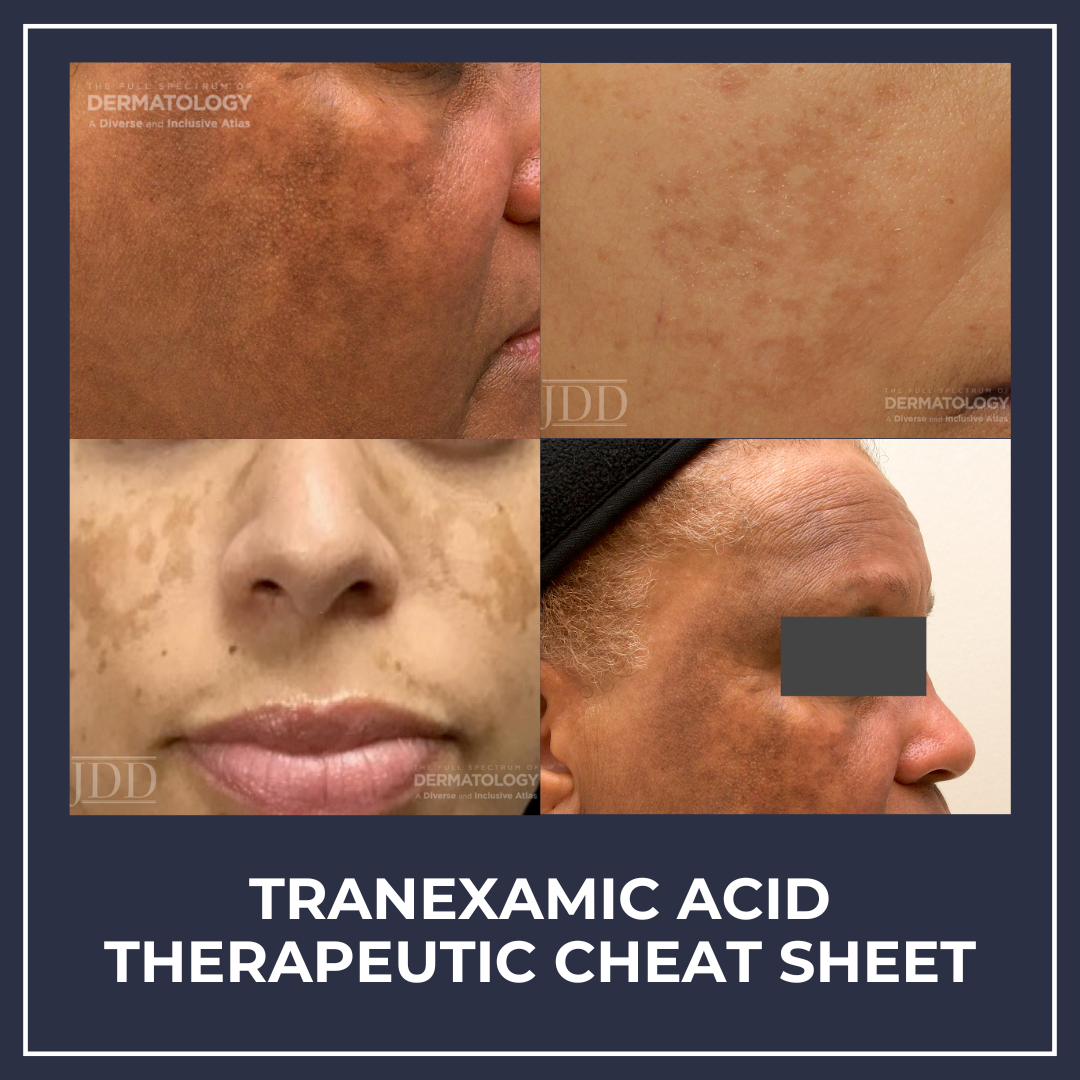 Tranexamic acid (TXA) is a synthetic lysine derivative that reversibly blocks the lysine-binding site on plasminogen, preventing conversion to plasmin. While originally developed as an antifibrinolytic agent to reduce bleeding, TXA has several downstream effects that make it useful in dermatology, particularly for pigmentary disorders, with emerging evidence in inflammatory disorders as well. TX …
  Hyperpigmentation often drives dermatology visits for patients with skin of color as an uneven skin tone can be distressing for patients. In fact, in cases where hyperpigmentation is a sequelae of an inflammatory skin condition, the hyperpigmentation can be more concerning for patients than the skin condition that caused it. Globally and in the U.S., this distress can lead patients to self-treat w …
 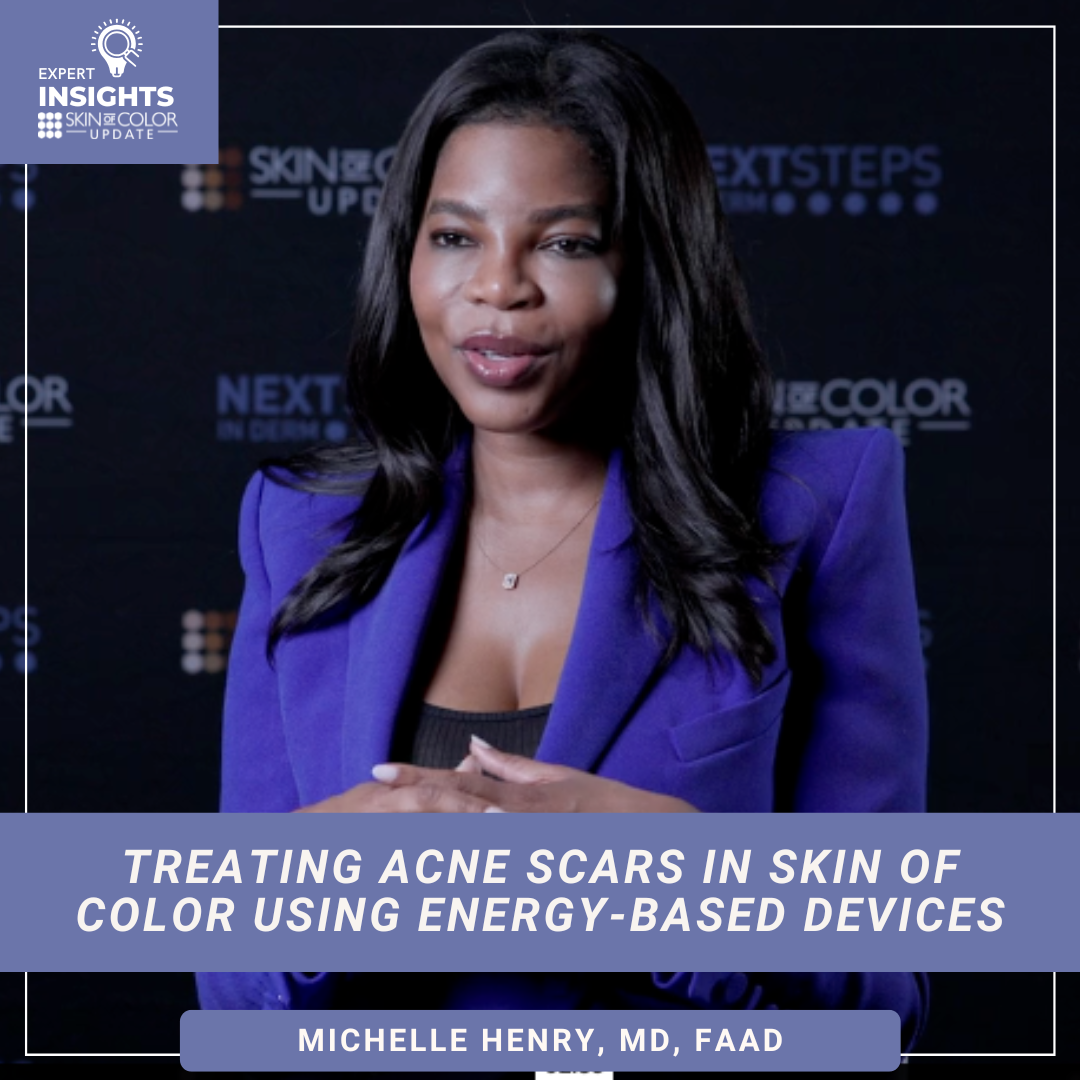 Post-acne scars can be disfiguring and require a creative treatment approach in patients with skin of color, according to Dr. Michelle Henry, clinical instructor of dermatology at Weill Cornell Medical College. Next Steps in Derm, in partnership with Skin of Color Update, interviewed Dr. Henry, who shared what energy-based devices she uses in her practice and how she chooses a device based on a p …
  Recent advances in photodermatology have expanded our understanding of how multiple wavelengths across the electromagnetic spectrum contribute to skin damage, aging, pigmentary disorders, and skin cancer risk. While ultraviolet (UV) radiation has traditionally been the primary focus of sun protection, visible light (VL), high-energy visible (HEV) light, infrared (IR) radiation, and even heat have …