












Do We Need Another Dermatology Atlas? A Response from the Editors of The Full Spectrum of Dermatology: A Diverse and Inclusive Atlas
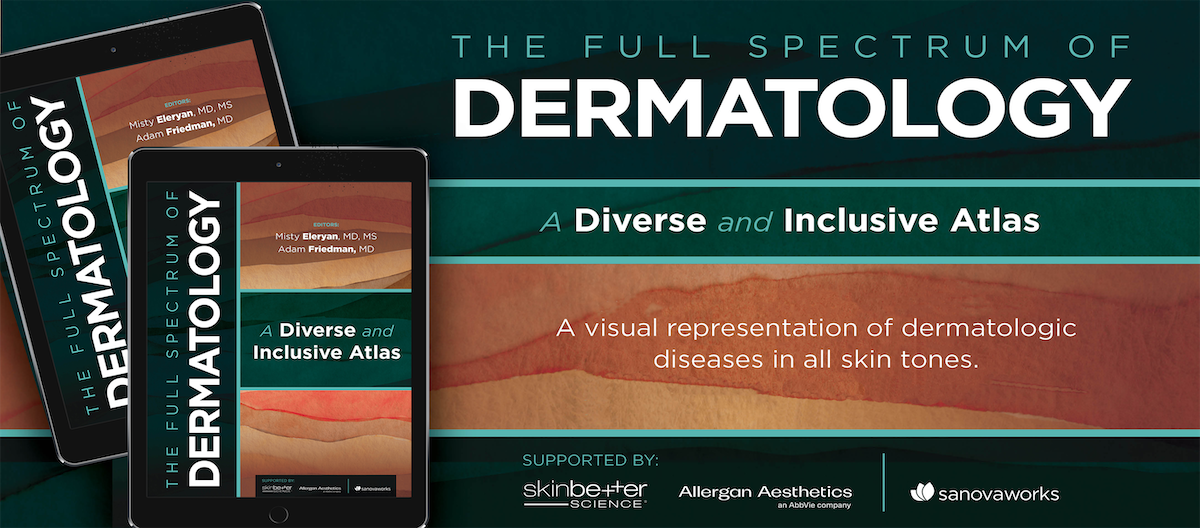 We have often been asked, “Why do we need another dermatology color atlas?” Good question, and here’s the answer! We have noticed that there is a paucity of photos of common dermatologic conditions depicted on darker skin. Oftentimes, photos of patients with darker/melanin-rich skin in atlases were those with conditions like keloids or more concerning, STIs. It is no wonder why many of these …
We have often been asked, “Why do we need another dermatology color atlas?” Good question, and here’s the answer! We have noticed that there is a paucity of photos of common dermatologic conditions depicted on darker skin. Oftentimes, photos of patients with darker/melanin-rich skin in atlases were those with conditions like keloids or more concerning, STIs. It is no wonder why many of these …  As dermatologists, we understand that hidradenitis suppurativa (HS) can be a devastating disease that affects all aspects of our patients’ lives, influencing their physical health, ability to be active, and ability to be intimate. This disease disproportionately affects patients with skin of color and unfortunately, treatment can be challenging. We are lucky to have experts who dedicate their cl …
  Pediatric lichen planopilaris (LPP) is a clinical variant of lichen planus (LP) that can lead to scarring hair loss without prompt intervention. While various therapies exist, intralesional and topical corticosteroids remain the mainstay of treatment in pediatric LPP. Refractory cases may require systemic therapies, selection of which may prove challenging due to the lack of data regarding pediatr …
  Introduction
The term “skin of color” generally refers to individuals from a broad group of racial and ethnic backgrounds including, but not limited to, Black, Asian, Latinx, American Indian, and Pacific Islander, as well as those of mixed race.1 According to the U.S. Census, the population will increase to comprise over 50% persons of color by the year 2042.2 However, the demographics …
Introduction
The term “skin of color” generally refers to individuals from a broad group of racial and ethnic backgrounds including, but not limited to, Black, Asian, Latinx, American Indian, and Pacific Islander, as well as those of mixed race.1 According to the U.S. Census, the population will increase to comprise over 50% persons of color by the year 2042.2 However, the demographics … 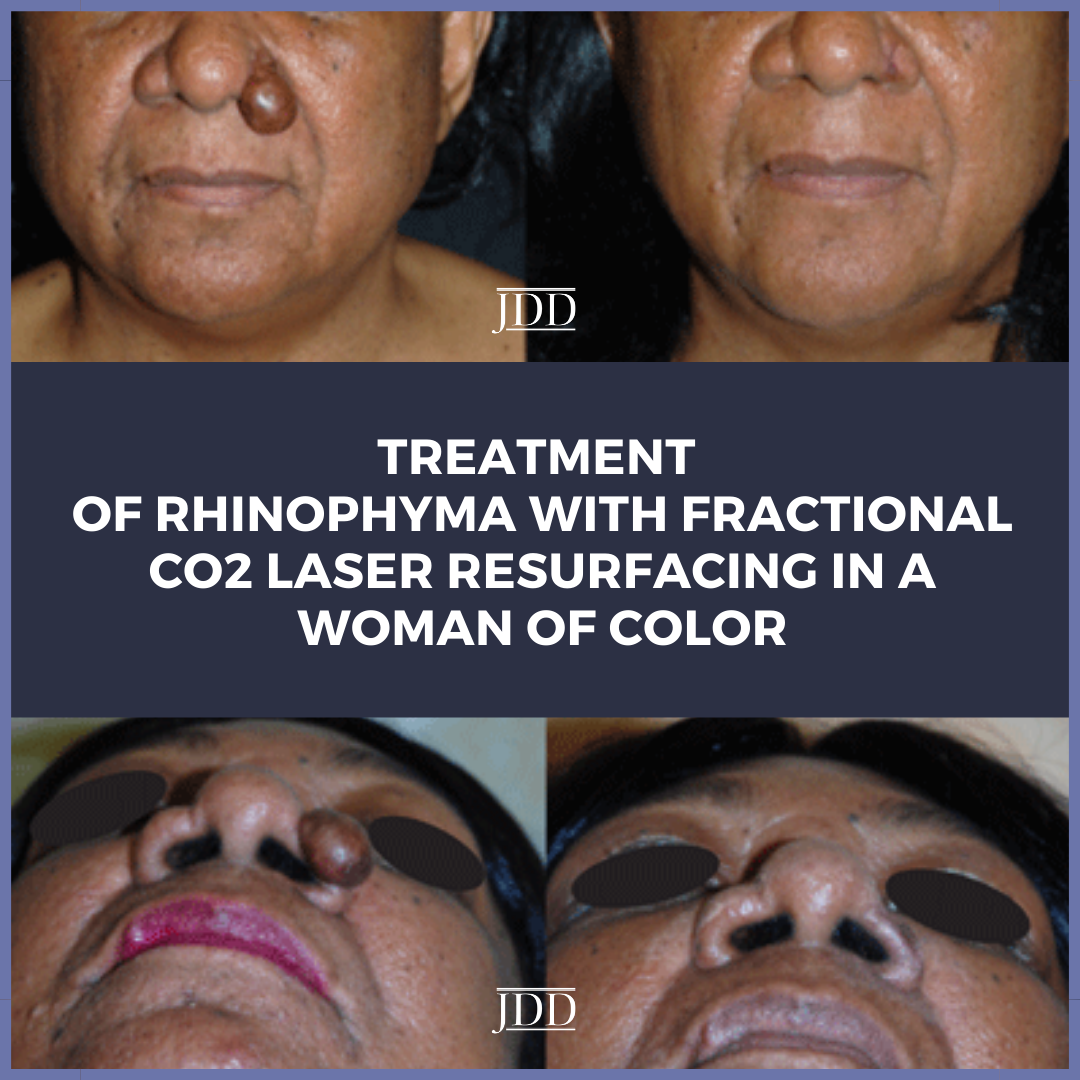 JDD authors Samuel S. Kassirer BA, Robert H. Gotkin MD, and Deborah S. Sarnoff MD present the first reported case of rhinophyma in a 62-year-old Fitzpatrick V female patient who was successfully treated with one session of fractional CO2 laser resurfacing. This case highlights the successful use of the fractional CO2 laser to treat rhinophyma in darker skin types (Fitzpatrick IV–VI) and undersco …