












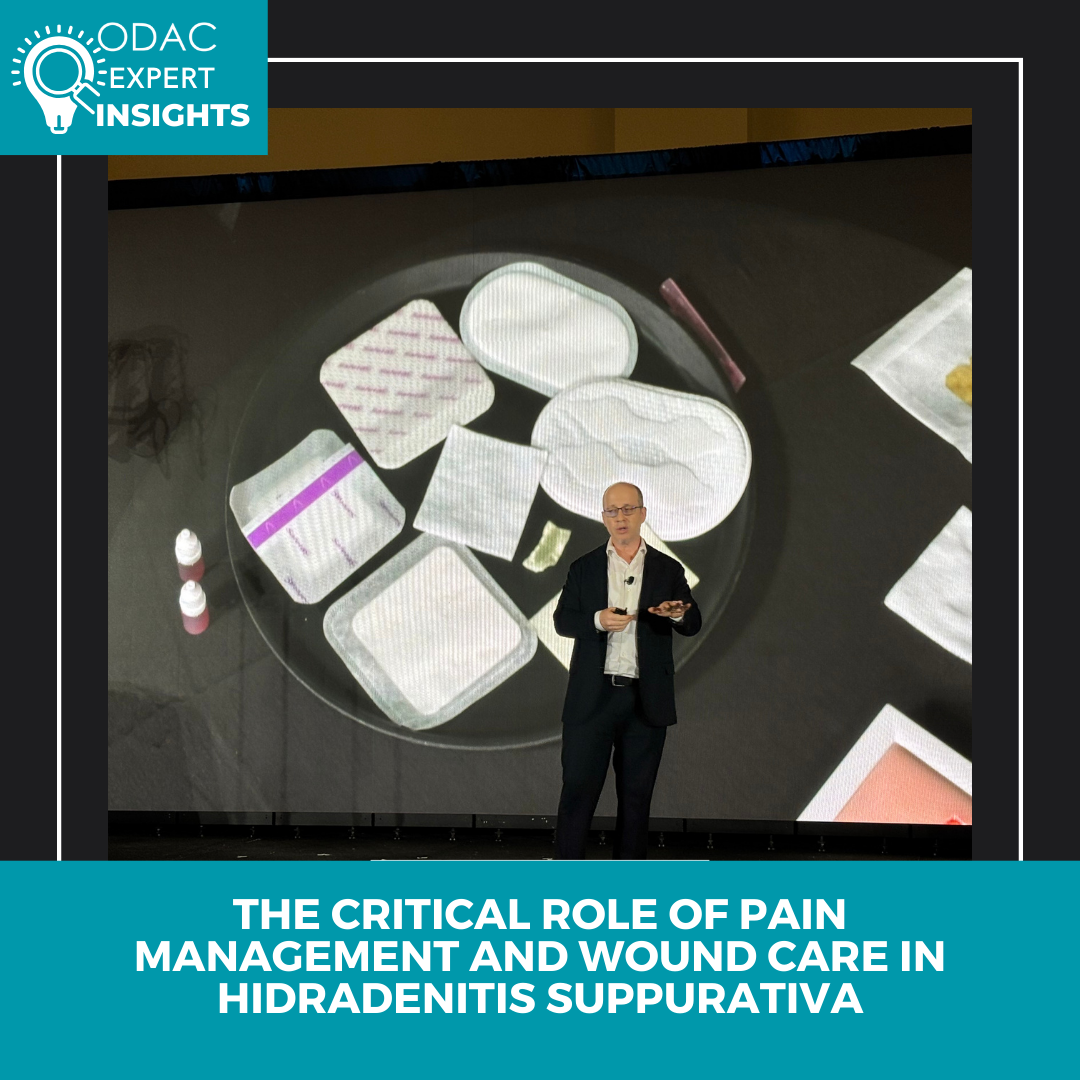
At the 2026 ODAC conference in Orlando, renowned expert Dr. Hadar Lev-Tov delivered an insightful presentation on the critical aspects of managing Hidradenitis Suppurativa (HS), focusing on two often-overlooked areas: pain management and wound care. This summary captures the key takeaways and clinical pearls from Dr. Lev-Tov’s lecture.
The Critical Role of Pain Management in HS
Dr. Lev-Tov began by emphasizing that pain is a common, clinically meaningful, and crucial contributor to a lower quality of life in patients with HS. He stressed that dermatologists are the primary physicians for these patients and, therefore, must take an active role in managing their pain.
Key Points on Pain in HS:
-
- High Prevalence: A significant percentage of HS patients experience moderate to severe pain.
- Impact on Quality of Life: Pain is a more relevant factor in worsening a patient’s quality of life than even the clinical severity of the disease.
- Risk of Opioid Use: Unmanaged pain can lead to long-term opioid use, highlighting the need for effective, non-opioid-centric pain management strategies. HS patients have an increased incidence of long-term opiate use, even after adjusting for confounding factors.
- Role of the dermatologist: Pain is often overlooked by dermatologists. Dermatologists care for patients with HS and managing pain is an integral part of HS care.
A Multimodal Approach to Pain
Dr. Lev-Tov advocated for a bio-psycho-social model for chronic pain management, which integrates various therapeutic modalities.
Pharmacological Approaches:
The presentation outlined a comprehensive pharmacological ladder for HS pain:
-
- First-line: NSAIDs (topical and systemic) and Acetaminophen.
- For Neuropathic Pain: Anticonvulsants (Gabapentin, Pregabalin) and Antidepressants (TCAs, SNRIs like Duloxetine).
- For Breakthrough Pain (Acute): Limited courses of Tramadol or other short-acting opioids, with a maximum of 20 pills per episode suggested.
- Consider procedural interventions: Intralesional triamcinolone or punch deroofing
- Consider pain specialist referral for refractory pain
Non-Pharmacological Treatments:
Evidence-based non-pharmacologic options are a cornerstone of chronic pain management and include:
-
- Physical Activation: Physical therapy, yoga, and low-intensity aerobic exercise.
- Behavioral Treatments: Cognitive Behavioral Therapy (CBT) and mindfulness/meditation.
- Other Techniques: Massage, acupuncture, and chiropractic
Essential Wound Care in HS
The second half of the presentation focused on practical wound care, which Dr. Lev-Tov described as a vital component for improving patient comfort and quality of life. The “bottom line” is that while HS requires medical and surgical treatment first, proper wound care improves quality of life, and a bad dressing can “ruin everything.”
Choosing the Right Dressing:
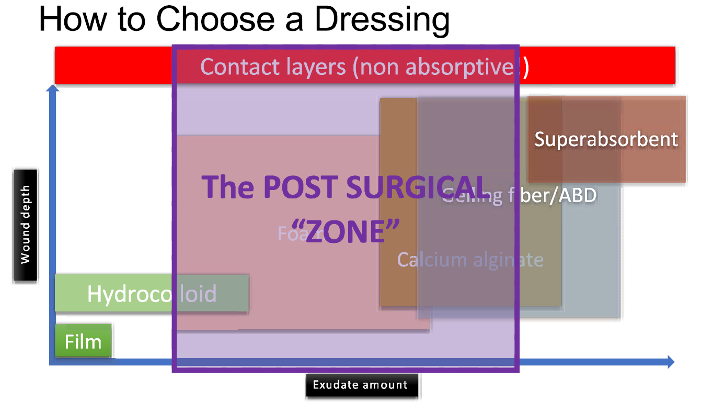
A key takeaway was the importance of selecting dressings based on wound characteristics, primarily exudate level and wound depth.
The presentation provided a visual guide to various dressing types, including foams, hydrocolloids, gelling fibers, calcium alginates, and superabsorbents, to help clinicians make appropriate choices.
Specialized and Post-Surgical Care:
-
- Healing by Secondary Intent: Dr. Lev-Tov showed compelling literature demonstrating that wide excisions for HS followed by healing by secondary intent yielded excellent results, even for large surgical wounds.
- Dedicated Systems: The lecture highlighted the availability of dedicated HS wound care systems, such as HidraWear, which can improve comfort, confidence, and ease of use for patients.
- Biologics should generally not be discontinued for HS surgery
- Hypergranulation tissue is a relatively common post-operative occurrence. It can be managed with chemical debridement, topical corticosteroids, or mechanical debulking.
Conclusion
Dr. Lev-Tov’s presentation provided a clear and actionable framework for managing pain and wound care in Hidradenitis Suppurativa. The core messages were clear: pain management is not optional, and thoughtful wound care significantly impacts a patient’s quality of life. By adopting a multimodal pain strategy and a structured approach to dressing selection, dermatologists can profoundly improve outcomes for their patients with HS.
This information was presented by Dr. Hadar Lev-Tov during the 2026 ODAC conference. The above highlights from his lecture were written and compiled by Dr. Ryan Gall. Dr. Gall was one of the five residents selected to participate in the Young Dermatology Leader Mentorship Program sponsored by Sun Pharma and organized by Derm In-Review.