












Friday Pop Quiz 6/28/2024
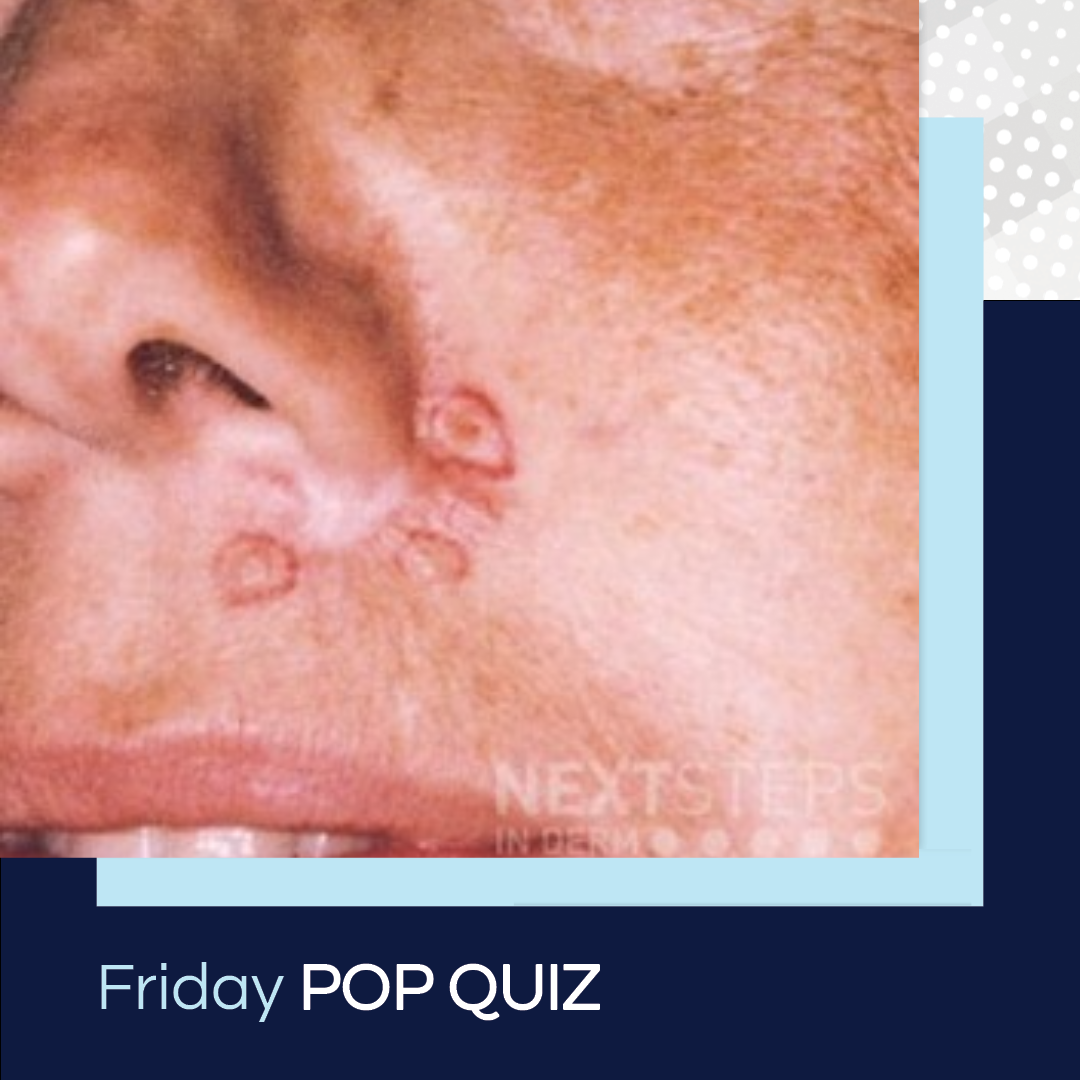 Which of the following is not a major diagnostic criteria for nevoid basal cell carcinoma syndrome?
A. Development of >2 BCCs or 1 BCC before the age of 20
B. Odontogenic keratocysts of jaw
C. Palmar or plantar pits (3 or more)
D. Calcification of the falx
E. All of the above are features of nevoid BCC syndrome
To find out the correct answer and read the explanation, click h …
Which of the following is not a major diagnostic criteria for nevoid basal cell carcinoma syndrome?
A. Development of >2 BCCs or 1 BCC before the age of 20
B. Odontogenic keratocysts of jaw
C. Palmar or plantar pits (3 or more)
D. Calcification of the falx
E. All of the above are features of nevoid BCC syndrome
To find out the correct answer and read the explanation, click h …
Which of the following is not a major diagnostic criteria for nevoid basal cell carcinoma syndrome?
A. Development of >2 BCCs or 1 BCC before the age of 20
B. Odontogenic keratocysts of jaw
C. Palmar or plantar pits (3 or more)
D. Calcification of the falx
E. All of the above are features of nevoid BCC syndrome
To find out the correct answer and read the explanation, click h … 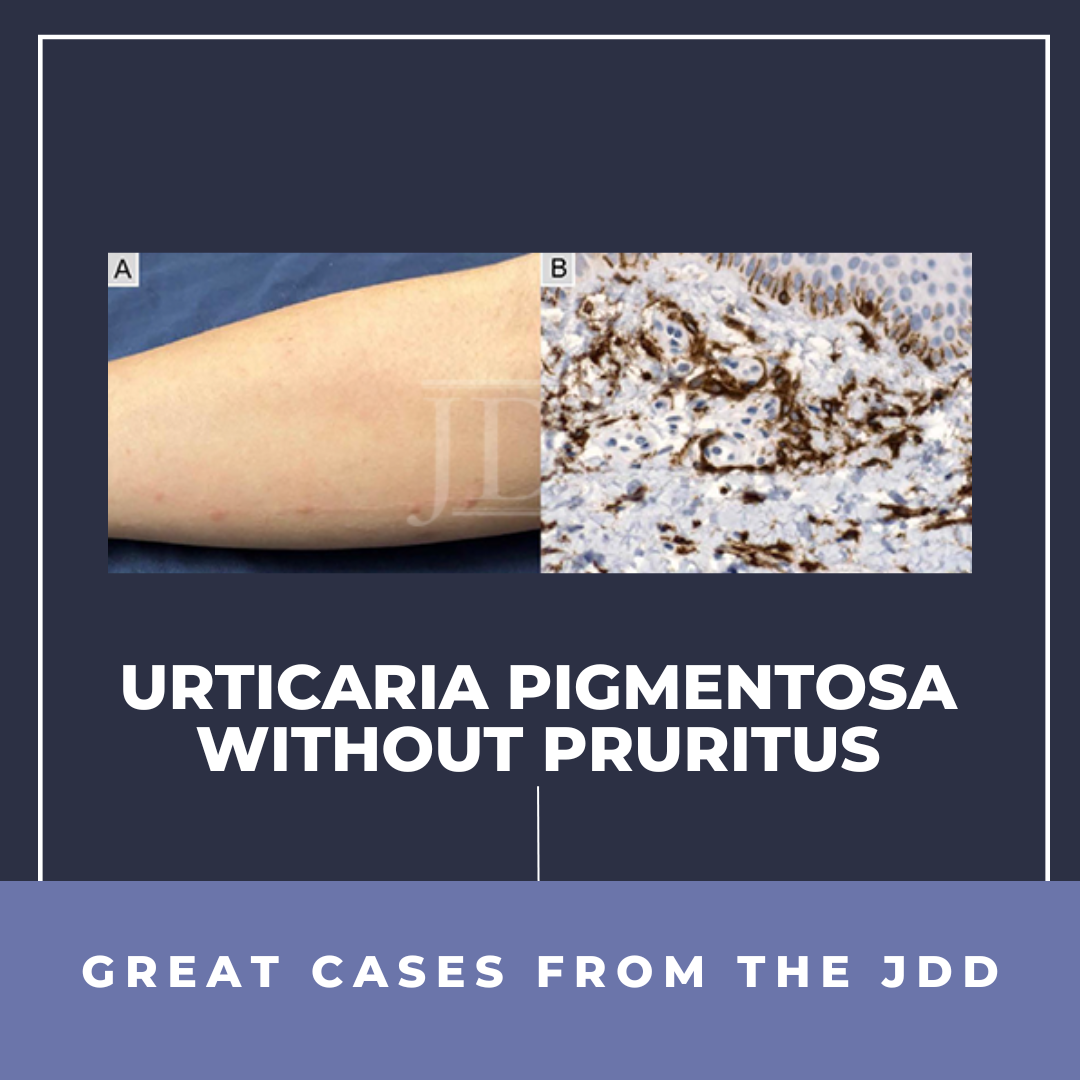 Mastocytosis is a group of disorders characterized by the pathologic accumulation of mast cells in various tissues. One example of mastocytosis is urticaria pigmentosa, which presents with mastocytomas that can cause hives and, when irritated, pruritus. To the authors' knowledge, they are describing the first case of urticaria pigmentosa without pruritus. The patient had a positive Darier' …
  Hair loss is a broad category that can be difficult for dermatology clinicians to manage. Having a scripted or algorithmic approach to alopecia consults can decrease clinician anxiety, says Dr. Adam Friedman, co-chair of the ODAC Dermatology, Aesthetic & Surgical Conference. Next Steps in Derm, in partnership with ODAC, interviewed Dr. Friedman, who shared his approach for evaluating alopecia …
  Sunscreen use varies among different racial groups despite its scientifically proven benefits. A cross-sectional, questionnaire-based study in the June issue of the Journal of Drugs in Dermatology aims to understand the needs and challenges people with skin of color face when choosing and using sunscreen.
I interviewed author Jared Jagdeo, MD, MS, associate professor of dermatology and director …
Sunscreen use varies among different racial groups despite its scientifically proven benefits. A cross-sectional, questionnaire-based study in the June issue of the Journal of Drugs in Dermatology aims to understand the needs and challenges people with skin of color face when choosing and using sunscreen.
I interviewed author Jared Jagdeo, MD, MS, associate professor of dermatology and director … 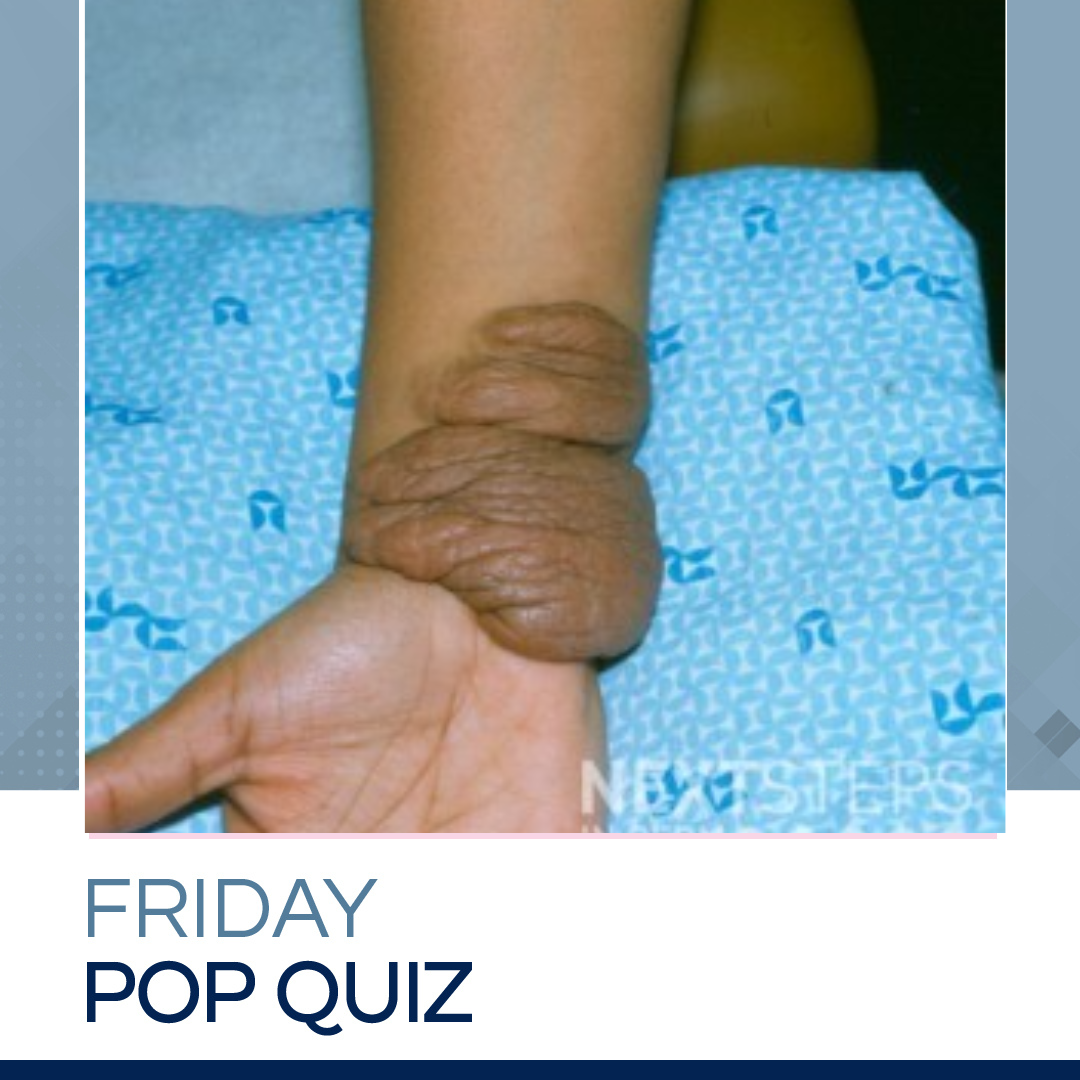 Which of the following medications would be used to treat the following condition?
A. MEK inhibitor
B. mTOR inhibitor
C. BRAF inhibitor
D. VEGF inhibitor
E. PD-1 inhibitor
To find out the correct answer and read the explanation, click here. …
Which of the following medications would be used to treat the following condition?
A. MEK inhibitor
B. mTOR inhibitor
C. BRAF inhibitor
D. VEGF inhibitor
E. PD-1 inhibitor
To find out the correct answer and read the explanation, click here. …