












Rosacea in Patients with Skin of Color: Not Common, But Certainly Not Rare
 Rosacea is defined by facial erythema and telangiectasias, two features that are more difficult to appreciate in patients with skin of color. To refine our ability to diagnose rosacea in all skin types, on day two of the 2021 Skin of Color Update virtual conference, we had an informative, evidence-based lecture, “Recognizing, Diagnosing, and Treating Rosacea in Patients with Skin of Color,” by …
 Continue reading "Rosacea in Patients with Skin of Color: Not Common, But Certainly Not Rare"
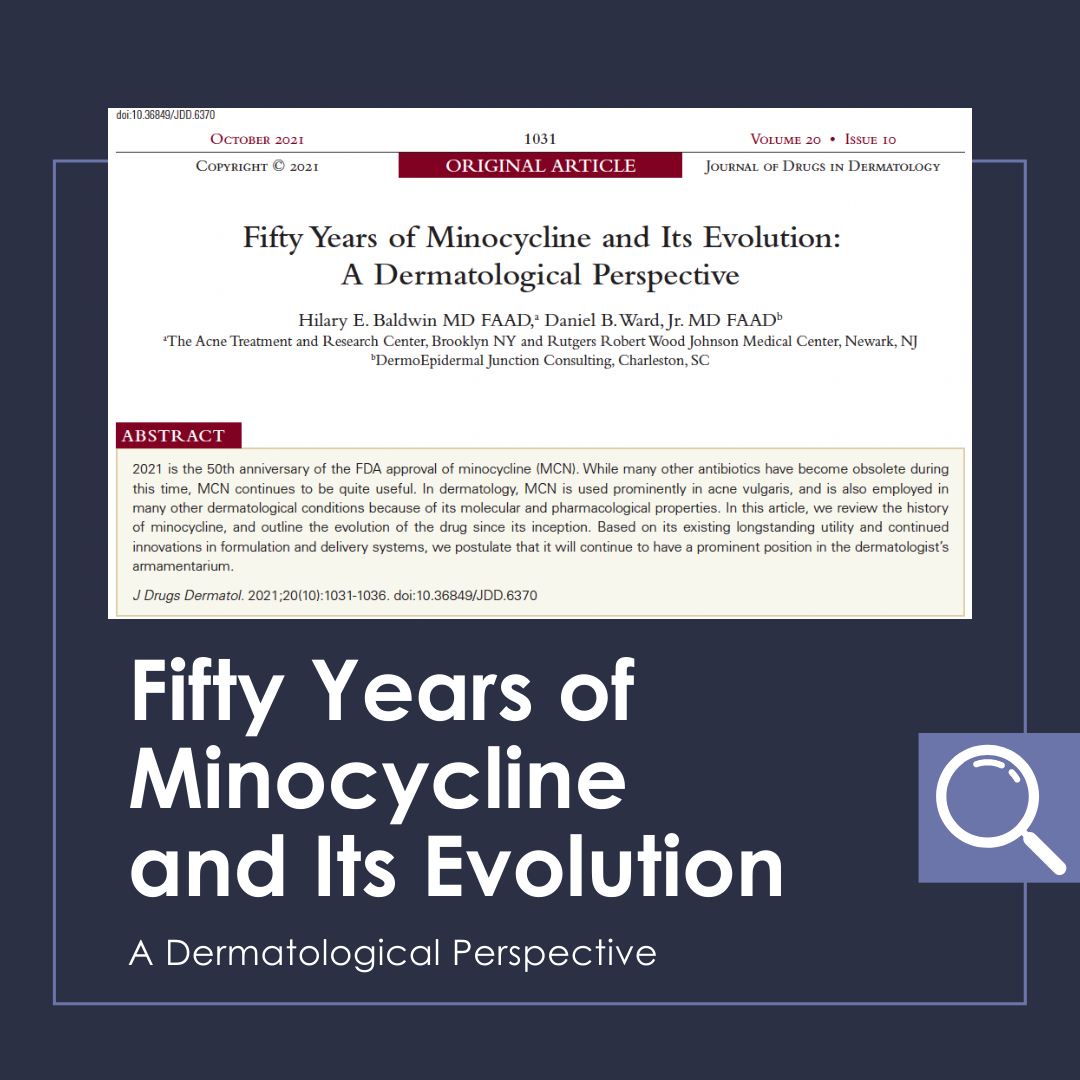 2021 is the 50th anniversary of the FDA approval of minocycline (MCN). While many other antibiotics have become obsolete during this time, MCN continues to be quite useful. In dermatology, MCN is used prominently in acne vulgaris, and is also employed in many other dermatological conditions because of its molecular and pharmacological properties. In this article, we review the history of minocycli …
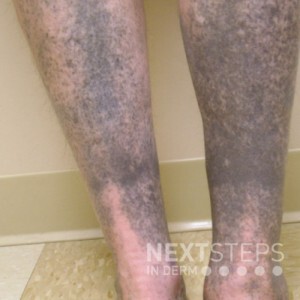 This patient also has a diagnosis of acne vulgaris (diagnosed 10 years ago). What is the most likely explanation for these cutaneous changes?
A. Peripheral vascular disease
B. Diabetes mellitus
C. Drugs hypersensitivity reaction to penicillin
D. Minocycline-induced hyperpigmentation
E. Leukocytoclastic vasculitis
To find out the correct answer and read the explanation, click he …
 My patient asks about turmeric, neem oil, cardamom, etc. I stubble through what I know. I am a “western-style” physician. I could be cast alongside Eastwood or the Duke (or maybe more accurately Cleavon Little in Blazing Saddles). Anyways, if you are like me and need the crash course, look no further! Before this lecture, I had never heard of Ayurvedic medicine (amazing what we don� …
 How to Mitigate Risk without Compromising Care
If you were to counsel a patient on every possible risk of a given medication, it would be a long list of extreme and rare potential outcomes and almost certainly leave the patient in doubt whether it is safe even to take. Frequent lab monitoring has been common practice and often used to reduce the perception of risk with systemic medication …