












Friday Pop Quiz 5/29/2026
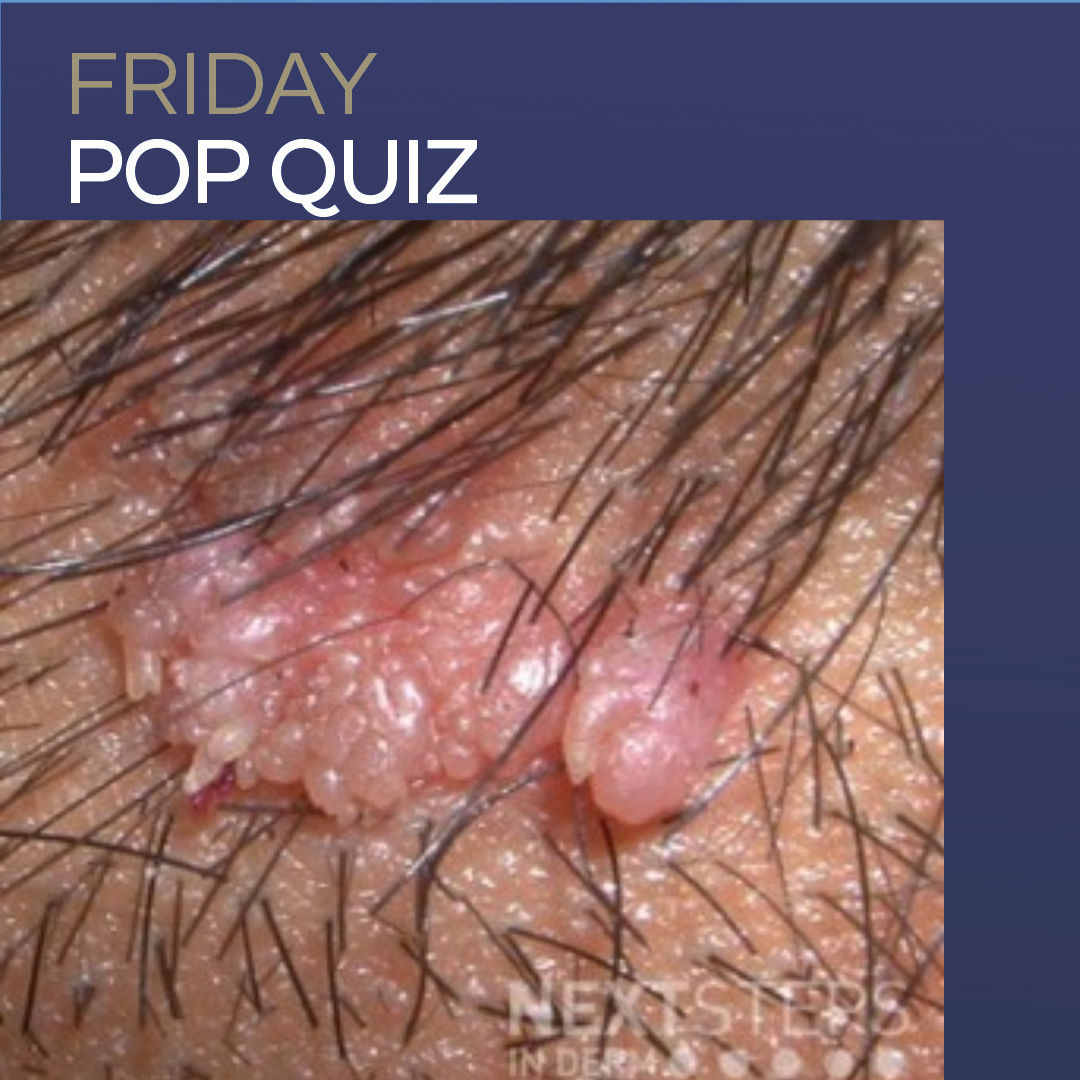 How are these lesions typically distributed?
A. Along the milk line
B. On the palmar surface of the hand
C. Along the lines of blaschko
D. On the trunk
E. On the extremities
To find out the correct answer and read the explanation, click here. …
How are these lesions typically distributed?
A. Along the milk line
B. On the palmar surface of the hand
C. Along the lines of blaschko
D. On the trunk
E. On the extremities
To find out the correct answer and read the explanation, click here. …
How are these lesions typically distributed?
A. Along the milk line
B. On the palmar surface of the hand
C. Along the lines of blaschko
D. On the trunk
E. On the extremities
To find out the correct answer and read the explanation, click here. … 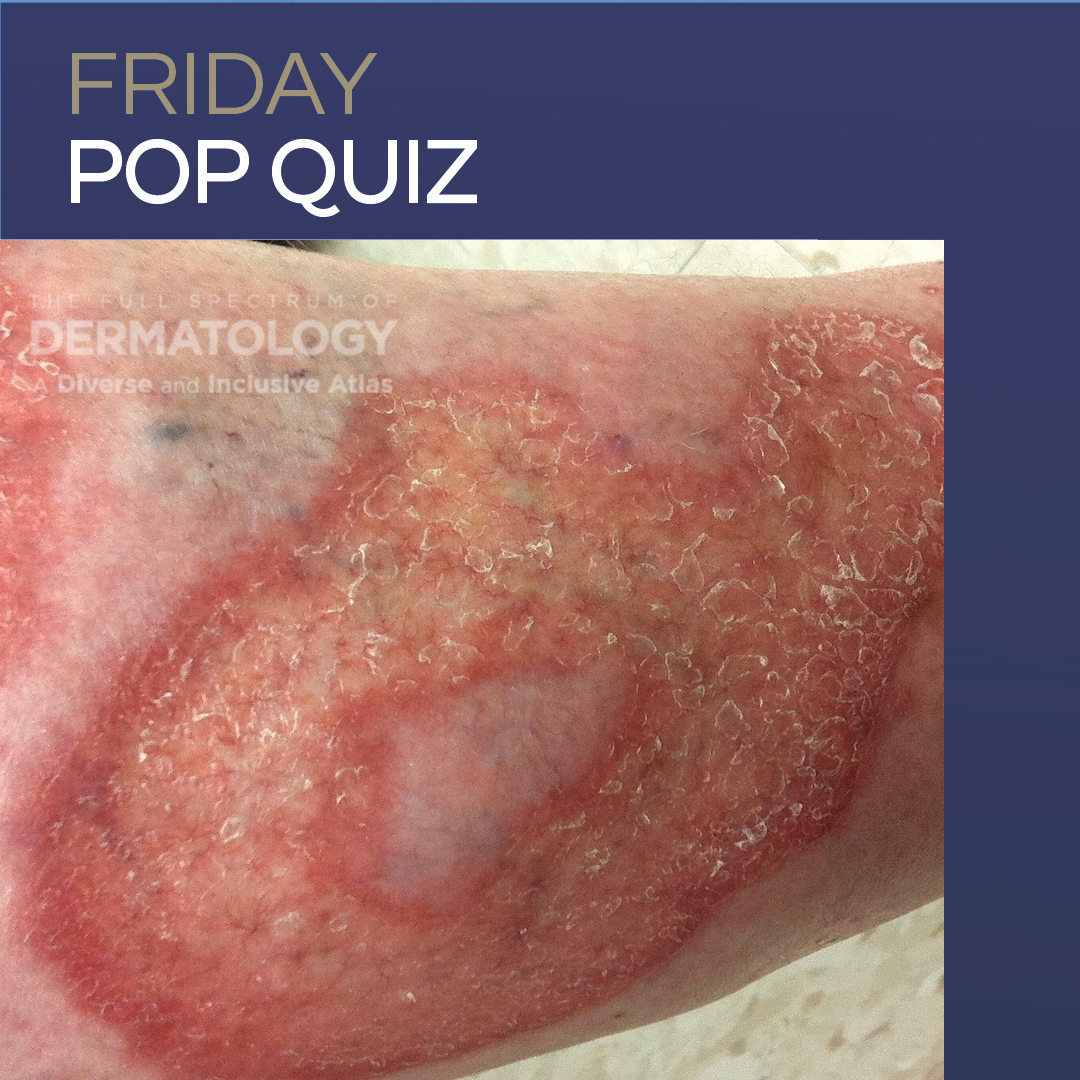 A 64-year old-woman with a history of hypertension and poorly controlled diabetes mellitus presents with these painful lesions on her legs that have slowly progressed for years. She is unable to tolerate compression. What is an appropriate next step?
A. Surgical reperfusion
B. Oral prednisone
C. Topical tacrolimus
D. Oral cellcept
E. Intravenous vancomycin
To find out the corre …
A 64-year old-woman with a history of hypertension and poorly controlled diabetes mellitus presents with these painful lesions on her legs that have slowly progressed for years. She is unable to tolerate compression. What is an appropriate next step?
A. Surgical reperfusion
B. Oral prednisone
C. Topical tacrolimus
D. Oral cellcept
E. Intravenous vancomycin
To find out the corre … 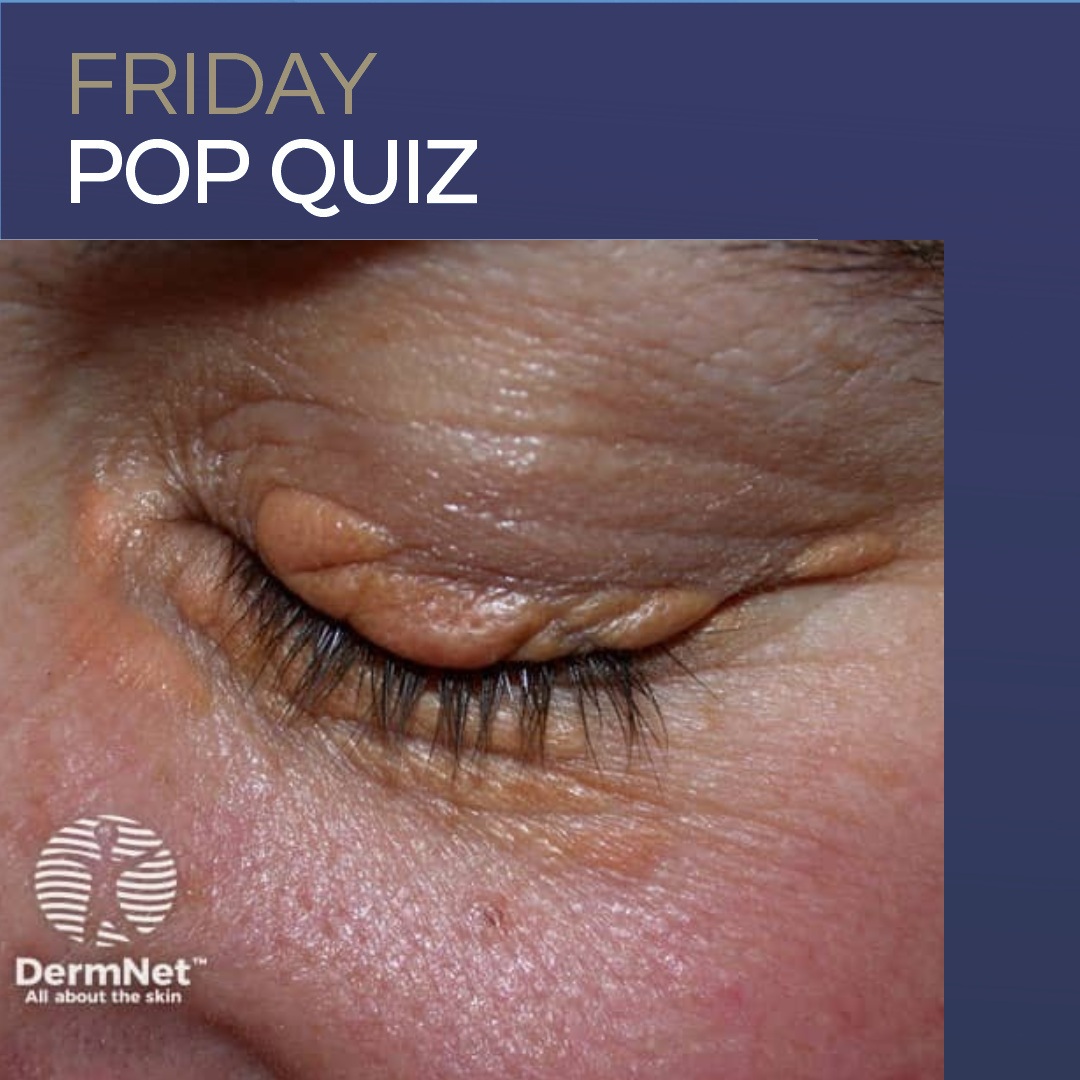 A 55-year-old female presents with concerns about plaques on both of her eyelids. Which of the following statements is true regarding this patient's skin condition?
A. These are the least common type of xanthoma
B. Most commonly associated with hyperglycemia
C. Lesions arise asymmetrically
D. Lesions start off as many bumps that grow rapidly
E. Lesions are soft, velvety, yellowi …
A 55-year-old female presents with concerns about plaques on both of her eyelids. Which of the following statements is true regarding this patient's skin condition?
A. These are the least common type of xanthoma
B. Most commonly associated with hyperglycemia
C. Lesions arise asymmetrically
D. Lesions start off as many bumps that grow rapidly
E. Lesions are soft, velvety, yellowi …  A previously healthy 55-year-old patient presents with a four-month history of the pictured indurated papules and plaques. History does not reveal prior skin problems. The lesions started on the cheeks and are now affecting the forehead. The sun seems to exacerbate the condition, causing mild burning and pruritus. Patient complains of cheek swelling that worsens in the morning and improves as …
 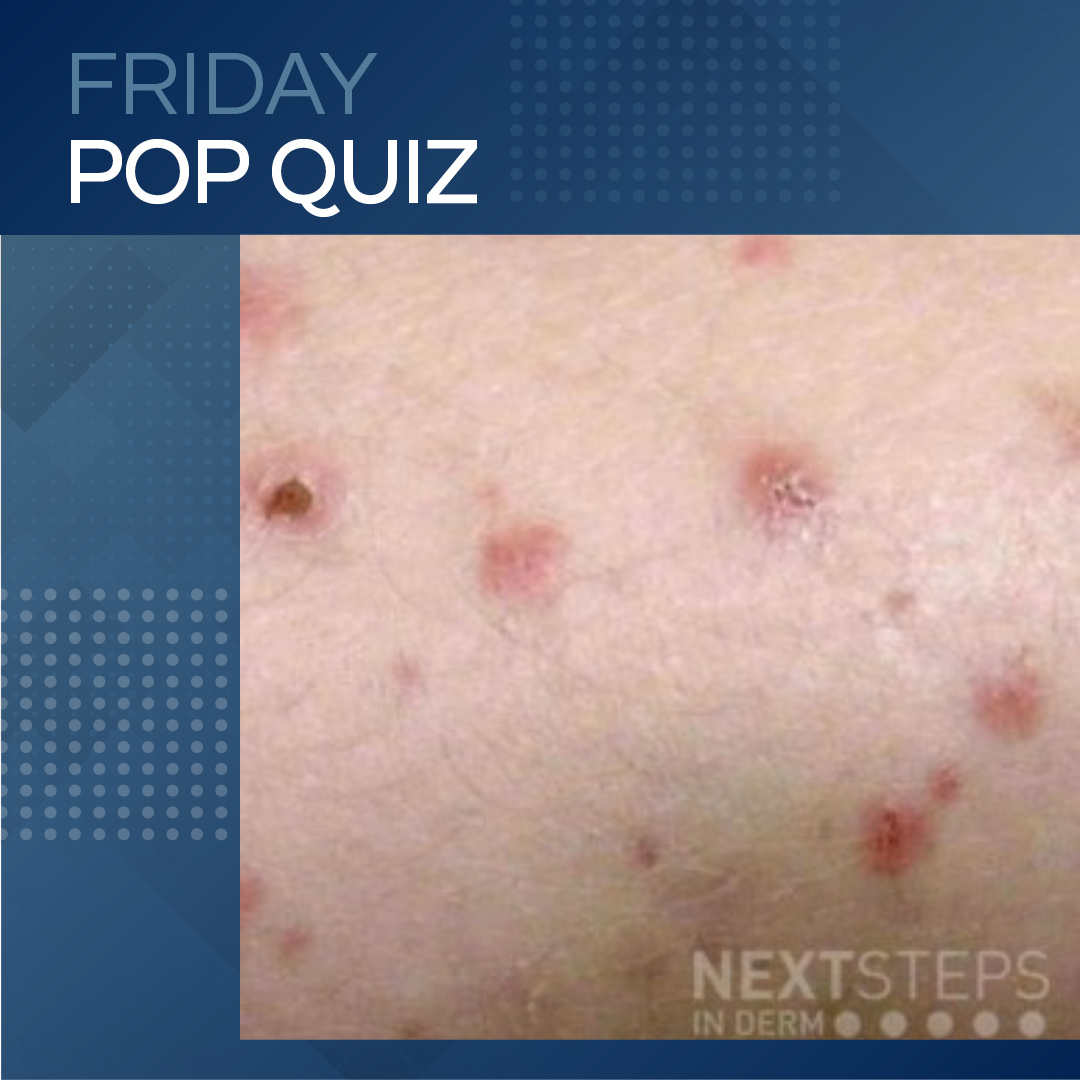 A 7-year-old boy presents with recurrent crops of pink papules on the trunk, buttocks, and proximal extremities, as shown in the clinical image. The lesions ulcerate and heal with varioliform scarring. Which of the following histologic findings would not be expected in this condition?
A. Lichenoid infiltrate
B. Extravasation of red blood cells
C. Dyskeratosis
D. Parakeratosis
E. …
A 7-year-old boy presents with recurrent crops of pink papules on the trunk, buttocks, and proximal extremities, as shown in the clinical image. The lesions ulcerate and heal with varioliform scarring. Which of the following histologic findings would not be expected in this condition?
A. Lichenoid infiltrate
B. Extravasation of red blood cells
C. Dyskeratosis
D. Parakeratosis
E. …