












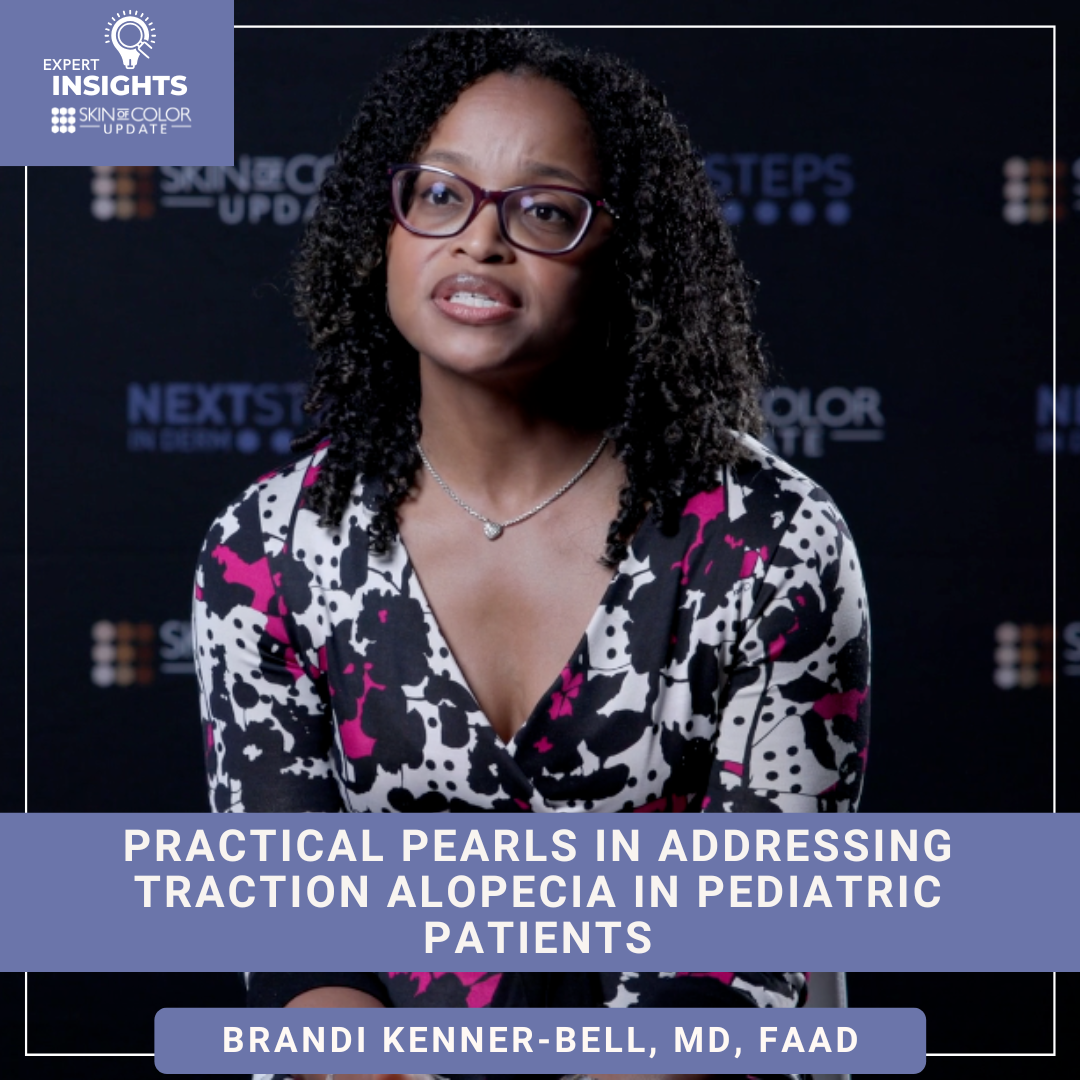
Cultural sensitivity is needed in order to provide practical advice to pediatric patients experiencing traction alopecia, according to Dr. Brandi Kenner-Bell, associate professor of dermatology and pediatrics at Northwestern University Feinberg School of Medicine. Next Steps in Derm, in partnership with Skin of Color Update, interviewed Dr. Kenner-Bell, who says it’s important for clinicians to understand a patient’s hair care practices before making recommendations. Find out her suggestions for ways to work collaboratively with children and their parents. Plus hear what questions to ask at a traction alopecia office visit.
Further Reading
If you want to read more about traction alopecia, check out the following articles published in the Journal of Drugs in Dermatology:
Management of Traction Alopecia: Our Experience and a Brief Review of Current Literature Recommendations
ABSTRACT
Traction alopecia is a common hair loss condition related to hair shaft trauma and sustained pulling leading to hair follicle loosening and inflammation. Although often categorized as nonscarring, increasing evidence indicate that late-stage traction alopecia (TA) can cause permanent hair loss and scarring from chronic folliculitis and sustained hair tension. TA is often seen in women of African descent, although cases have been reported in African men, Hispanic women, Japanese women, Sikh men, and ballet dancers. Early effective treatment is needed to prevent progression and potential scarring; therefore, a review and summary of published literature for best practices is necessary and valuable.
Treatment of Alopecia in Children
ABSTRACT
Alopecia or hair loss in children is an important and often challenging problem to diagnose and treat. Early diagnosis and treatment is the key because hair loss in children has a significant physical as well as psychological impact on their development. Alopecia in children are mainly non-scarring, but cicatricial alopecia can also be seen. The diagnosis can usually be made by direct examination of the scalp. Potassium hydroxide (KOH) examination of plucked hair and scalp scrapings, woods lamp examination and trichoscopy are useful diagnostic aids. When a cicatricial alopecia is suspected, scalp biopsy is recommended. Disease specific treatment should be initiated early and adequate counselling provided to both the patient and their parents. This review focuses on the treatment options available for various types of alopecia in children and their safety and efficacy data, analyzing the available literature evidences.
Did you enjoy this video interview? Find more here.