












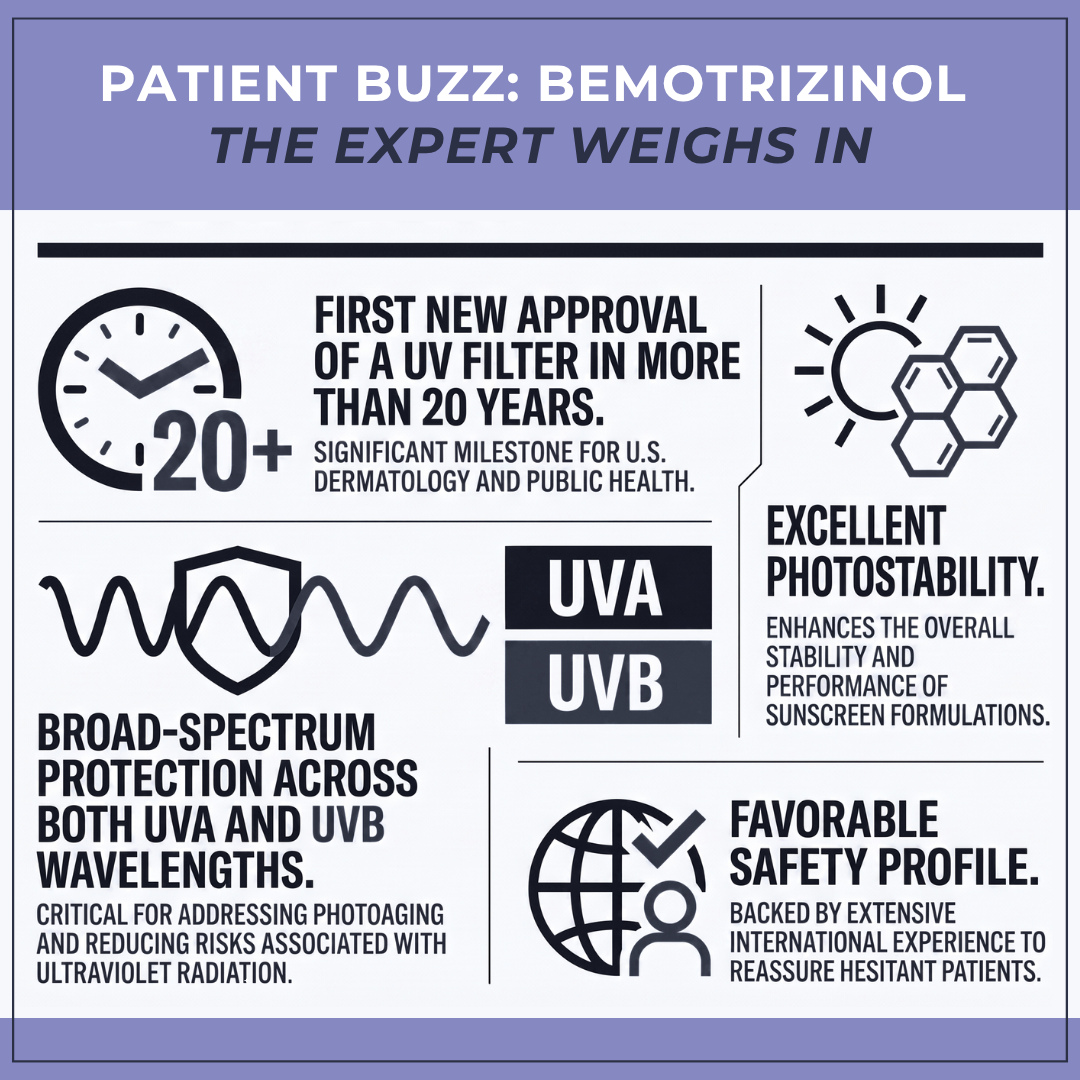
Bemotrizinol’s recent FDA approval – the first new approval of a UV filter in more than 20 years — made headlines in several media outlets, including NPR. The broad-spectrum, chemical sunscreen ingredient is a welcome addition to the U.S. market, according to dermatologists, who have been advocating for its approval for decades. The U.S. lags behind other countries in the number of approved sunscreen ingredients as well as sunscreen technology, missing out on newer chemical filters that provide broader protection than those currently approved.
For the unique value of bemotrizinol and the role of advocacy in the FDA approval process, I interviewed Seemal R. Desai, MD, FAAD, past president of the American Academy of Dermatology.
What was your reaction when you learned the FDA approved bemotrizinol?
I was genuinely excited and encouraged by the FDA’s approval of bemotrizinol. This approval represents a significant milestone for dermatology and public health, particularly because it introduces a modern UV filter that has been widely used internationally for many years with an extensive safety and efficacy record. For many dermatologists, it also symbolizes progress toward providing patients in the United States with access to more advanced photoprotection options that have long been available elsewhere.
The bemotrizinol approval process took two decades. What should residents, fellows, and early career dermatologists know about the work dermatologists put in over the years to lead to this moment?
Residents and early career clinicians should appreciate that this approval did not happen overnight. It reflects years of advocacy by dermatologists, physician organizations, researchers, industry partners, and patient advocates who continuously highlighted the importance of innovation in photoprotection. Organizations such as the American Academy of Dermatology have repeatedly emphasized the need for broader sunscreen options in the United States. This moment underscores that meaningful policy and regulatory change often requires persistence, collaboration, and sustained advocacy over many years.
What does this approval teach dermatologists about the advocacy process?
This approval demonstrates that advocacy matters. Dermatologists often focus on patient care and scientific discovery, but engagement with regulatory agencies and policymakers is equally important. Progress can be slow, but when physicians consistently advocate for evidence-based improvements that benefit patients, meaningful change can occur. Bemotrizinol serves as an excellent example of how long-term advocacy efforts can eventually lead to improved patient care and expanded therapeutic options.
What’s the unique value of bemotrizinol, and what place should it have in a sun protection regimen?
Bemotrizinol offers several unique advantages. It provides broad-spectrum protection across both UVA and UVB wavelengths, has excellent photostability, and can enhance the stability and performance of other sunscreen ingredients in formulations. Importantly, UVA protection remains critical in addressing photoaging, pigmentary disorders such as melasma and post-inflammatory hyperpigmentation, and potentially reducing photocarcinogenesis. As new formulations become available in the United States, bemotrizinol-containing sunscreens may become particularly valuable for patients seeking cosmetically elegant products with strong broad-spectrum protection. However, it should be viewed as an addition to, not a replacement for, a comprehensive photoprotection strategy that includes regular sunscreen use, protective clothing, hats, sunglasses, and sun-seeking behavioral modifications.
How can dermatologists use bemotrizinol’s strong safety profile to encourage reluctant patients to wear sunscreen?
Patients frequently express concerns regarding sunscreen safety, often fueled by misinformation circulating online and through social media. Bemotrizinol’s extensive international experience and favorable safety profile provide dermatologists with another evidence-based option to discuss with patients. Having an additional ingredient with a long history of use may help reassure patients who are hesitant about sunscreen ingredients and may ultimately improve adherence to daily photoprotection recommendations.
What do you foresee as the future of approved sunscreens in the U.S.?
I am hopeful that the approval of bemotrizinol represents the beginning of a new era of sunscreen innovation in the United States. Ideally, this approval will encourage continued scientific collaboration and regulatory engagement that may ultimately expand the number of safe and effective UV filters available to American consumers. More options could lead to improved formulations, greater cosmetic acceptability, and ultimately increased sunscreen use among diverse patient populations.
What else should dermatologists know about bemotrizinol and future approved sunscreen ingredients?
This approval should remind us that sunscreen innovation remains critically important. Rates of skin cancer continue to rise, and we are increasingly recognizing the impact of ultraviolet radiation on pigmentary disorders, photoaging, and skin health across all skin types. Future sunscreen development should focus not only on efficacy and safety, but also on improving cosmetic elegance, accessibility, inclusivity across skin tones, and patient adherence.
Ultimately, the best sunscreen is the one patients are willing to use consistently. Expanding our armamentarium of sunscreen ingredients and formulations gives dermatologists additional tools to help patients achieve meaningful, lifelong photoprotection.
Did you enjoy this article? Find more Patient Buzz Expert Commentaries here.