












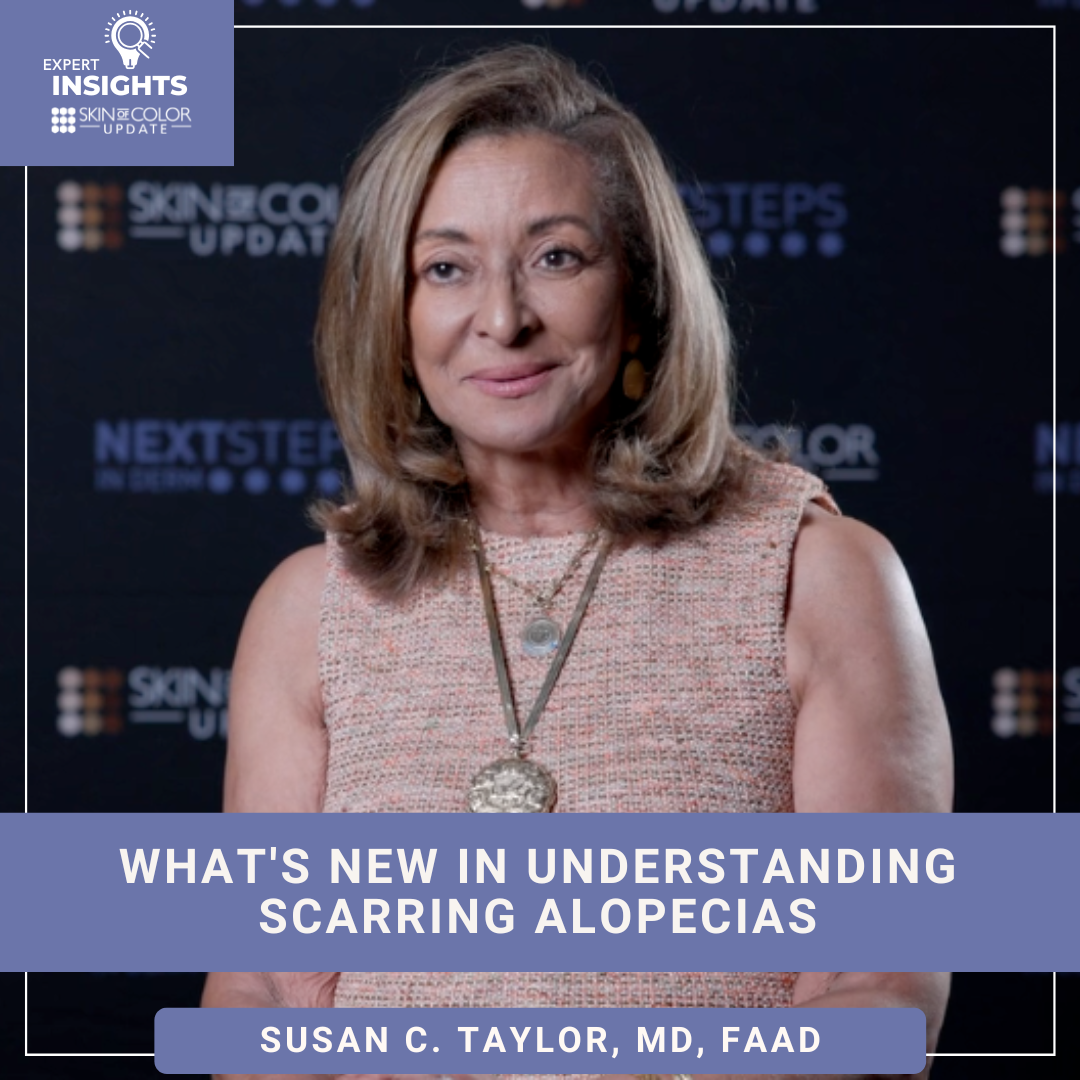
Scarring alopecias can be especially distressing for a patient and challenging for a clinician to treat. Next Steps in Derm, in partnership with Skin of Color Update, interviewed Dr. Susan C. Taylor, Bernett Johnson Endowed Professor of Dermatology at the University of Pennsylvania Perelman School of Medicine. Watch as Dr. Taylor outlines how a deeper understanding of scarring alopecias is impacting therapeutic development. And learn the role of JAK inhibitors and other treatments, including vitamin D.
Further Reading
If you want to read more about scarring alopecias, check out the following articles published in the Journal of Drugs in Dermatology:
Safety and Efficacy of Minoxidil Treatment in Scarring Alopecia: A Scoping Review
ABSTRACT
Background: Topical minoxidil (TM) has been a cornerstone in treating various hair loss disorders, while low-dose oral minoxidil (LDOM) is emerging as an effective alternative. Despite their widespread use, there is a notable gap in the literature regarding their use in treating scarring alopecia.
Objective: This study evaluates the efficacy and safety of TM and LDOM in managing scarring alopecia.
Methods: A systematic literature search identified relevant studies on TM and LDOM use in central centrifugal cicatricial alopecia, frontal fibrosing alopecia, lichen planopilaris, and traction alopecia. Key metrics included disease stabilization, hair thickness improvement, hair regrowth, and side effect profiles.
Results: Analysis of the selected studies revealed mixed outcomes. Most participants experienced benefits in terms of disease stabilization and hair regrowth with TM and LDOM. The majority of cases reported good tolerability of the treatment, although some side effects were noted.
Conclusion: TM and LDOM show promise in scarring alopecia treatment, demonstrating benefits in disease stabilization and hair regrowth. Despite these positive indications, the variability in results and reported side effects underline the need for further research to establish their consistent efficacy and safety profiles in scarring alopecia treatment.
Examining the Potential for Koebnerization and Disease Precipitation in Cicatricial Alopecias
ABSTRACT
The treatment of primary scarring alopecias is challenging and patients may be susceptible to koebnerization. This predisposes cicatricial alopecia patients to worsening of their disease following procedural treatments or interventions. Research and recommendations surrounding the risk for koebnerization within scarring alopecias is extremely limited. Using a comprehensive literature review, we summarized the risks of procedures in potentially koebnerizing alopecias. We evaluated the risk not only with procedural treatments, but also with common elective cosmetic procedures and potentially trauma-inducing hairstyling techniques. Although additional studies are needed to better elucidate the risks of procedural treatments within primary scarring alopecia, we believe this review of the current evidence and expert insight will benefit healthcare providers and patients alike to help guide treatments in this challenging patient population.
Did you enjoy this video interview? Find more here.