



















Pyoderma Gangrenosum Occurring in the Setting of Hypercortisolism
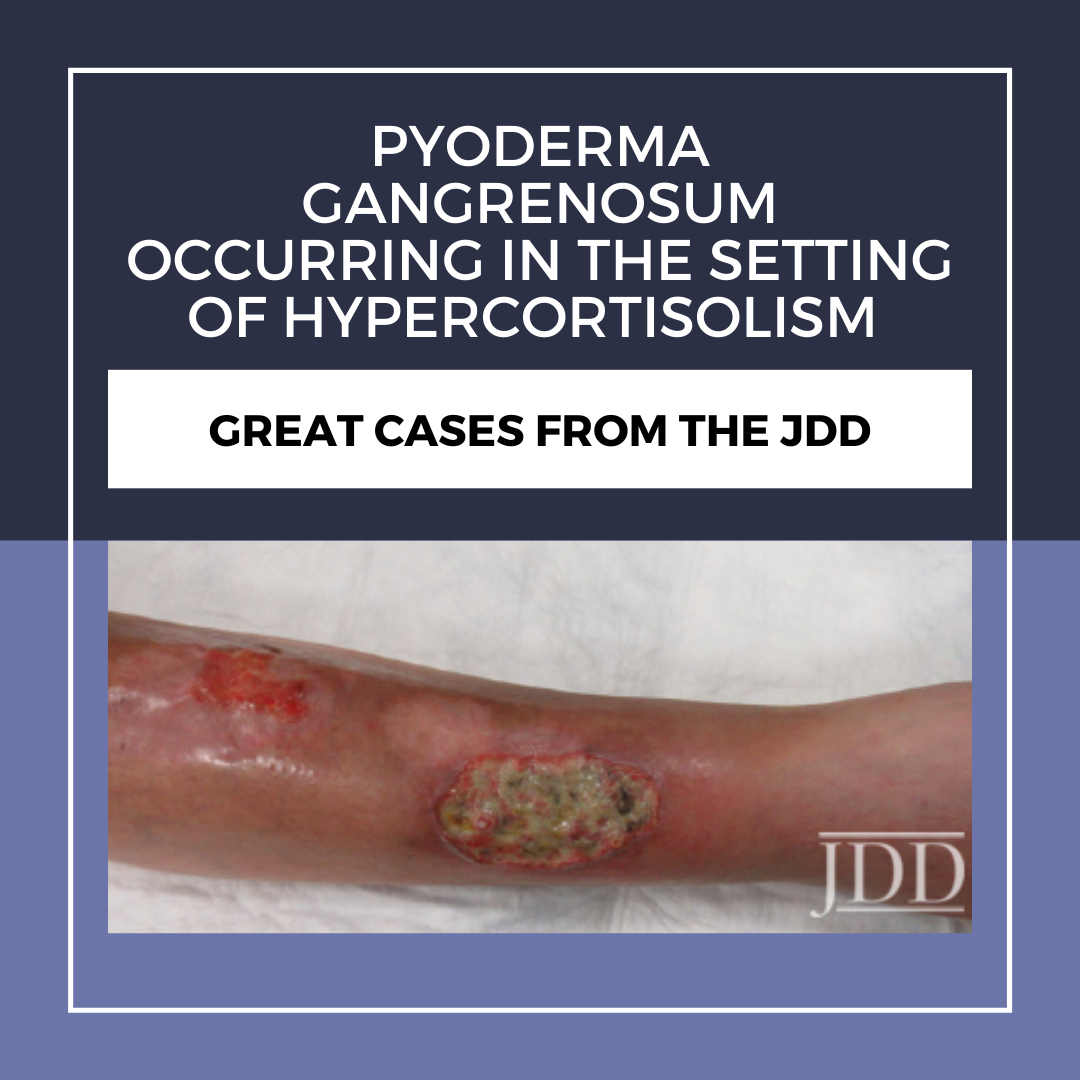 Pyoderma Gangrenosum Occurring in the Setting of Hypercortisolism Associated With Adrenocortical Adenoma: A Pathophysiological Paradox
Pyoderma gangrenosum (PG) is a challenging, rare, ulcerating skin disease characterized by neutrophilic abundance and absence of infection, often associated with systemic diseases. JDD authors Chapman Wei, Elizabeth Hazuka, Peter DeRosa, Jill M. Paulson MD, and Ad …
Pyoderma Gangrenosum Occurring in the Setting of Hypercortisolism Associated With Adrenocortical Adenoma: A Pathophysiological Paradox
Pyoderma gangrenosum (PG) is a challenging, rare, ulcerating skin disease characterized by neutrophilic abundance and absence of infection, often associated with systemic diseases. JDD authors Chapman Wei, Elizabeth Hazuka, Peter DeRosa, Jill M. Paulson MD, and Ad …
Pyoderma Gangrenosum Occurring in the Setting of Hypercortisolism Associated With Adrenocortical Adenoma: A Pathophysiological Paradox
Pyoderma gangrenosum (PG) is a challenging, rare, ulcerating skin disease characterized by neutrophilic abundance and absence of infection, often associated with systemic diseases. JDD authors Chapman Wei, Elizabeth Hazuka, Peter DeRosa, Jill M. Paulson MD, and Ad … Continue reading "Pyoderma Gangrenosum Occurring in the Setting of Hypercortisolism"
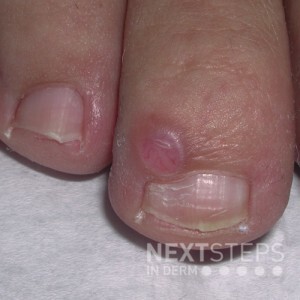 The mucin found in this lesion is produced by:
A. Fibroblasts
B. Keratinocyte
C. Merkel cells
D. Nail matrix
E. Osteoblast
To find out the correct answer and read the explanation, click here.
Brought to you by our brand partner Derm In-Review. A product of SanovaWorks.
…
The mucin found in this lesion is produced by:
A. Fibroblasts
B. Keratinocyte
C. Merkel cells
D. Nail matrix
E. Osteoblast
To find out the correct answer and read the explanation, click here.
Brought to you by our brand partner Derm In-Review. A product of SanovaWorks.
…  Starting a dermatology practice is a dream that many dermatologists share. The freedom to decide how and when you work, building a business, increasing physician autonomy, and starting a legacy are some attractive aspects of starting a practice. However, when taking in the immense burden of building a business, things can seem quite daunting and overwhelming. At the 2021 ODAC Dermatology, Aesthet …
 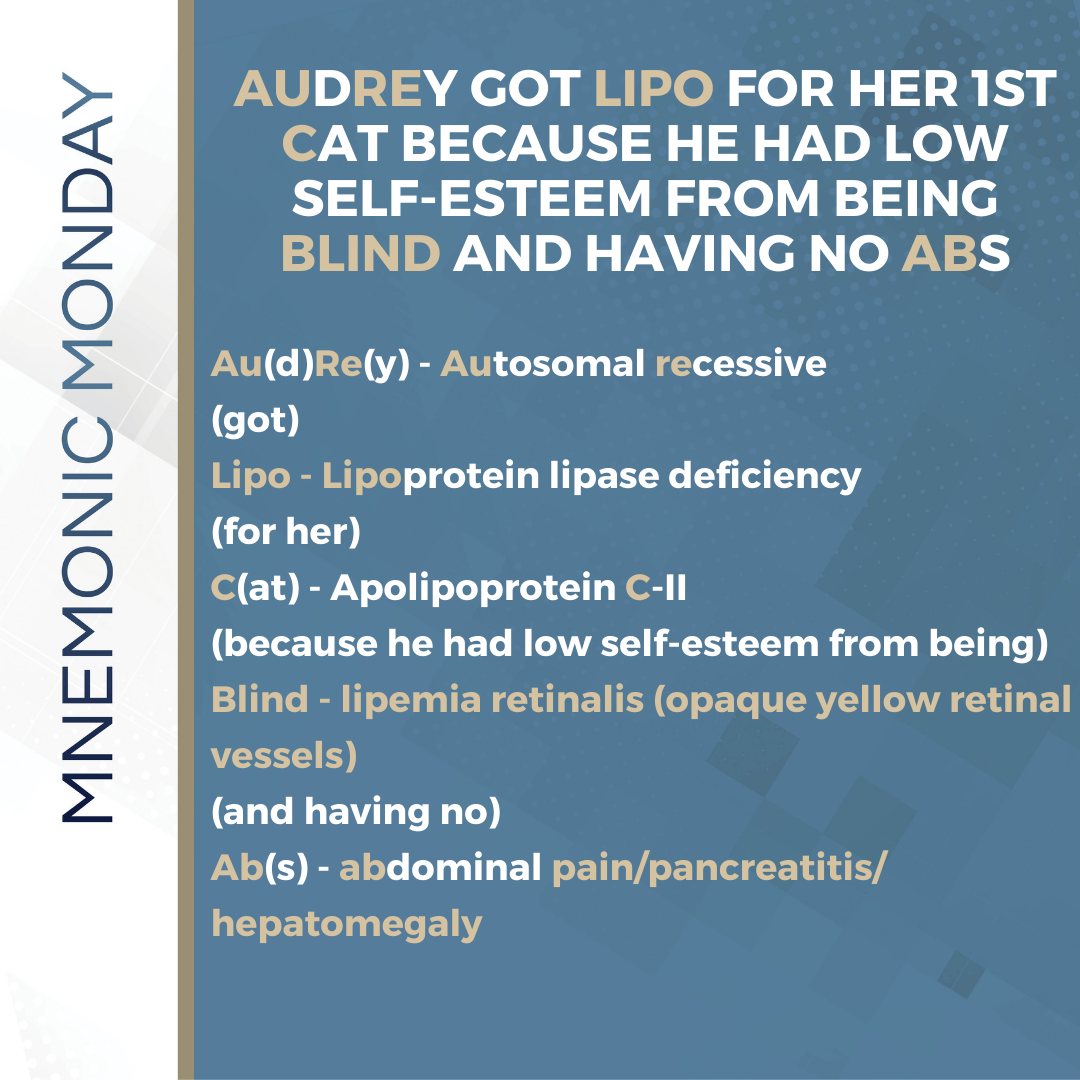 On this Mnemonic Monday, we challenge you to remember findings/mutations associated with Familial LPL deficiency (type I hyperlipoproteinemia) with the following mnemonic:
AudRey got lipo for her 1st Cat because he had low self-esteem from being blind and having no abs.
Au(d)Re(y)- Autosomal recessive
(got)
Lipo- Lipoprotein lipase deficiency
(for her)
C(at)- Apolipoprotein C-II
( …
On this Mnemonic Monday, we challenge you to remember findings/mutations associated with Familial LPL deficiency (type I hyperlipoproteinemia) with the following mnemonic:
AudRey got lipo for her 1st Cat because he had low self-esteem from being blind and having no abs.
Au(d)Re(y)- Autosomal recessive
(got)
Lipo- Lipoprotein lipase deficiency
(for her)
C(at)- Apolipoprotein C-II
( … 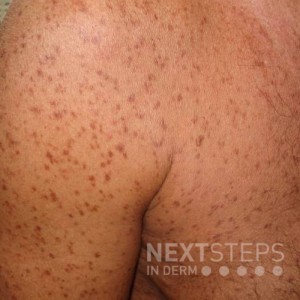 Which organ system is least likely to be involved in the condition shown in the attached image?
A. Liver
B. Spleen
C. Genitourinary
D. Gastrointestinal tract
E. Bone marrow
To find out the correct answer and read the explanation, click here.
Brought to you by our brand partner Derm In-Review. A product of SanovaWorks.
…
Which organ system is least likely to be involved in the condition shown in the attached image?
A. Liver
B. Spleen
C. Genitourinary
D. Gastrointestinal tract
E. Bone marrow
To find out the correct answer and read the explanation, click here.
Brought to you by our brand partner Derm In-Review. A product of SanovaWorks.
…