












Trichoscopy Clues for Diagnosing Common Hair Disorders
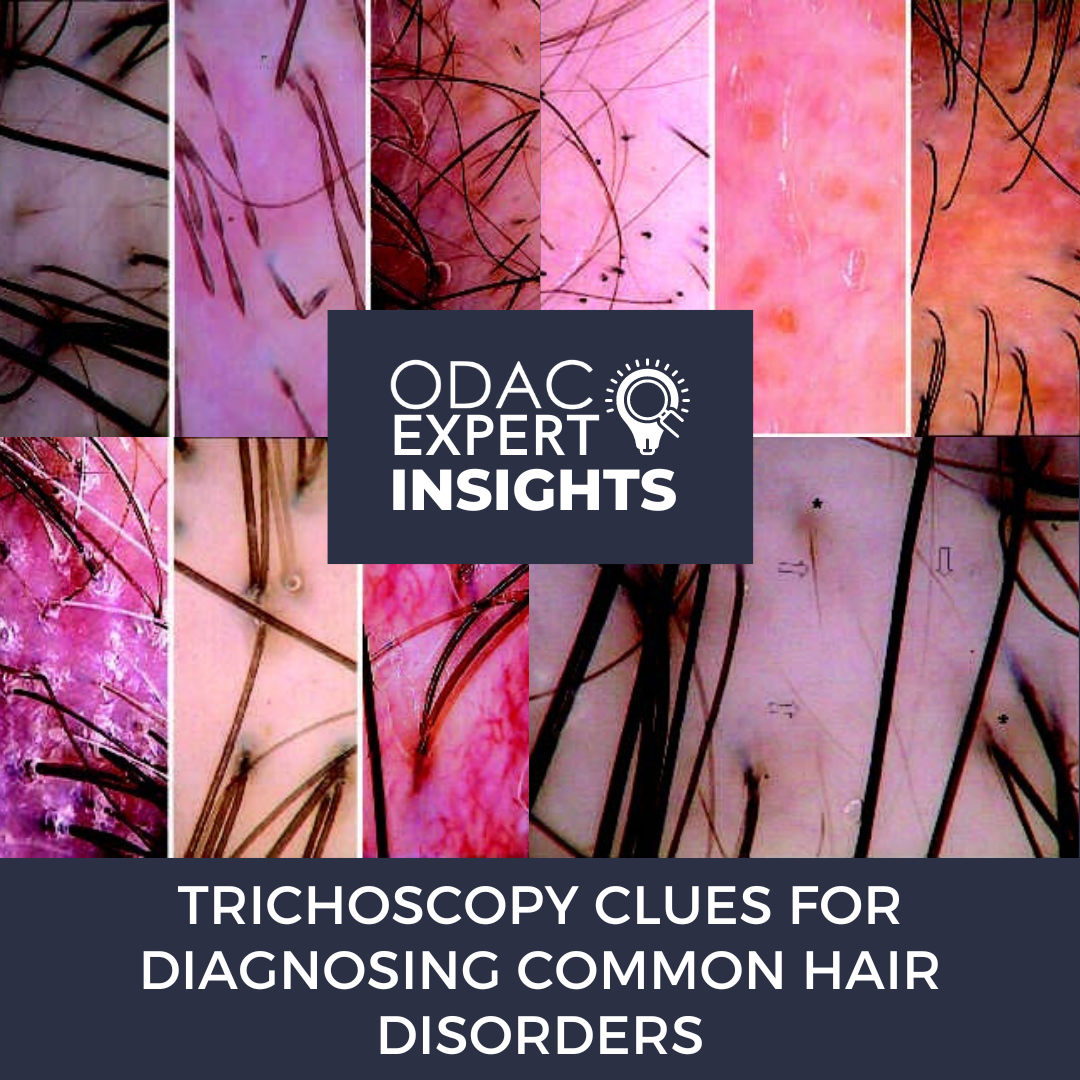 Trichoscopy is a handy dermoscopic tool that can be used at the bedside to diagnose multiple hair diseases. However, these hair diseases may be challenging to diagnose by the untrained eye. Fortunately, we had the opportunity to train these skills at ODAC 2023 with hair expert and dermatologist Dr. Amy McMichael, Professor of Dermatology at Wake Forest University. We will review the essentials of …
Trichoscopy is a handy dermoscopic tool that can be used at the bedside to diagnose multiple hair diseases. However, these hair diseases may be challenging to diagnose by the untrained eye. Fortunately, we had the opportunity to train these skills at ODAC 2023 with hair expert and dermatologist Dr. Amy McMichael, Professor of Dermatology at Wake Forest University. We will review the essentials of … Continue reading "Trichoscopy Clues for Diagnosing Common Hair Disorders"
 INTRODUCTION
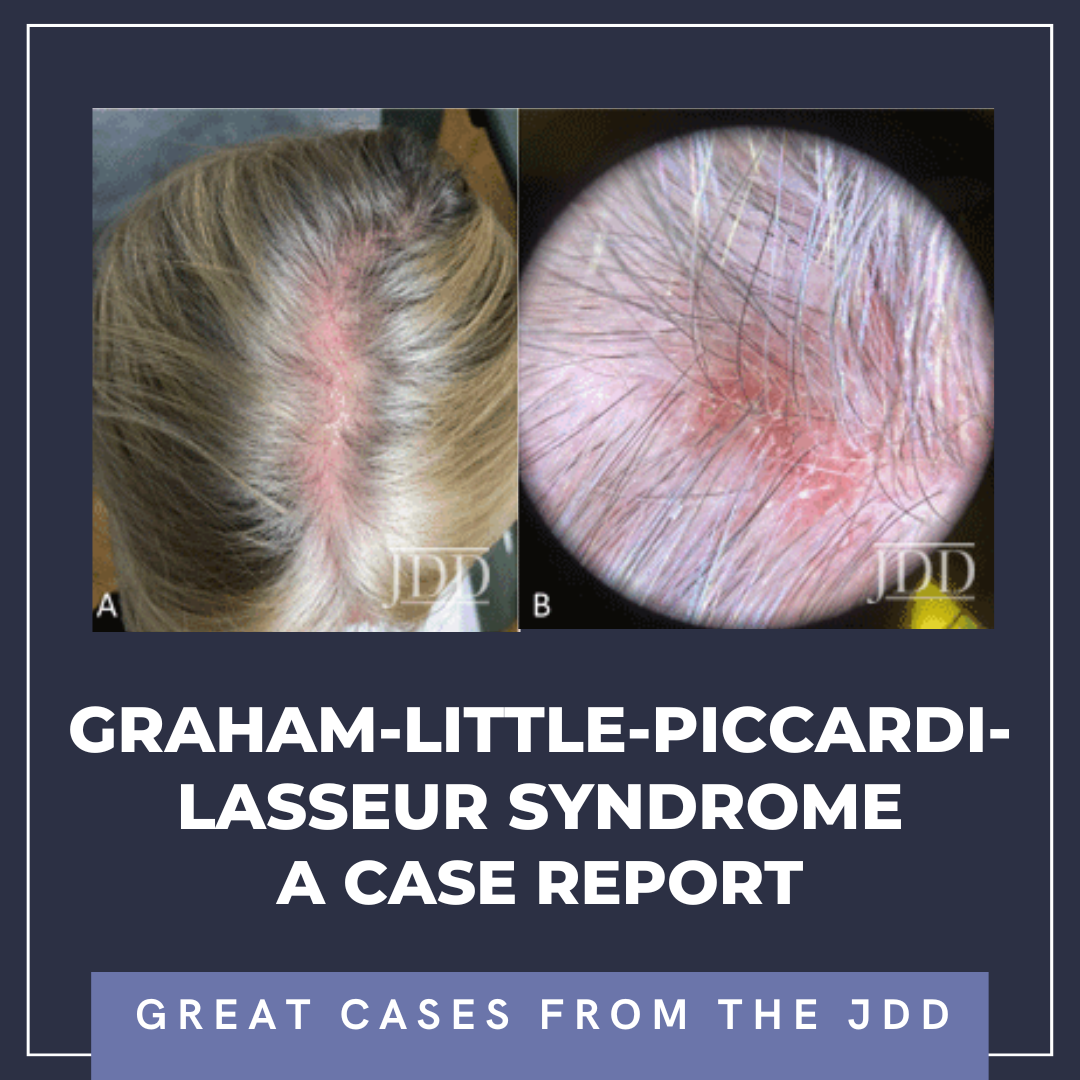
Graham-Little-Piccardi-Lasseur Syndrome (GLPLS) is a rare clinical subtype of lichen planopilaris (LPP) that manifests as a triad of scarring alopecia of the scalp, nonscarring alopecia of the axillary and the pubic skin, and widespread lichenoid follicular papules.1 GLPLS more commonly affects women (male-to-female ratio ≃ 1:4), with the classic patient being a middle-aged Ca …
INTRODUCTION
Graham-Little-Piccardi-Lasseur Syndrome (GLPLS) is a rare clinical subtype of lichen planopilaris (LPP) that manifests as a triad of scarring alopecia of the scalp, nonscarring alopecia of the axillary and the pubic skin, and widespread lichenoid follicular papules.1 GLPLS more commonly affects women (male-to-female ratio ≃ 1:4), with the classic patient being a middle-aged Ca … 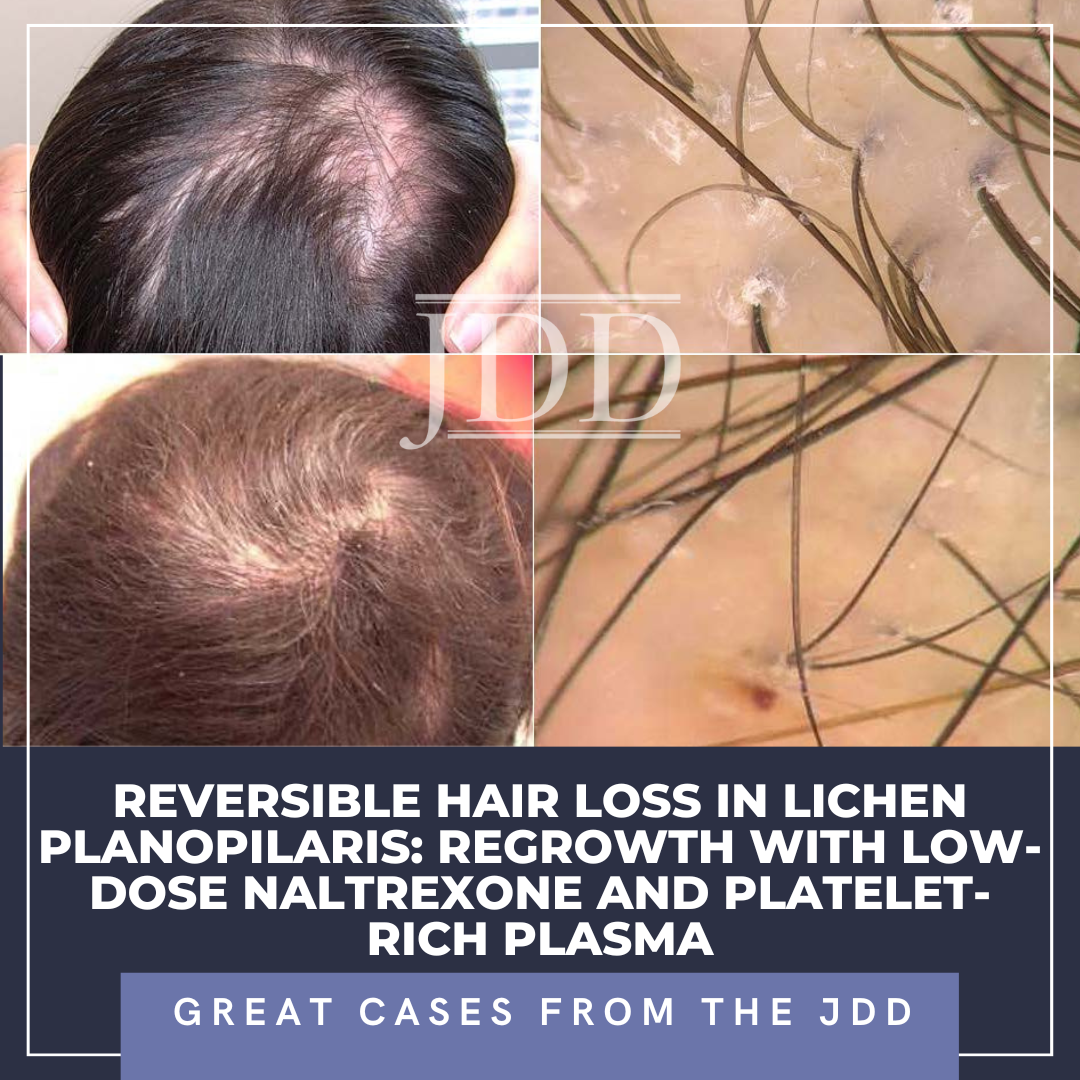 INTRODUCTION
Lichen planopilaris (LPP) is a cicatricial alopecia that presents with patchy or diffuse hair loss at the vertex or parietal scalp. Although there is no gold standard therapy, most interventions are immune modulating and aimed at reducing inflammation and terminating the scarring process to prevent further fibrosis.3 Even amongst patients who respond to therapy, hair loss at alopeci …
INTRODUCTION
Lichen planopilaris (LPP) is a cicatricial alopecia that presents with patchy or diffuse hair loss at the vertex or parietal scalp. Although there is no gold standard therapy, most interventions are immune modulating and aimed at reducing inflammation and terminating the scarring process to prevent further fibrosis.3 Even amongst patients who respond to therapy, hair loss at alopeci … 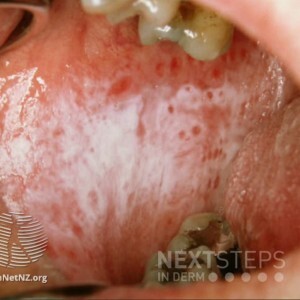 A 55 year-old woman comes in for a rash in her mouth pictured below. Also on exam, you note a scarring alopecia of the scalp. From the below options, which other location should you examine for hair loss?
A. Eyebrows
B. Legs
C. Axilla
D. Arms
E. Eyelashes
To find out the correct answer and read the explanation, click here.
Brought to you by our brand partner
…
A 55 year-old woman comes in for a rash in her mouth pictured below. Also on exam, you note a scarring alopecia of the scalp. From the below options, which other location should you examine for hair loss?
A. Eyebrows
B. Legs
C. Axilla
D. Arms
E. Eyelashes
To find out the correct answer and read the explanation, click here.
Brought to you by our brand partner
… 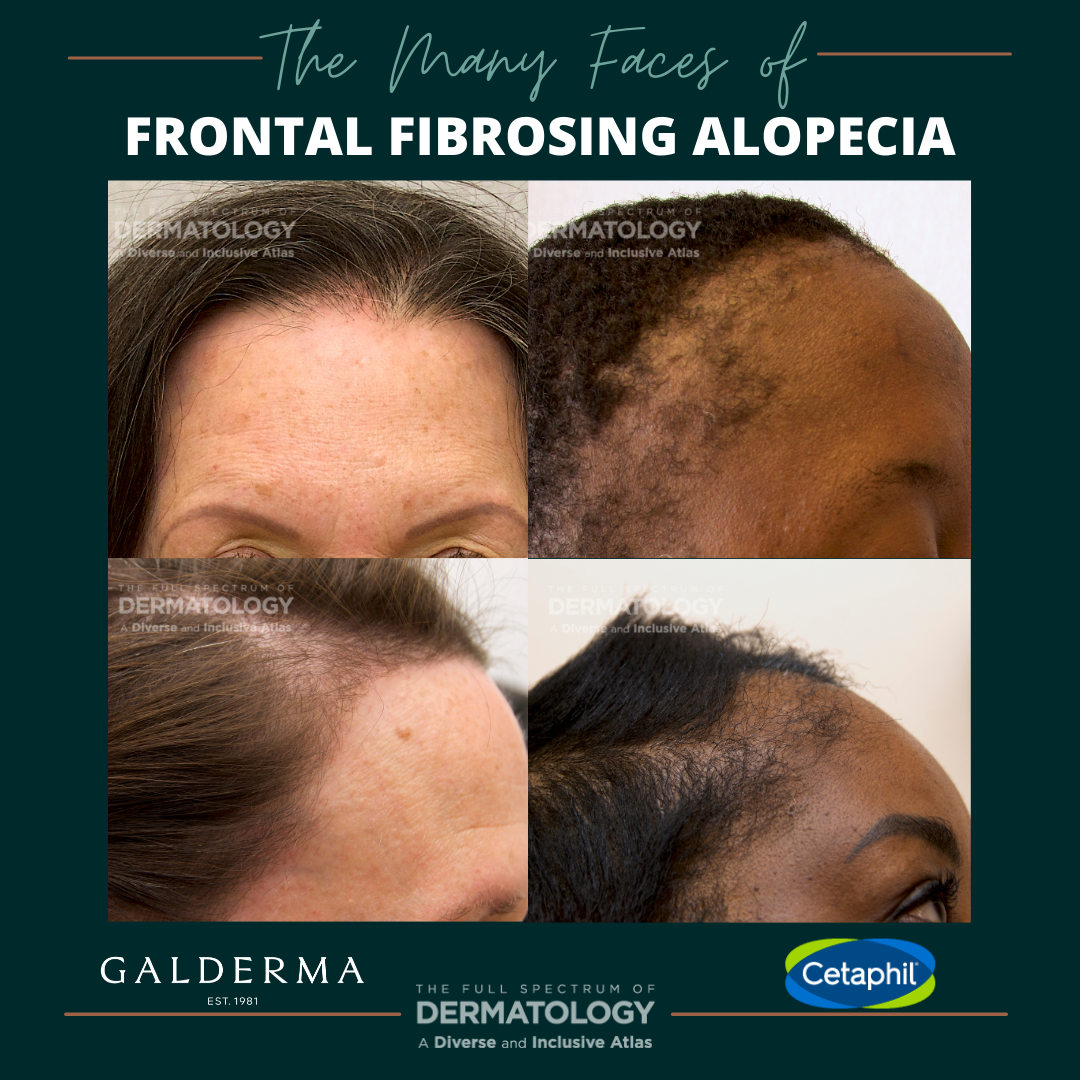 Before concluding a patient with thinning edges has traction or androgenic alopecia, take a closer look at the scalp, face, and other hair bearing areas of the body to complete the picture. You might be missing signs and symptoms of Frontal Fibrosing Alopecia. As seen in the images, FFA can have various presentation patterns on different skin tones and hair textures.
Frontal Fibrosing Alopecia …
Before concluding a patient with thinning edges has traction or androgenic alopecia, take a closer look at the scalp, face, and other hair bearing areas of the body to complete the picture. You might be missing signs and symptoms of Frontal Fibrosing Alopecia. As seen in the images, FFA can have various presentation patterns on different skin tones and hair textures.
Frontal Fibrosing Alopecia …