












Keys for Treating Pediatric Patients With Skin of Color
 When treating pediatric patients, knowing how to appropriately use topical steroids in this patient population is essential, according to Dr. Karan Lal, a dermatologist in Scottsdale, Ariz. Next Steps in Derm, in partnership with Skin of Color Update, interviewed Dr. Lal, who shares how to taper topical steroids and the role of non-steroidal agents. Hear the latest in the safety profile of topica …
When treating pediatric patients, knowing how to appropriately use topical steroids in this patient population is essential, according to Dr. Karan Lal, a dermatologist in Scottsdale, Ariz. Next Steps in Derm, in partnership with Skin of Color Update, interviewed Dr. Lal, who shares how to taper topical steroids and the role of non-steroidal agents. Hear the latest in the safety profile of topica … Continue reading "Keys for Treating Pediatric Patients With Skin of Color"
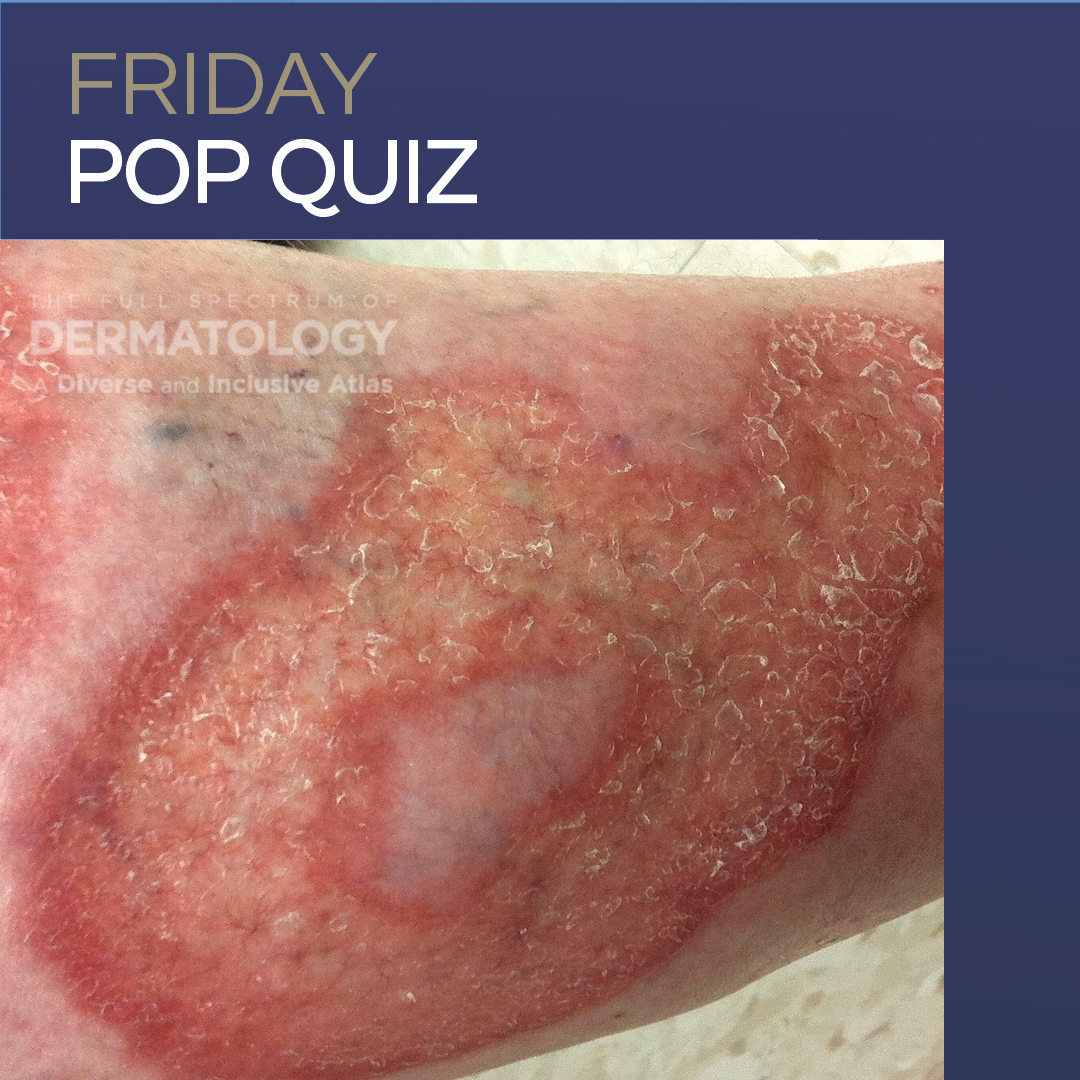 A 64-year old-woman with a history of hypertension and poorly controlled diabetes mellitus presents with these painful lesions on her legs that have slowly progressed for years. She is unable to tolerate compression. What is an appropriate next step?
A. Surgical reperfusion
B. Oral prednisone
C. Topical tacrolimus
D. Oral cellcept
E. Intravenous vancomycin
To find out the corre …
A 64-year old-woman with a history of hypertension and poorly controlled diabetes mellitus presents with these painful lesions on her legs that have slowly progressed for years. She is unable to tolerate compression. What is an appropriate next step?
A. Surgical reperfusion
B. Oral prednisone
C. Topical tacrolimus
D. Oral cellcept
E. Intravenous vancomycin
To find out the corre … 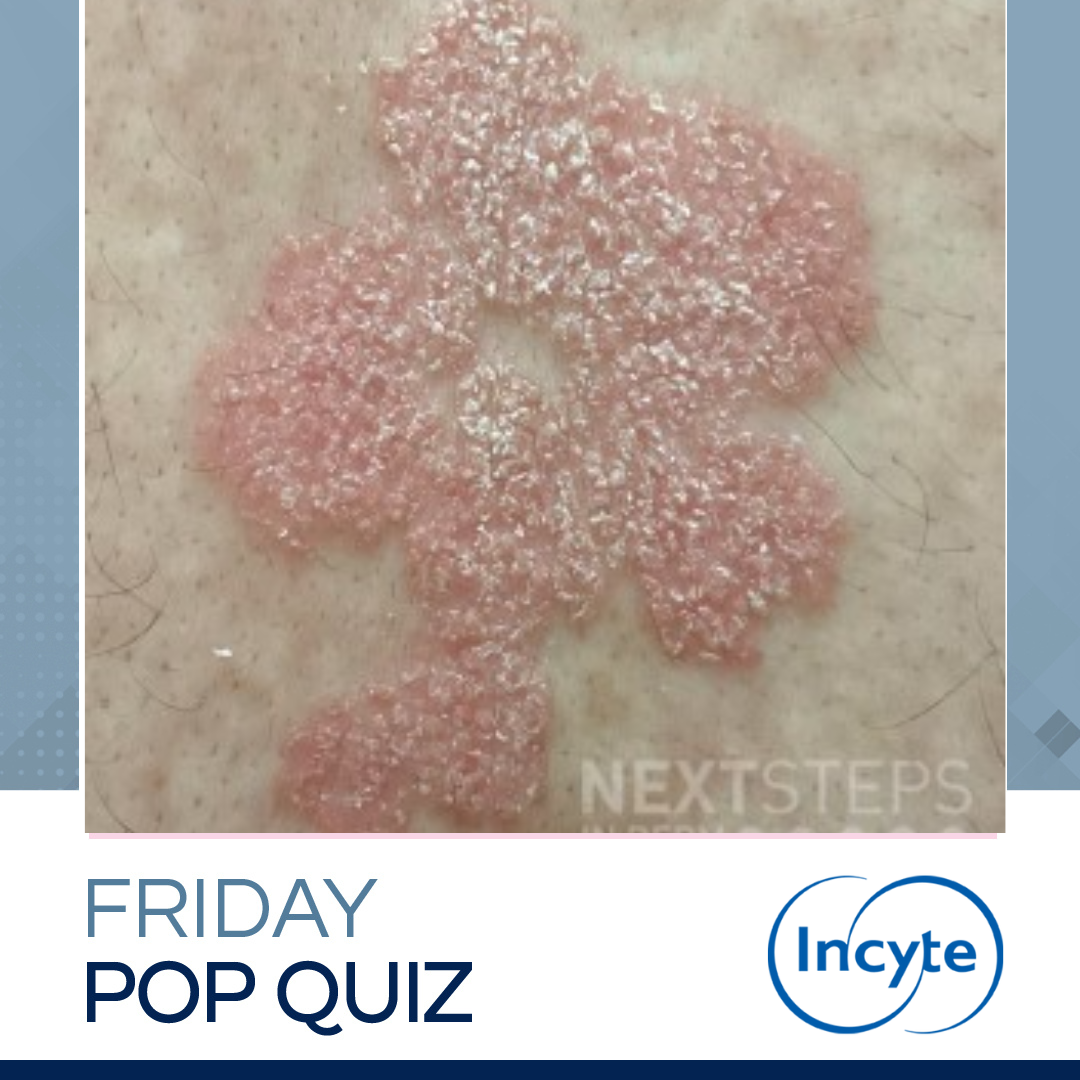 A 35-year-old woman presents to clinic with the skin lesions (shown) and joint pain. She was previously well controlled on guselkumab, but has flared since her dog was diagnosed with cancer. She has previously failed various treatments including topical steroids, methotrexate, narrow-band UVB, adalimumab, ixekizumab, and etanercept. She developed transaminitis and hepatic steatosis in response t …
 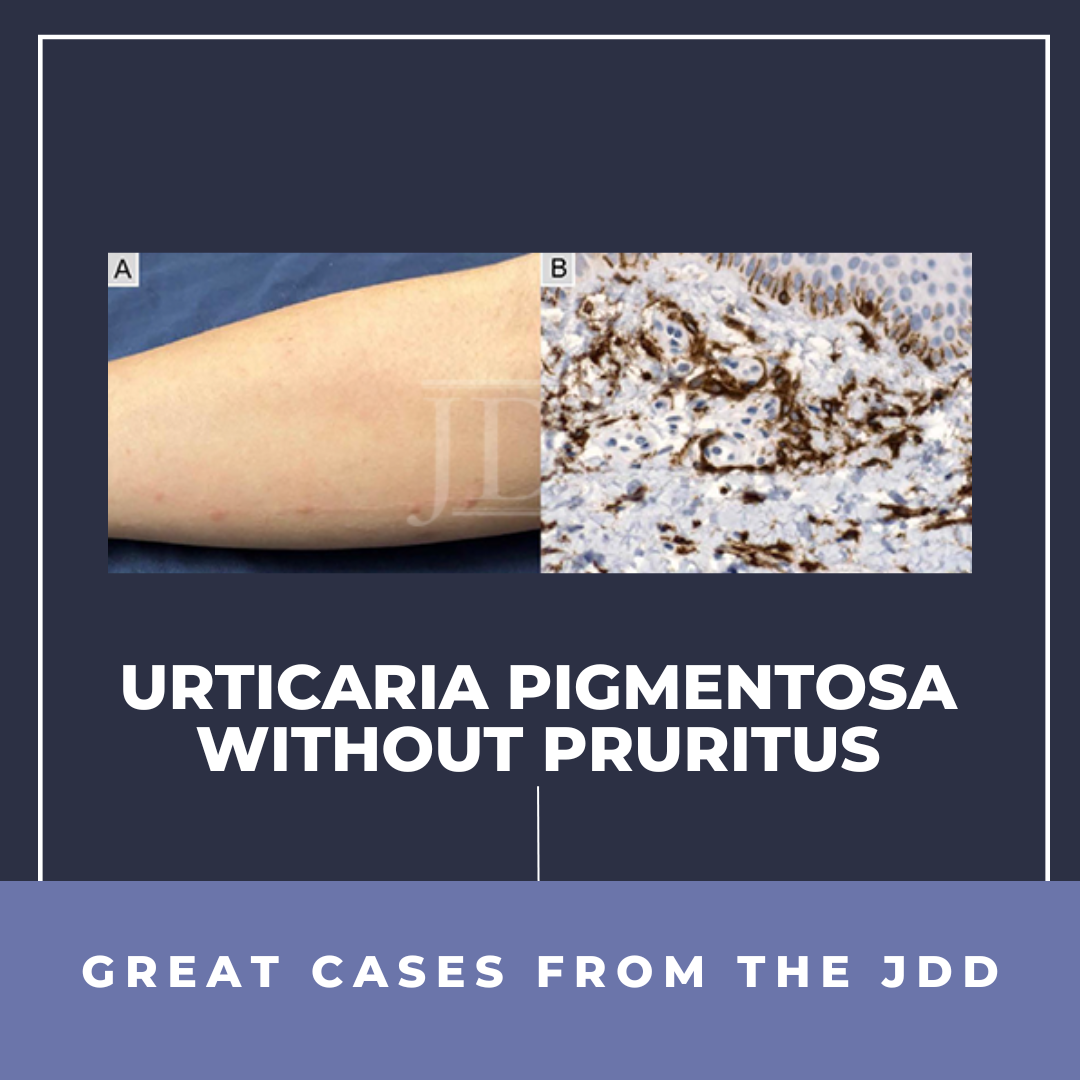 Mastocytosis is a group of disorders characterized by the pathologic accumulation of mast cells in various tissues. One example of mastocytosis is urticaria pigmentosa, which presents with mastocytomas that can cause hives and, when irritated, pruritus. To the authors' knowledge, they are describing the first case of urticaria pigmentosa without pruritus. The patient had a positive Darier' …
 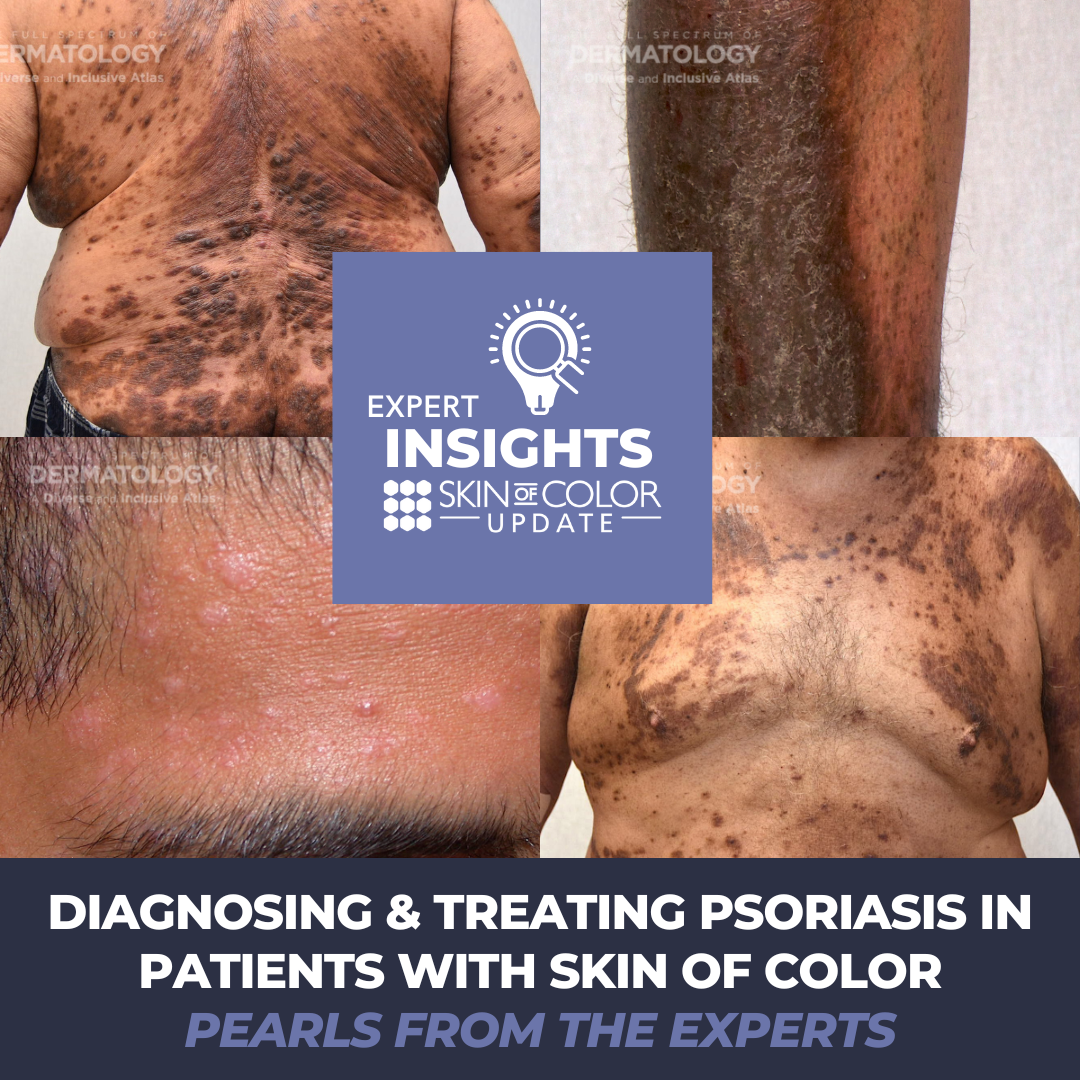 During the 2023 Skin of Color Update in New York City, esteemed experts, Dr. Andrew Alexis, Professor of Clinical Dermatology at Weill Cornell Medical College, and Dr. George Han, Associate Professor in the Department of Dermatology at the Donald and Barbara Zucker School of Medicine at Hofstra/Northwell, shared their expertise in diagnosing and managing psoriasis in individuals with skin of color …