












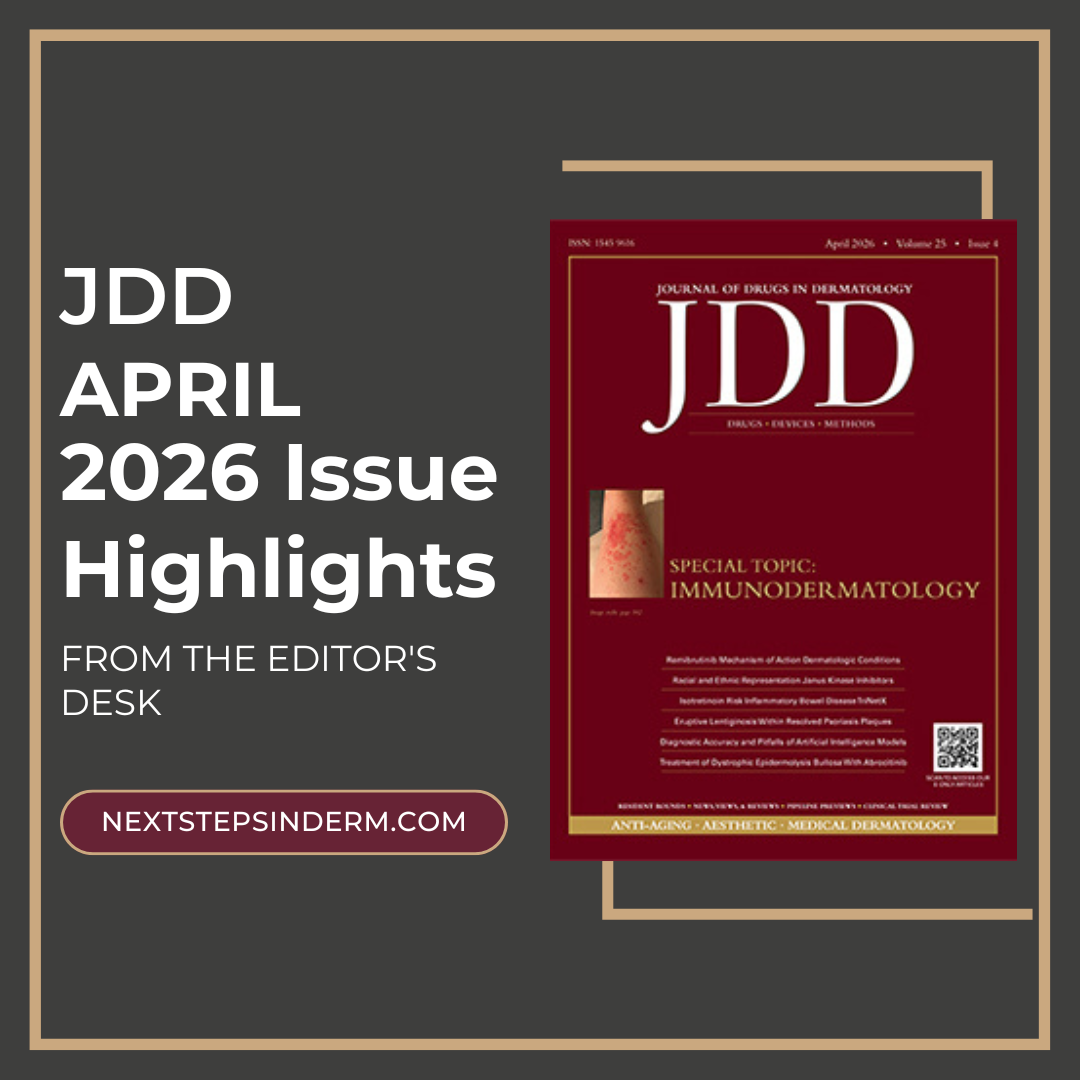
Welcome to the April edition the JDD Highlights! Each month, we dive into the Journal of Drugs in Dermatology to bring you the most impactful research and clinical updates selected by the editor.
This month’s selection reflects the rapidly evolving landscape of modern dermatology. From the diagnostic precision of Artificial Intelligence in nail disorders to the “cosmetic elegance” of seborrheic dermatitis treatments, the April issue balances cutting-edge technology with practical, patient-centered care. We also explore critical professional shifts, including the USMLE Step 1 Pass/Fail transition and the ongoing need for racial representation in JAK inhibitor clinical trials.
Whether you are looking to refine your treatment protocols for Skin of Color or seeking clarity on the regulatory environment of exosomes, these picks provide a roadmap for the current state of the specialty.
Remibrutinib: Insights Into Its Mechanism of Action and Use for Dermatologic Conditions provides findings that demonstrate clinical efficacy for the treatment of CSU with an acceptable safety profile.
Racial and Ethnic Representation in Clinical Trials of Janus Kinase Inhibitors for Dermatologic Conditions: A Systematic Review aims to characterize the study populations of clinical trials for JKIs for dermatologic indications.
Diagnostic Accuracy and Pitfalls of Publicly Available Artificial Intelligence Models for Nail Disorders evaluates the ability of widely available Vision Language Models (VLMs), ChatGPT-3.5, ChatGPT-4o, and Google Gemini, in diagnosing common nail disorders using clinical images.
Hydroquinone and Emerging Depigmenting Agents: Clinical Guidelines, Regulatory History, and Global Safety Considerations aims to offer an updated review on best practices for depigmenting treatment protocols and highlight ongoing debates on dermatologic safety and efficacy
Patient Interest in Dermatologists in the United States: A 20-Year Google Trends and Workforce Analysis evaluates geographic variation in patient interest in dermatology services and compares it to dermatologist supply to identify areas of potential unmet need.
Exosome-Based Therapies in Dermatology: A Scoping Review summarizes clinical studies evaluating exosome-based dermatologic therapies, clarifying evidence, safety, and regulatory context.
Beyond Efficacy: 0.6% Selenium Disulfide Shampoo Matches 2% Ketoconazole for Seborrheic Dermatitis with Superior Cosmesis compares the efficacy, tolerability, and cosmetic benefits of 0.6% micronized selenium disulfide shampoo (SeS2) to 2% ketoconazole shampoo.
Objective Measures Needed: Dermatology Program Directors’ Perspectives on the USMLE Step 1 Pass/Fail Transition shares survey results and communicates the changes Dermatology residency program directors (PDs) will make to evaluate candidates.
Topical Vehicle Design: Educational Intervention Addresses Gap in Dermatology Resident Training seeks to quantify TV training in dermatology residency and to evaluate the impact of a targeted educational intervention on residents’ overall knowledge.
An Investigator-Developed Regimen for Treatment and Prevention of Post-Inflammatory Hyperpigmentation in Skin of Color evaluates the safety and efficacy of a comprehensive investigator-developed skincare regimen in reducing post-inflammatory hyperpigmentation (PIH) and improving patient-reported satisfaction in skin of color patients.
Find more JDD Issue Highlights here.