












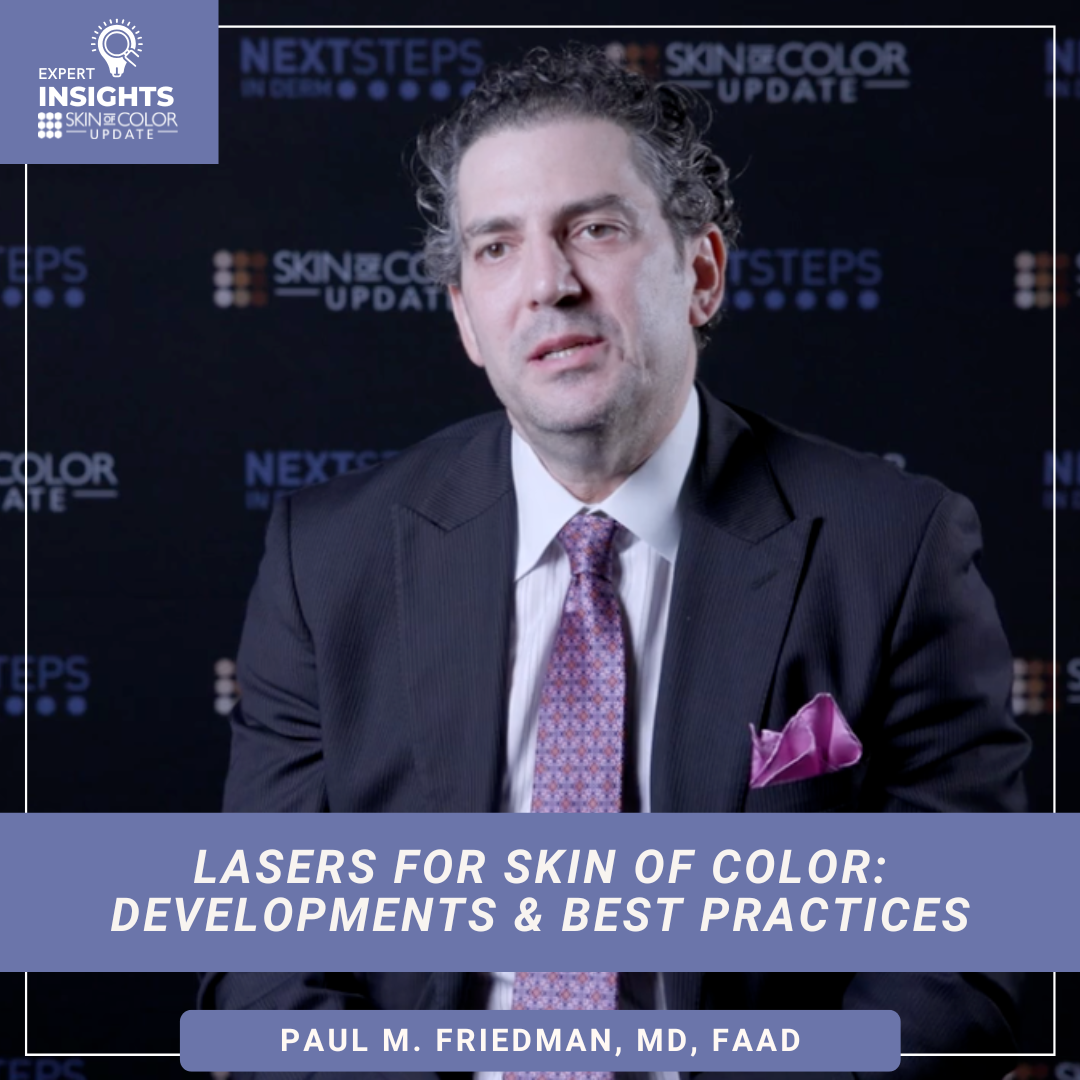
The laser toolbox for use in patients with skin of color has grown dramatically in the last 20 years. Next Steps in Derm, in partnership with Skin of Color Update, interviewed Dr. Paul M. Friedman, clinical assistant professor of dermatology at the University of Texas Medical School. Dr. Friedman practices in Houston, the most ethnically diverse city in America, so he’s become well-versed in the evolution of safe and effective laser treatment in patients with darker skin tones. Find out why he recommends becoming an ”endpoint-ologist” and how he pre-treats the skin for greater safety and effectiveness. This interview is a must-watch for emerging laser practitioners!
Further Reading
If you want to read more about using lasers in patients with skin of color, check out the following articles published in the Journal of Drugs in Dermatology:
ABSTRACT
Background: Facial hyperpigmentation, characterized by the excessive production of melanin in the skin, is a prevalent dermatological concern affecting individuals of various ethnic backgrounds.
Aims: To evaluate the safety and efficacy of a multi-wavelength 589/1319 nm dual-pulse duration laser device for the treatment of hyperpigmentation
Patients/Methods: A total of 17 healthy women (mean [SD] age of 43.4 [11.6] with skin phototype II-IV) were enrolled in this prospective, single-center study. Eligible participants received up to 3 treatments spaced 3 to 5 weeks apart with 2 follow-up visits at 4 and 12 weeks after the final treatment. Assessments included investigator ratings of skin quality, global aesthetic improvement, and hyperpigmentation. Safety and tolerability were monitored throughout the study.
Results: Significant improvements in hyperpigmentation and skin quality were observed at the 2 follow-up visits from baseline in most patients per investigator assessments. Patient satisfaction was high, and treatments were safe with transient self-resolving side effects such as erythema.
Conclusions: Laser treatments using a dual-wavelength 589/1319nm device significantly improve facial hyperpigmentation in patients of various skin types.
ABSTRACT
Background: Cosmetic procedures with lasers, nonenergy devices, and injectables are increasing in popularity among patients with skin of color. Published algorithms address measures to reduce side effects related to aesthetic procedures; however, none focus on reducing adverse events in skin of color.
Methods: An expert panel of dermatologists and plastic surgeons conducted face-to-face and online meetings to develop an algorithm for measures before, during, and after using aesthetic devices (energy and nonenergy-based) and injectable treatments based on the best available evidence for skin of color. Published algorithms and literature searches for aesthetic procedures provided guidance for the current algorithm. A modified Delphi method was used to reach a consensus to apply outcomes of literature searches, along with expert opinion, resulting in the current algorithm.
Results: The four sections of the algorithm outline an approach to optimize outcomes with specific before, during, and after procedure considerations. Pre-procedural consultation includes the development of a specific treatment plan based on individual patient goals and risk profile (including history and signs that may predict a higher risk for pigmentary or scarring complications). Before the procedure, sun avoidance and sunscreen use are emphasized; herpes simplex virus 1 prophylaxis and bleaching agents are administered if indicated. During the procedure, skin cleansing products are addressed, along with judicious techniques to minimize unintended cutaneous injury or inflammation. Post-procedural sunscreen and gentle skincare that may include skin-lightening agents or formulations designed to prevent infection and promote optimum healing are advised.
Conclusions: The algorithm strives to optimize treatment outcomes for patients with skin of color by providing their physicians with guidance on measures before, during, and after office-based medical aesthetic procedures.
Did you enjoy this video interview? Find more here.