












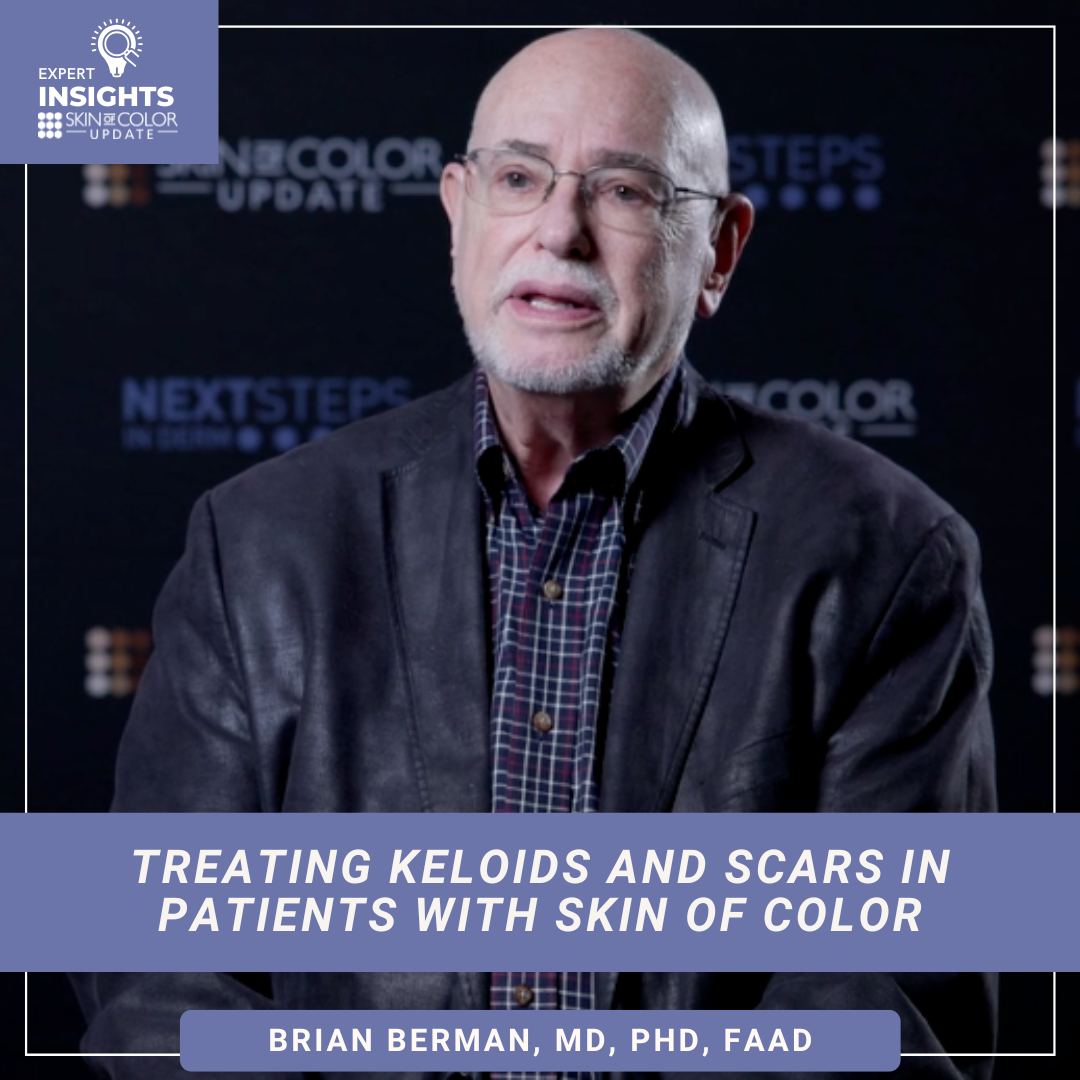
Treating keloids requires a forward-thinking approach, according to Dr. Brian Berman, professor emeritus of dermatology and dermatologic surgery at the University of Miami Miller School of Medicine. Next Steps in Derm, in partnership with Skin of Color Update, interviewed Dr. Berman about the challenges associated with treating keloids given the high risk of recurrence. Hear Dr. Berman’s approach when patients say they want surgery. Watch as he outlines research on strategies to reduce recurrence risk from surgery, including superficial radiation therapy and imiquimod. Plus learn about non-surgical options and their recurrence rates.
Further Reading
If you want to read more about keloids and hypertrophic scars, check out the following articles published in the Journal of Drugs in Dermatology:
Analysis of Therapeutic Interventions for Hypertrophic and Keloid Scarring: A Systematic Review
ABSTRACT
This systematic review compares the efficacy of pressure garment therapy (PGT) and non-PGT treatments, such as triamcinolone, verapamil, and laser therapies, for hypertrophic and keloid scars. Following PRISMA guidelines, a systematic search of PubMed, CINAHL, EMBASE, and Web of Science was conducted. Studies that evaluated the efficacy of PGT or non-PGT interventions using standardized scar assessment scales (VSS, POSAS) were included. A total of 753 articles were screened, and 12 studies involving 397 participants met the inclusion criteria. Interventions on the VSS scale compared included PGT, triamcinolone, verapamil, bleomycin, silicone gel, laser therapy, Botulinum toxin, and massage therapy. Triamcinolone showed the greatest scar reduction (82.2%), followed by Nd:YAG laser (65.44%) and verapamil (57.7%). Early intervention PGT demonstrated a 30.2% reduction, while late intervention PGT showed only a 4.5% decrease. Triamcinolone is the most effective treatment for hypertrophic and keloid scars, but evidence supporting PGT is inconsistent. Further research is needed to standardize treatment protocols and improve clinical outcomes.
ABSTRACT
Hypertrophic scars and keloids represent abnormal wound healing, manifesting as raised scars confined to or extending beyond the wound margin, respectively. Understanding the risk factors associated with these scarring types is crucial for prevention and management. Utilizing the TriNetX global health research network database, we analyzed the data of 6,249 patients with hypertrophic scars or keloids. We employed the ICD-10 code L91.0 for identification, generating a control cohort matched by age, sex, and race. Associations between scarring and race, ethnicity, and various comorbidities were quantified. The analysis revealed that hypertrophic scars and keloids were more commonly associated with Black/African American individuals (OR=1.74, P<0.01) and less so with White races and Hispanic ethnicity. Significant comorbidities associated with increased risk included scarring alopecia, rosacea, atopic dermatitis, and acne. Inadequate sample size limited analysis for conditions like vitiligo. The findings suggest a higher prevalence of these scars in Black/African American races, potentially linked to melanocyte-mediated fibroblast and extracellular matrix activities. A notable correlation with inflammatory conditions suggests shared cytokine pathways, highlighting IL-4 and IL-13 as therapeutic targets. The strong association between scarring alopecia and skin cancers may implicate chronic inflammation and treatment-related scarring. Limitations of the study include its retrospective design, possible misdiagnosis, and small sample sizes for certain comorbidities.
Did you enjoy this video interview? Find more here.