












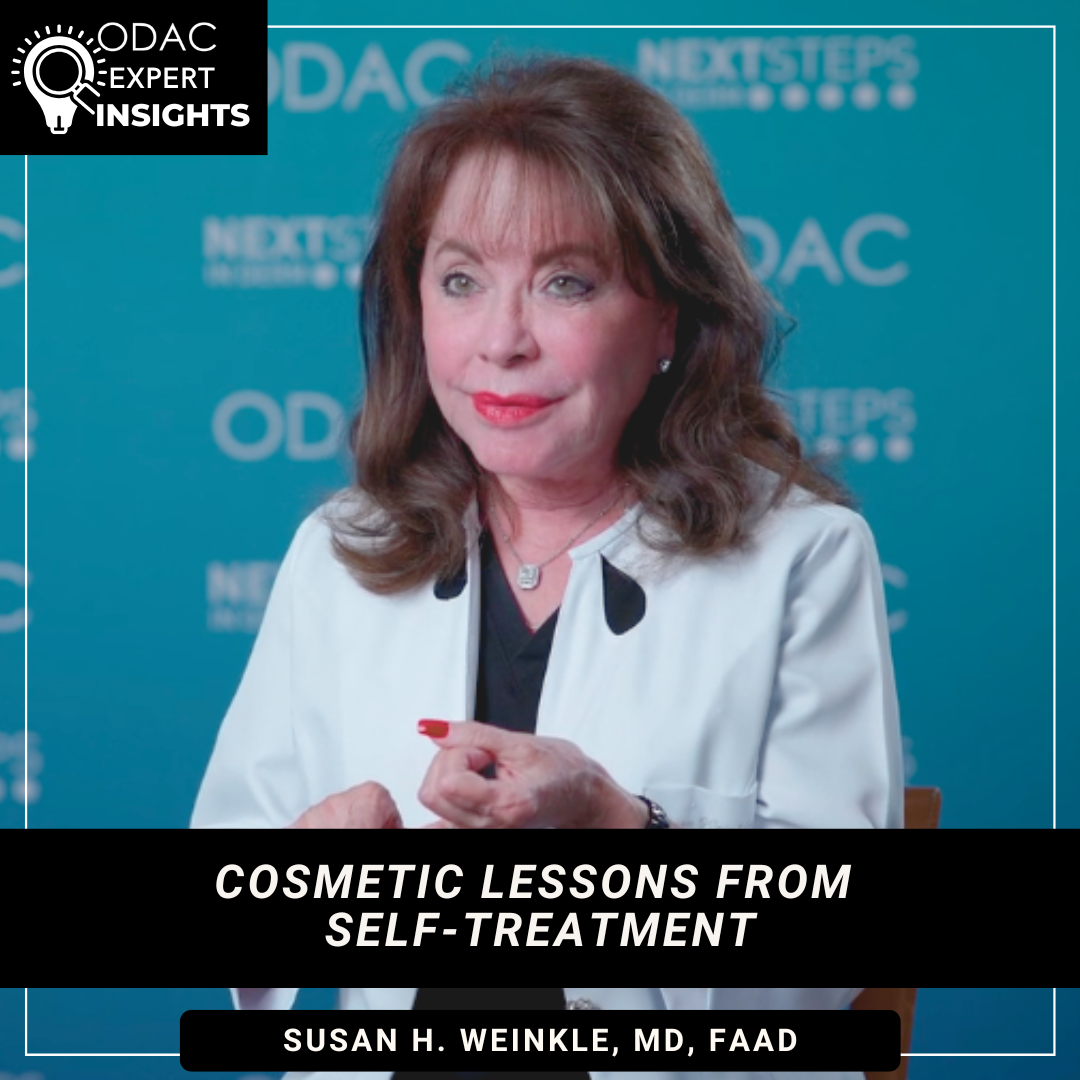
ODAC Conference Co-Chair Susan Weinkle, MD, FAAD, is a scientist at heart, which means she’s frequently conducting aesthetic experiments on herself. In this Next Steps in Derm video interview, conducted in partnership with the ODAC Dermatology Conference, Dr. Weinkle shares some of the lessons she’s learned in 25 years of aesthetic self-treatment. For Dr. Weinkle, it’s meant admitting her self-treatment mistakes, which she says has only improved patient trust. Find out what areas of the face are off-limits for Dr. Weinkle’s self-treatment and when she relies on her colleagues. This is a fresh, lighthearted interview on how learning from adverse events makes you a better clinician.
Further Reading
If you want to read more about cosmetic dermatology, check out the following articles published in the Journal of Drugs in Dermatology:
ABSTRACT
Background: Poly-l-lactic acid (PLLA) is an injectable biostimulatory filler used for restoring facial fat volume loss.
Objective: To evaluate the safety and efficacy of injectable PLLA injections for volume loss in the temples using dual plane injections. Assessments included live ratings and ratings of standardized pictures and ultrasound imaging at weeks 4, 8, 12, and 16 by a trained
evaluator.
Results: At the 8-week follow-up, there was a statistically significant increase in temporal volume and improvement in skin elasticity in PLLA-treated subjects. Treatment was well-tolerated with minimal self-resolving adverse effects. Ultrasound imaging confirmed that
the injection plane was free of vasculature, posing no safety risk.
Conclusion: Repeated PLLA treatments in the temporal region elicited a global improvement in facial shape, particularly the mid and upper face region. The temple hollowness and facial laxity improved over time with no safety sequelae.
ABSTRACT
Background: Soft-tissue filler injection-related vascular complications (IRVC) can lead to tissue necrosis, vision loss, and stroke. Hyaluronidase-based injections are the mainstay of treatment, though other options include heat, massage, nitroglycerin, and anticoagulants. Given the narrow therapeutic window and limited early warning signs, we propose training residents to implement a standardized soft-tissue filler vascular complication (SFVC) management protocol.
Objective: This study aims to address gaps in procedural knowledge by providing residents with a lecture series followed by a hands-on cadaveric practice session.
Methods and Materials: An SFVC management protocol was developed based upon a literature review and expert opinion. Didactic instruction and practice sessions with cadavers were conducted with residents at an academic dermatology program. All resident trainees took a survey assessing their knowledge and satisfaction with the quality of training.
Results: Thirteen residents were included in this study. Overall, the aggregate confidence score for recognizing vascular events, acute management of filler complications, and performance of procedures after hands-on simulation on cadavers significantly increased between pre- and post-surveys (P<0.001).
Conclusion: Our intervention successfully demonstrated increased confidence among residents regarding the key components of SFVC, namely, in recognizing the signs and symptoms, managing an acute event, and finally, in performing advanced procedures for SFVC.
Did you enjoy this video interview? Find more here.
CATEGORIESDERM TOPICS, VIDEO PEARLS
TAGS SUSAN WEINKLE, MD, FAAD; COSMETIC DERMATOLOGY; FILLERS; NEUROMODULATORS