












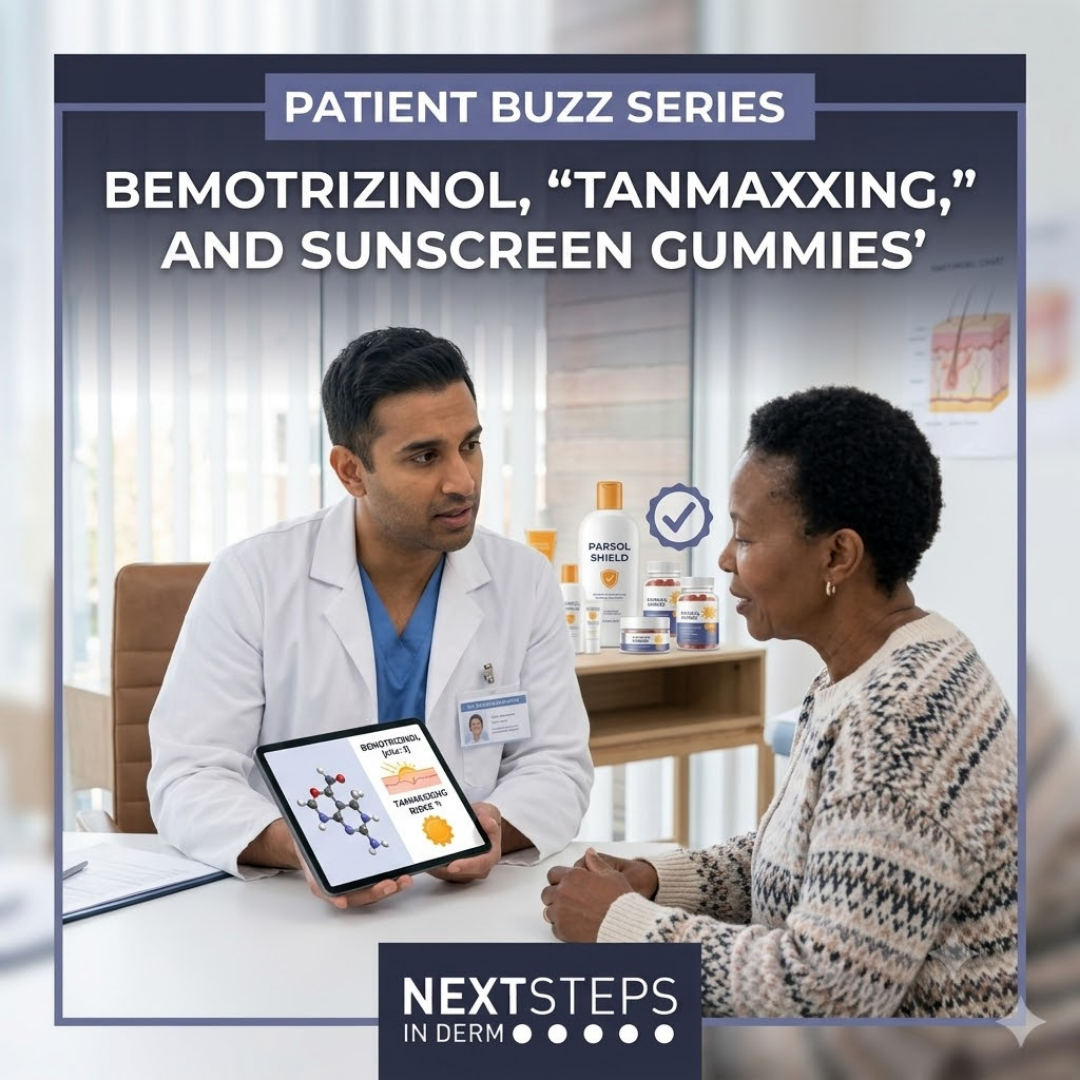
Summer means news articles on sun protection and the dangers of tanning, and for the first time in more than 20 years, the news includes FDA approval of a sunscreen ingredient. As detailed by NPR, newly approved bemotrizinol protects against both UVA and UVB rays, and is photo stable, offering longer protection than other U.S. sunscreens. Even the Environmental Working Group (EWG) is excited about the approval, saying that bemotrizinol has more safety data to support it than currently approved chemical sunscreens, including no evidence of reproductive harm, irritation, or absorption into the bloodstream. According to the article, the first sunscreens with bemotrizinol (marketed as Parsol Shield) should be available this fall.
Even though dermatologists have been educating the public about the dangers of tanning for decades, social media has given the practice new life. In a CBS News report, “tanmaxxing” is the new term for spending as much time in the sun as possible and using tanning beds with the goal of obtaining the darkest possible tan. In the interview, dermatologist Dr. Rachel Nazarian says “tanmaxxing” is popular among Gen Z, even though research shows they also want healthy looking skin. Since “tanmaxxers” don’t seem to be swayed by skin cancer risks, Dr. Nazarian recommends changing messaging to focus on the risks of premature aging, including wrinkles.
For those who do want to protect their skin from the sun, sunscreen gummies are an option, but do they work? In an article by Eating Well, dermatologist Dr. Marisa Garshick says the gummies’ ingredients – including polypodium leucotomos – may reduce damage from free radicals and oxidative stress, but research is limited. Dr. Garshick says these gummies are not a substitute for topical sunscreen as they do not provide a chemical or physical barrier on the skin to protect from UV rays.
Effectively communicating the risks of UV damage and the need for sun protection requires knowing the latest public opinion. As Dr. Nazarian points out in her interview, TikTok and Instagram are popular sources of health information, even though the information may be false or misleading. Dermatologists need to recognize these societal shifts and proactively build trust with their patients so accurate health messages will be well received, leading to changed behavior.
Know what other dermatology topics are making news in this review of consumer skin, hair, and nail health articles:
-
- ABC News: Why not to scratch a bug bite
- Cosmopolitan: How to treat hormonal acne
- Eating Well: Foods to reduce UV-related damage
- Everyday Health: Psoriasis-safe house cleaning
- Health: Proven anti-aging ingredients
- Health: Skincare routine changes for summer
- HuffPost: How to get rid of milia
- HuffPost: Using hands for body cleansing
- Newsweek: Products dermatologists avoid
- Newsweek: Skin habits that break down collagen
- Newsweek: Skin signs of health
- Parade/AOL: Early signs of skin cancer
- Prevention: How often to wash sheets
- Prevention: How often to wash your face
- Prevention: PDRN skin care
- Real Simple: Showering too much
- SheFinds: Beauty treatments for building collagen
- The Healthy: Is a raised mole cancerous?
- TODAY: How to treat heat rash
- Woman’s World: How to remove skin tags at home
- Women’s Health: How to build collagen in the skin
Did you enjoy this Patient Buzz listing? You can find more here.