












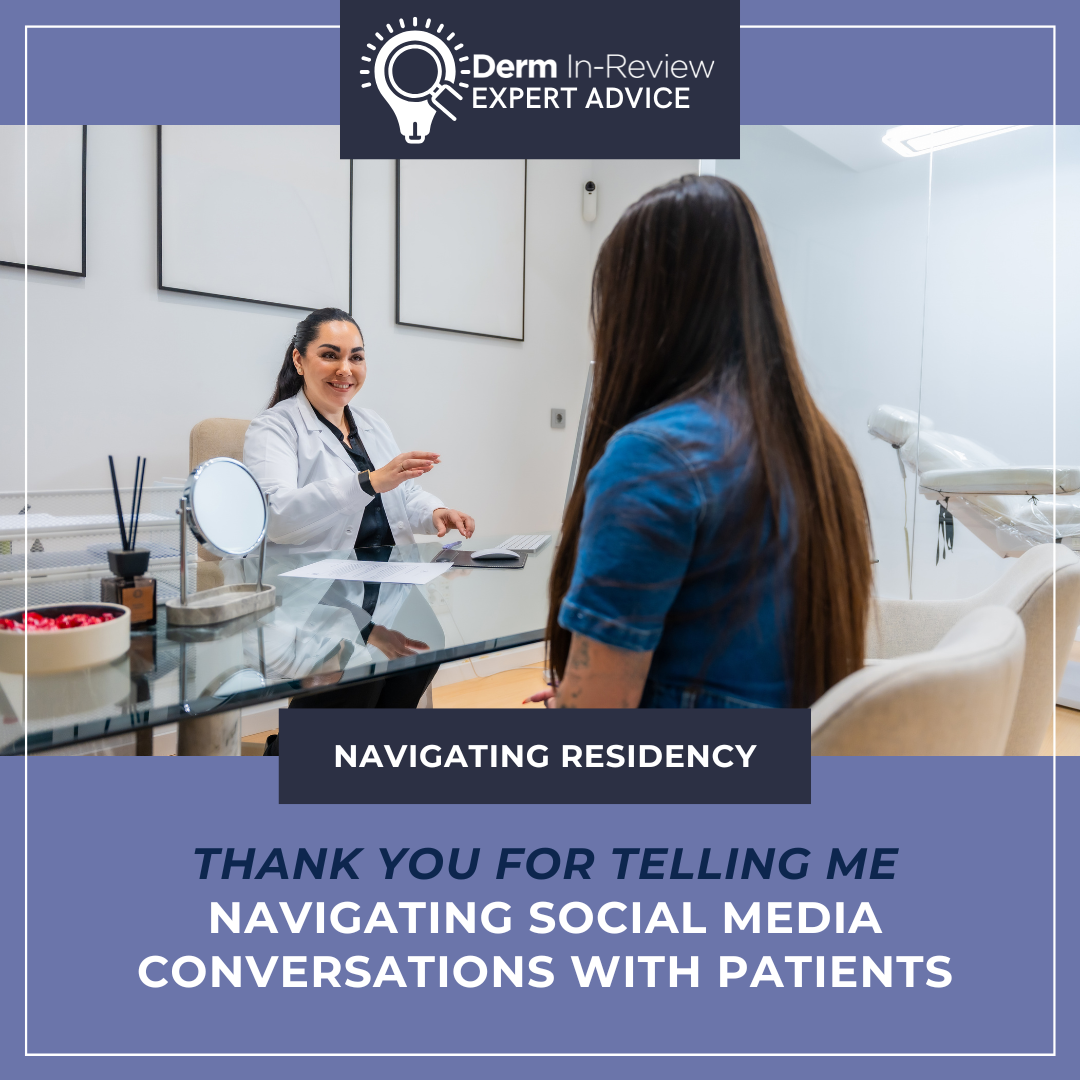
My colleagues often joke about how much my patients “love me.”
Over the years, I’ve come to think that what they are really seeing in my patients is a profound commitment to the therapeutic relationship: a willingness to trust the plan we have laid out and a deep engagement in their own care, even when visits are short and clinic is moving fast.
For physicians, that same commitment is often tested when patients bring in outside information. Increasingly, that information comes from social media. Patients frequently arrive having already read posts on Reddit, watched videos on Instagram, joined online communities on Facebook, or asked ChatGPT about their diagnosis, and those narratives often shape the conversation before I enter the room.
What is easy to miss in these moments is that the challenge is rarely the content itself. It is what happens to the relationship when we respond to it. When we don’t engage or do so and discount the content, our patients don’t hear disagreement with a source or idea, but instead a dismissal of their own judgment and intelligence. Over time, that can quietly erode trust.
In contrast, when we engage, we have an amazing opportunity to honor their self-advocacy and inquiry, preserve trust, and strengthen shared decision-making. I find that briefly sitting in these uncomfortable moments has been some of the most meaningful work in my practice.
In many ways, this is no different than when we were in school and our librarians taught us how to evaluate sources and identify trustworthy information. That same skill has become part of our clinical responsibility: helping patients navigate the flood of health information they encounter every day. I don’t hope to convince patients to abandon social media; I aim to help them become thoughtful consumers of the information they encounter there.
Behavioral science helps explain why this matters. Psychological reactance describes the tendency to resist when autonomy feels threatened; the more we tell people what they should not believe, the more firmly those beliefs can become entrenched. Conversely, when people feel respected and their perspectives understood, they are more open to challenging old and incorporating new information.
In practice, this often starts with how we react in those first moments of the encounter. I’ve learned that my initial emotional response often determines where the conversation goes next. My goal is to keep the door open, not close it. I often lead with something as simple as, “Thank you for telling me.” It’s a small phrase, but signals that I value their willingness to share rather than conceal what they are doing, reading, or trying on their own.
In that moment, I am less concerned with whether the information is correct than with preserving the trust that allows us to discuss it honestly.
A patient recently told me, “I saw on Facebook that people have cured rashes like mine with FenBen, so I tried it because I thought it might help me too.”
“Thank you for bringing this up.”
This simple statement is positive reinforcement. If we want patients to tell us what supplements they’re taking, what they read online, or what treatments they’ve tried on their own, we have to reinforce honesty when it happens. Otherwise, patients will simply stop sharing that information with us.
“I’m so happy to hear that you’re invested in understanding your skin and wanting to feel better. I want the same thing and to figure this out together.”
By highlighting our shared goal, I am signaling that we are on the same team. I am not frustrated that they sought information; I am glad they cared enough to look and trusted me enough to tell me about it.
“What were your thoughts when you read that?”
Before I can address the information itself, I need to understand what it means to them. Patients rarely make decisions based on facts alone. They make decisions based on emotions, prior experiences, fears, hopes, and stories. Understanding why a message resonated with a patient is often more informative than debating the message itself. In fact, many social media posts are persuasive because they tell a story, not because they provide evidence. Assessing their perspective on these stories helps me understand whether they are looking for reassurance, validation, alternatives, or simply someone willing to listen.
Some folks already feel confused, hopeless, or even silly for trying something, and they don’t need shame from their doctor telling them they were wrong. Others might feel defensive. How do you set the stage for honesty and also navigate these waters?
“When you compare your rash now with your rash before trying this, what are your thoughts on how well it worked?”
Through guided self-reflection, rather than telling them this treatment failed, I am inviting them to examine the outcome themselves. People are often more persuaded by conclusions they reach on their own than by conclusions imposed upon them.
If a patient expresses disappointment, I name that emotion.
“I hear that it felt frustrating and draining putting your hope in that treatment. I’m sorry it didn’t pan out how you hoped.”
If they immediately defend the treatment, I acknowledge that too.
“It sounds like we’ve not been very successful in making you feel better and it makes complete sense that you’d try to help yourself. I don’t fault you for that.”
Only then do I begin introducing more neutral information about efficacy, risks, side effects, or concerns about counterfeit products purchased online.
Before recommending any treatments, I often ask one final question:
“It sounds like you are miserable and willing to do almost anything to get better. How open are you to hearing about some alternative options?”
The power of this question is that it preserves autonomy. Instead of pushing recommendations onto a patient, I am inviting them to ask for them. The difference may seem subtle, but in my experience, it transforms the conversation from persuasion into partnership.
My goal is rarely to convince a patient to stop using social media to seek healthcare information. For many patients, that simply isn’t realistic. Social media has become one of the primary ways people learn about their health, connect with others who share their diagnosis, and seek support during difficult times. Rather than trying to close that door, I try to help them walk through it with support and guidance.
When patients bring me information from Facebook, Reddit, Instagram, or TikTok, I want to understand what drew them in. Was it the science? The story? Was it finding someone who understands what they are going through? Once I know that, I can redirect rather than correct.
If a patient is looking for community, I might share a reputable support organization or patient advocacy group, like the Lichen Sclerosus Support Network. If they are looking for educational content, I may recommend physician creators on social media, professional societies, journals, or websites that consistently provide evidence-based information.
I have found my patients remarkably receptive to this approach. Most are not looking to challenge expertise. They are looking for guidance and coming from a place of uncertainty and fear. By acknowledging their curiosity rather than criticizing it, we preserve trust while giving them support to navigate an increasingly complicated information landscape.
These conversations extend far beyond social media. They occur every day in dermatology—when a patient with contact dermatitis is convinced a different culprit is responsible or when a patient with vulvar disease comes to clinic carrying years of fear, stigma, and misinformation.
The specifics change, but the skills do not.
Patients want a clinician willing to listen before they teach. When patients tell us what they have read, tried, feared, or hoped for, they are offering us a glimpse into how they understand their disease. That understanding is often far more valuable than us trying to squash the misinformation itself.
As a physician, my goal is not to win an argument, debunk a post, or prove a patient wrong, but to be a trusted guide.
So, I start by saying a simple, “Thank you for telling me.”
Because the conversation isn’t really about social media. It’s about trust.
Did you enjoy this article? Find more on Navigating Your Career here.