












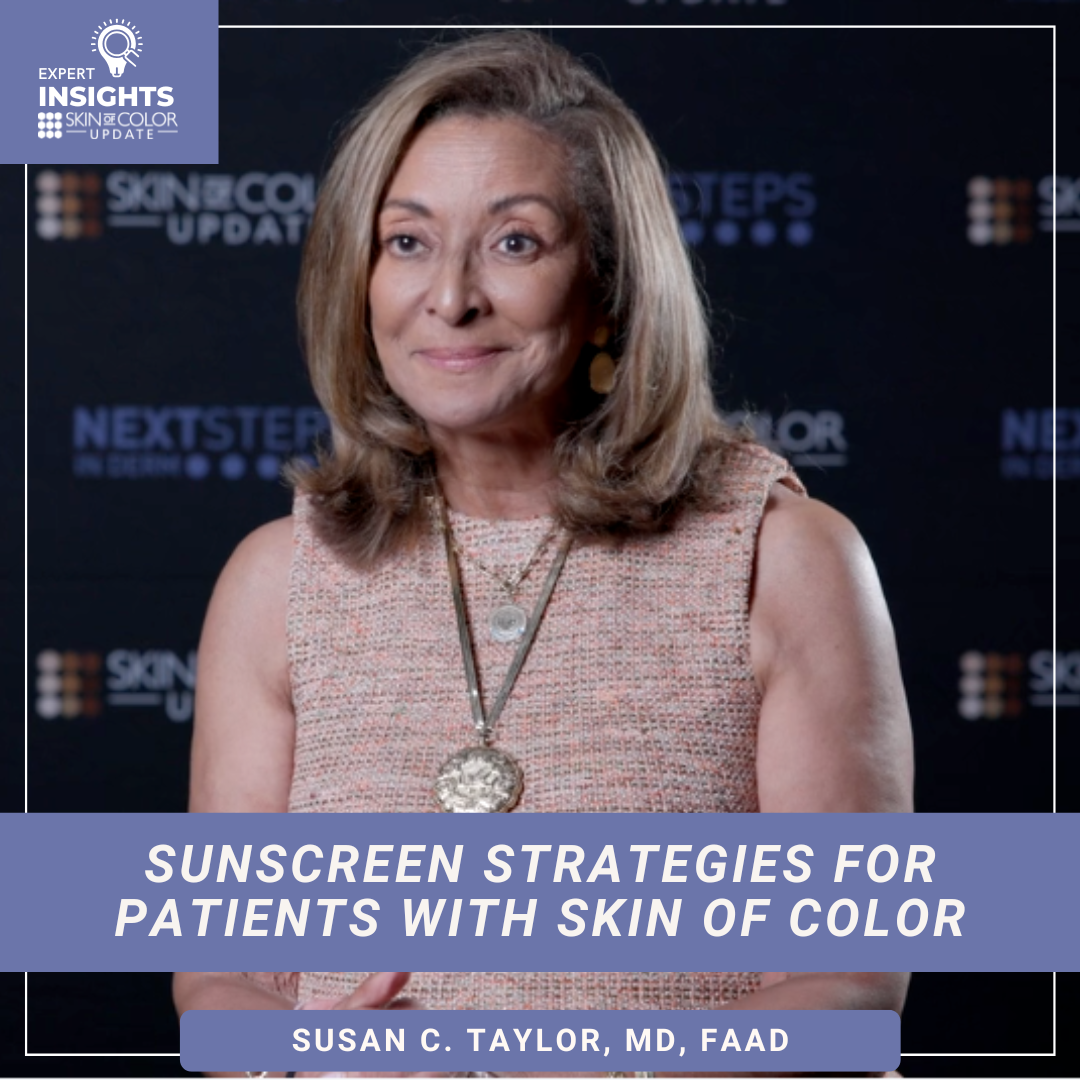
Research on the role of visible light has changed how to address photoprotection in patients with skin of color. Next Steps in Derm, in partnership with Skin of Color Update, interviewed Dr. Susan C. Taylor, Bernett Johnson Endowed Professor of Dermatology at the University of Pennsylvania Perelman School of Medicine. Watch as Dr. Taylor outlines the latest insights in visible light and how to protect the skin from its effects. Learn what types of sunscreens make good recommendations for people with darker skin tones. Plus hear about some sunscreen ingredients that may be on the horizon in the U.S.
Further Reading
If you want to read more about photoprotection in patients with skin of color, check out the following articles published in the Journal of Drugs in Dermatology:
ABSTRACT
Visible light (400-700nm) comprises 45% of the sunlight spectrum and can induce both immediate and persistent skin darkening, as well as worsen dyschromia, especially in the skin of color population. In a recent mini-zone study, we demonstrated that iron oxide (FeO)-containing formulations could protect skin from visible light-induced pigmentation in Fitzpatrick skin type (FST) IV individuals, while ultraviolet (UV) protection sunscreen SPF 50+ (sun protection factor) could not. To assess the benefit of adding FeO-containing foundation into real-life daily sun care routine in improving the appearance of photodamage and melasma, we evaluated the efficacy of two sun protection regimens (SPF50 alone and SPF50+FeO) in healthy women of FST III to VI for 12 weeks. Clinical evaluation and colorimetric measurement showed that both regimens significantly improved skin quality and overall appearance over 12 weeks compared to baseline. At week 4, the photodamage subgroup using SPF50+FeO showed early improvement over baseline in skin roughness (visual and tactile). The melasma subgroup using SPF50+FeO showed early improvement in overall healthy appearance.
At week 12, although both groups showed improvement in colorimetric measurements (L*), the response was different: 36% of melasma participants in the SPF50+FeO group showed superior improvement in their skin radiance (L*) vs 0% in the SPF50 group. A self-assessment questionnaire revealed that SPF50+FeO enhanced the quality of life in participants with melasma. This study demonstrated the importance of including visible light protection into a daily sun care routine, especially for melasma: masking and improving existing conditions indoors and outdoors at the same time.
Dermatologist Practical Guide To Encouraging Photoprotection In Skin Of Color Patients
ABSTRACT
Patients with skin of color (SOC) are at risk for skin cancers and photoaging and have a unique predisposition to pigmentary disorders that are exacerbated by ultraviolet light exposure. Sun protection with a Sun Protection Factor (SPF) > 15 sunscreen has been shown to not only decrease the incidence of melanoma and non-melanoma skin cancers, but also improve and prevent the exacerbation of certain ultraviolet (UV)-sensitive conditions, such as post-inflammatory hyperpigmentation (PIH), melasma, and Lichen Planus Pigmentosus (LPP).1 Despite this, the use of sunscreen among SOC patients have been shown to be inadequate, with barriers such as a poor blend with some skin complexions and lack of awareness being attributed as its drivers. Recent studies have also highlighted issues related to cultural and communication barriers that affect the way dermatologists relate to their skin of color patients.2 The purpose of this article is to provide practical tips to dermatologists interested in improving sunscreen adherence in their SOC patient population.
Did you enjoy this video interview? Find more here.