












GLP-1 Agonists & Cosmetic Outcomes
 GLP-1s are ushering in a new era of medical treatment, and cosmetic dermatologists are feeling the impact. Patients who are experiencing weight loss from GLP-1s are seeking help with the cosmetic side effects, especially with the loss of facial volume. Next Steps in Derm, in partnership with the ODAC Dermatology Conference, interviewed Sarah Jackson, MD, FAAD, associate clinical professor of derma …
 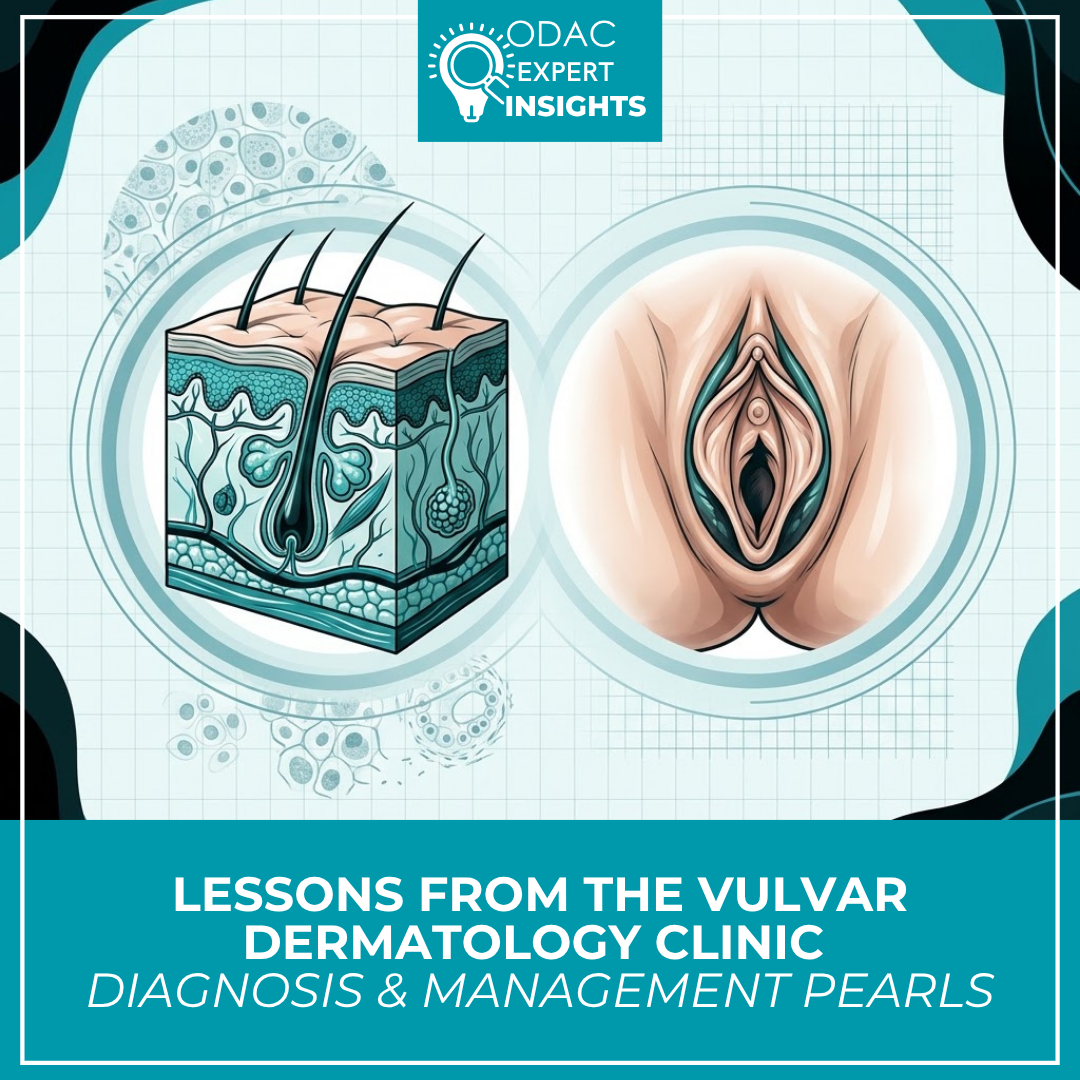 Vulvar dermatology is one of those areas where small misses can really add up. Symptoms can affect quality of life, and in some cases, result in scarring and permanent architecture changes. Dr Murphy—assistant professor of Dermatology and director of the Vulvar Health Program at George Washington University—walked through six key lessons she’s learned from caring for patients with vulvar dis …
 Photodynamic therapy (PDT) involves a lot of choices for a clinician, from deciding how to prepare the skin for a photosensitizer to selecting the light source. Next Steps in Derm, in partnership with the ODAC Dermatology Conference, addresses proven strategies for PDT in this interview with ODAC Conference Co-Chair Vishal A. Patel, MD, FACMS. Watch as Dr. Patel outlines varied options for enhanci …
 New treatments are giving alopecia patients hope, according to ODAC Medical Dermatology Advisor Jennifer Soung, MD, FAAD. Next Steps in Derm, in partnership with the ODAC Dermatology Conference, interviewed Dr. Soung, who shares her pearls for the medical treatment of alopecia. Watch as Dr. Soung outlines the AST tool to determine alopecia severity. Hear a summary of approved JAK inhibitors for al …
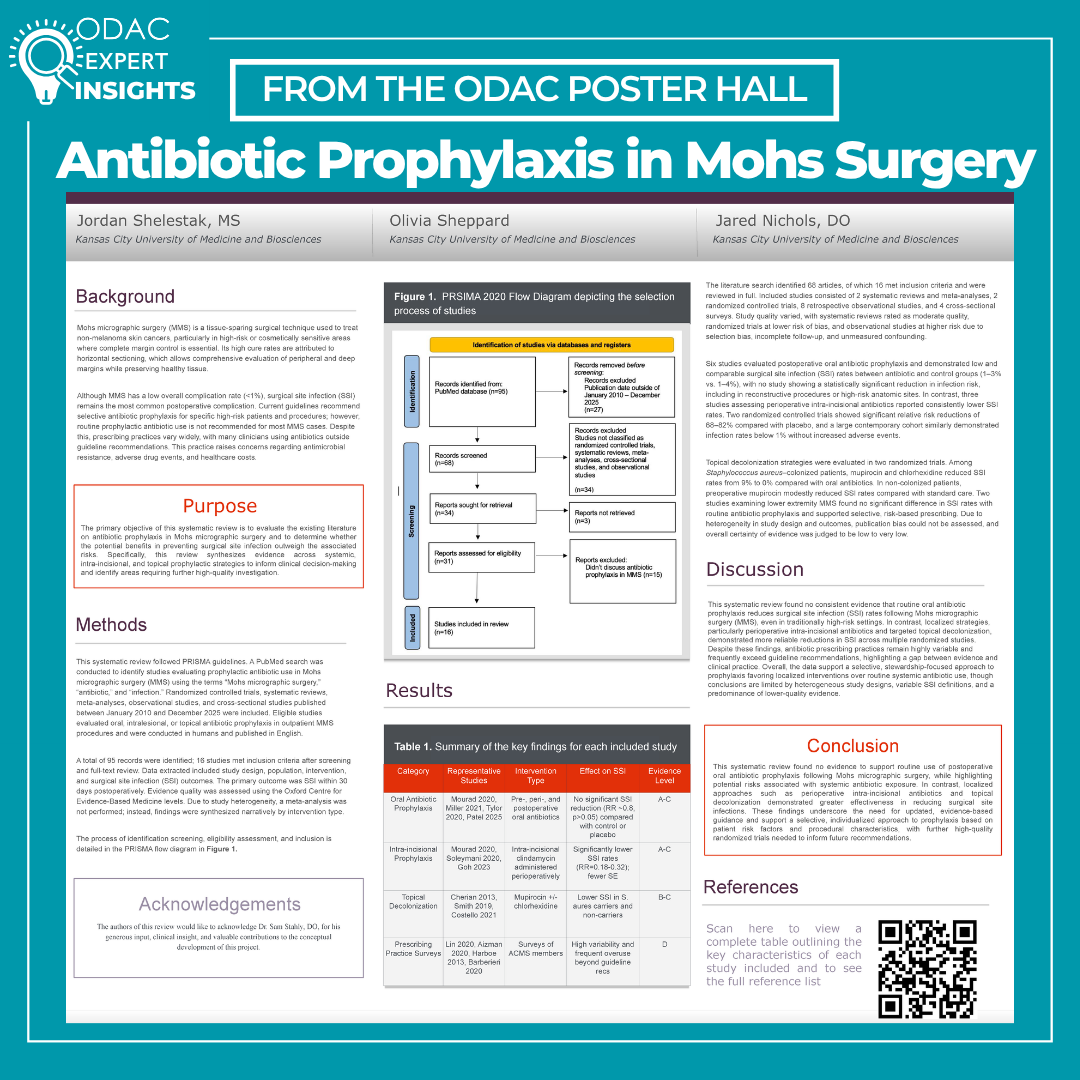 Antibiotics are commonly prescribed before, during, or after Mohs surgery as a means of preventing infection. Postoperative oral antibiotics are frequently used for prophylaxis, and some clinicians also administer perioperative intra-incisional antibiotics or use topical agents for surgical site decolonization. Yet infections as a result of Mohs surgery are rare – only 2% of Mohs surgeries resu …