












Antibiotics are commonly prescribed before, during, or after Mohs surgery as a means of preventing infection. Postoperative oral antibiotics are frequently used for prophylaxis, and some clinicians also administer perioperative intra-incisional antibiotics or use topical agents for surgical site decolonization. Yet infections as a result of Mohs surgery are rare – only 2% of Mohs surgeries result in a surgical site infection.
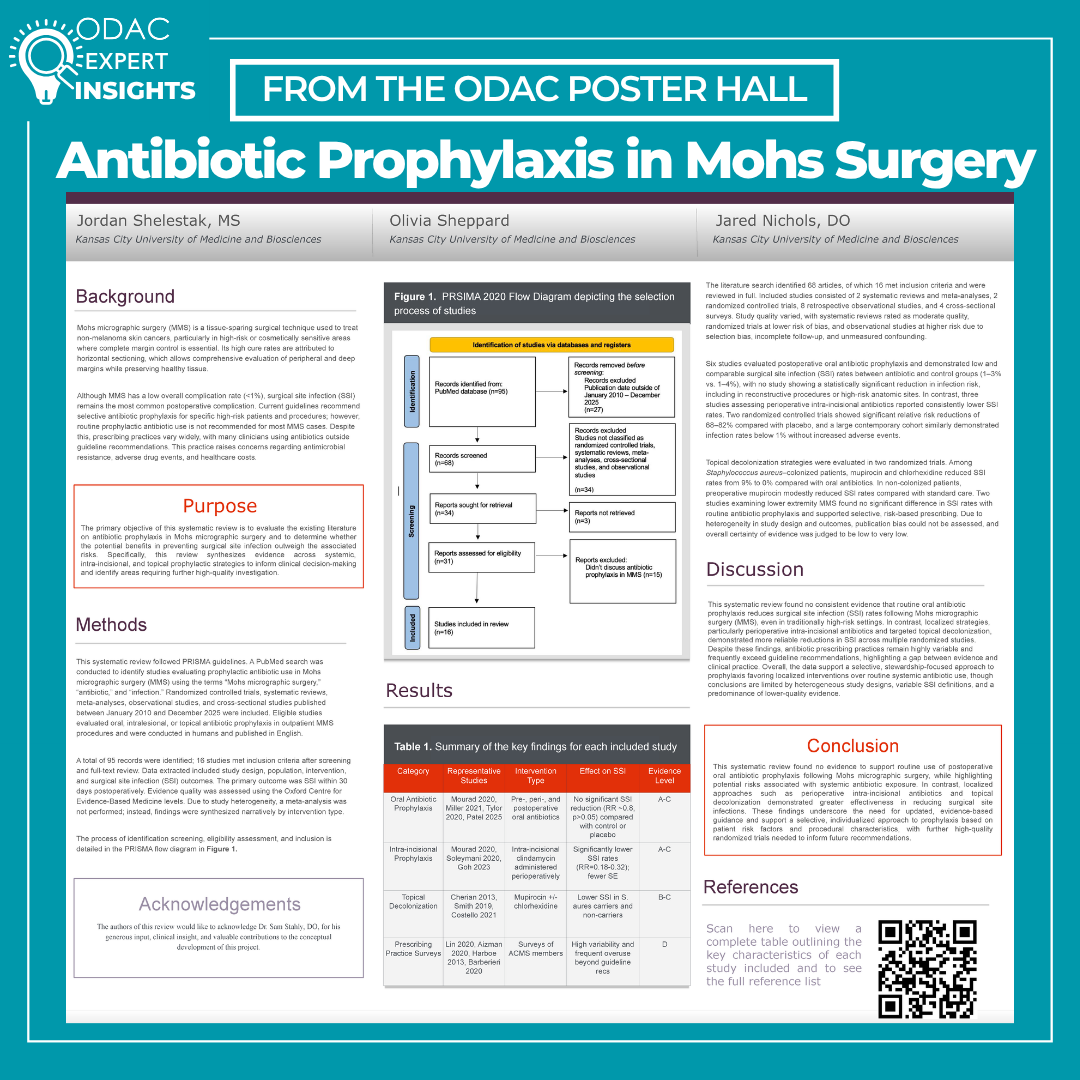
A poster presented at the ODAC Dermatology conference evaluated whether the benefits of prophylactic antibiotics in Mohs surgery outweigh potential risks, including drug reactions and antimicrobial resistance. I interviewed poster author Jordan Shelestak, MS, of the Kansas City University College of Osteopathic Medicine.
What motivated you to investigate the prophylactic use of antibiotics in Mohs surgery?
During undergrad, I was involved in research on antibiotic resistance and stewardship, which really shaped how I think about prescribing and the downstream impact of even well-intentioned antibiotic use. When I was on my surgery rotation, questions about antibiotic prophylaxis frequently came up between attendings, residents, and patients, which made me curious about how those same stewardship principles apply in the Mohs setting. Mohs is such a precise and thoughtful surgery, and this project felt like the perfect intersection of my interest in antimicrobial stewardship and procedural dermatology. Investigating prophylactic antibiotic use in Mohs allowed me to explore how we can maintain excellent surgical outcomes while also being intentional and evidence-based in our antibiotic decisions.
Your poster mentions that the surgical site infection rate after Mohs surgery is estimated at 2%. Why do you think antibiotics are so often prescribed even though up to this point there’s no clear data as to their effectiveness?
I think most clinicians genuinely prescribe antibiotics from a place of caution — we’re trained to anticipate complications, and even with a low infection rate, no one wants to be the outlier case where a preventable infection occurs. Every patient comes with their own comorbidities, immune status, and surgical variables, so in certain scenarios prophylaxis can feel like the safer choice. I also think habit and historical precedent play a role. The current guidelines were published in 2008, and while they provide a framework, practice patterns often persist even as new data emerge. Ultimately, I believe the intention is almost always to protect patients.
You conducted a systematic review looking at antibiotic use before, during, and after Mohs surgery. What did you find?
In our systematic review, we found that, despite a low overall surgical site infection rate after Mohs surgery (~ 2%), routine postoperative oral antibiotics have not consistently been shown to reduce infection risk. Multiple studies, including randomized trials, failed to demonstrate a significant benefit of systemic prophylaxis, even in higher-risk locations. We also found considerable variability in real-world prescribing practices, often exceeding what guidelines recommend.
Were there any strategies using antibiotics that did show some benefit?
In contrast to the question above, certain targeted strategies appeared beneficial in higher-risk populations. Localized approaches, such as perioperative intra-incisional antibiotics and targeted topical decolonization, showed more promising reductions in infection rates while avoiding many of the risks associated with systemic antibiotic exposure. These strategies were especially useful for patients with immunosuppression, large or complex reconstructions (such as flaps or grafts), surgeries on the lower extremities, or procedures involving high-risk anatomic sites like the ear. Overall, the evidence supports a more selective, individualized approach to prophylaxis rather than routine oral antibiotic use, while highlighting the need for updated guidelines and higher-quality trials.
One of your findings was that antibiotics, when prescribed, were frequently overprescribed, even at times exceeding guideline recommendations. What do you think are some of the reasons behind overprescribing?
I think much of the overprescribing comes from good intentions. With low infection rates, many clinicians prefer to be on the side of caution, especially for patients with comorbidities or complex repairs.
What does your study show about the risks and benefits of antibiotics in Mohs surgery?
Our study suggests that routine systemic antibiotic prophylaxis in Mohs surgery provides limited benefit for average-risk patients, given the already low surgical site infection rate (~2%), while still exposing patients to real risks such as adverse drug reactions, C. difficile infection, cost burden, and contribution to antimicrobial resistance. We did not find strong, consistent evidence supporting routine oral antibiotics in uncomplicated cases; however, certain higher-risk patients may benefit from a more targeted approach. Overall, our findings support an individualized — more of a personalized — approach to prophylaxis.
What should dermatology clinicians take away from your findings?
I think the biggest takeaway is that we should feel empowered to pause and think critically before prescribing antibiotics in Mohs surgery. With such a low baseline infection rate, routine systemic prophylaxis often adds more risk than benefit for average-risk patients. Our findings support a more individualized, risk-stratified approach leaning into stewardship principles whenever possible. Ultimately, it’s about balancing patient safety with and recognizing that sometimes the safest choice is also the more selective one. I also hope our findings can contribute to ongoing conversations about existing guidelines and staying up to date as new evidence emerges.
Additional authors of the poster include:
Olivia Sheppard, Kansas City University College of Osteopathic Medicine
Jared Nichols, DO, Kansas City University Department of Osteopathic Manipulative Medicine