












Topical and systemic medications are mainstays of acne treatment, targeting excess oil, clogged pores, bacteria, and inflammation. An original article published in the June Journal of Drugs in Dermatology calls for research on an adjunct acne treatment modality that addresses an unusual target: psychological stress. The authors contend psychological stress can influence acne, and psychotherapeutic strategies, like cognitive behavioral therapy (CBT) and stress-management techniques, can address the factors that contribute to acne flares as well as treatment adherence.
I interviewed author Mohammad Jafferany, MD, DFAPA, MCPS, professor of psychodermatology, psychiatry, and behavioral sciences at the Covenant HealthCare College of Medicine at Central Michigan University. Dr. Jafferany is president of the Association for Psychocutaneous Medicine of North America and president of World Psychodermatology Day.
Dermatologists know that acne commonly leads to psychosocial distress. How common is the understanding that psychological factors can also influence acne?
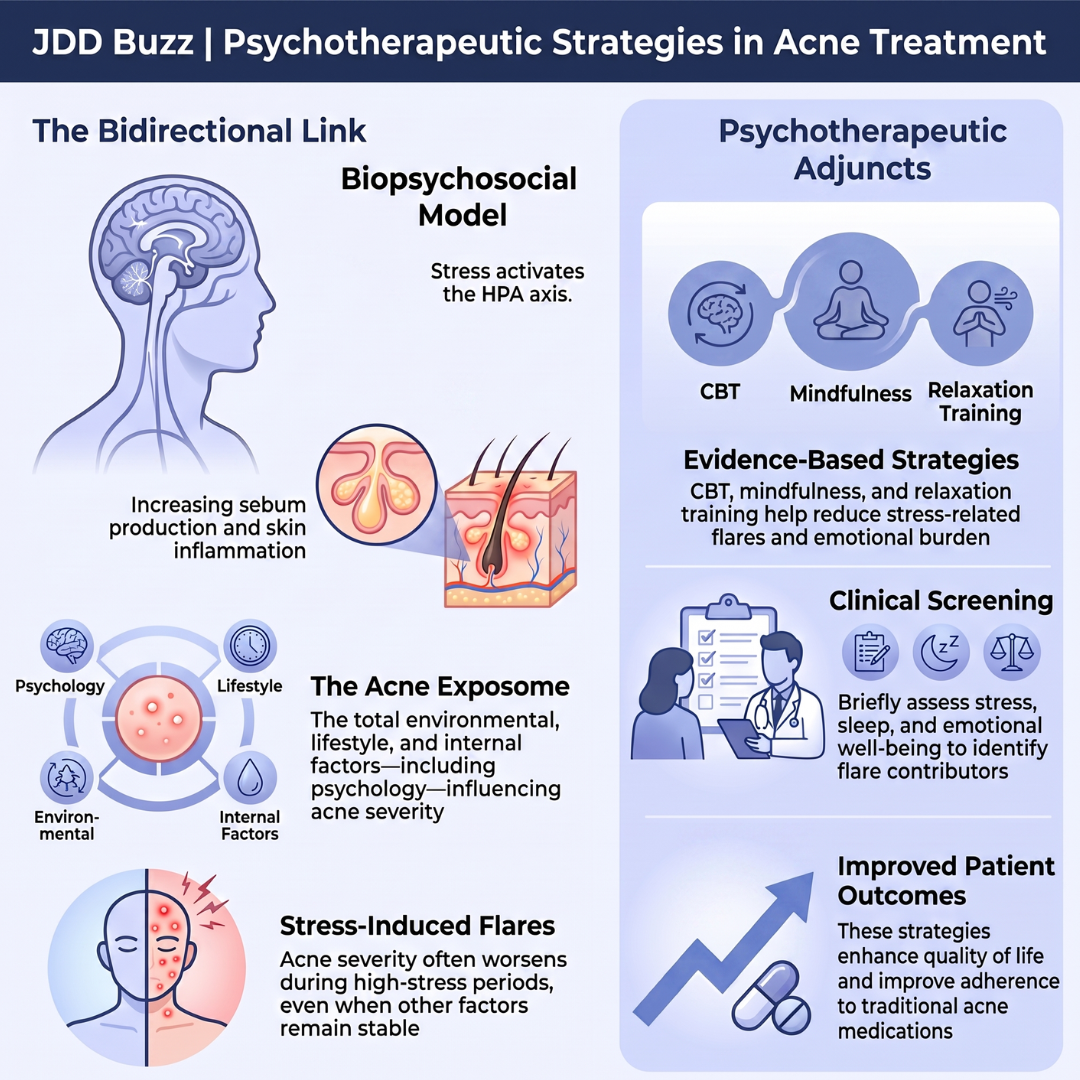
There is increasing evidence that there is bidirectional relationship between acne and stress. Psychological stress can influence acne through activation of the hypothalamic–pituitary–adrenal (HPA) axis and neuroendocrine pathways, leading to increased sebum production, inflammation, and alterations in skin barrier function. Studies have shown that acne severity often worsens during periods of heightened stress, even when other factors remain stable. Therefore, incorporating a brief assessment of stress, anxiety, sleep quality, and emotional well-being into acne management can help identify contributors to disease flares and support a more comprehensive, patient-centered treatment approach.
You use the term “acne exposome.” Describe what that term means and where psychology fits in.
The term “acne exposome” refers to the totality of environmental, lifestyle, and internal factors that influence the development, severity, and course of acne throughout a patient’s life. This includes diet, pollution, skincare practices, medications, sleep, hormonal influences, and psychological factors. Psychology is an important component of the acne exposome because stress, anxiety, and other emotional states can affect neuroendocrine and immune pathways, promoting inflammation and potentially exacerbating acne. Understanding the acne exposome concept encourages clinicians to look beyond lesions alone and consider modifiable psychosocial and lifestyle factors as part of a comprehensive acne management strategy.
What unique roles can psychotherapeutic strategies play in acne treatment?
Psychotherapeutic strategies can serve as valuable adjuncts to traditional acne treatment by addressing the psychological factors that may contribute to disease exacerbation and treatment adherence. Interventions such as CBT, stress-management techniques, mindfulness-based approaches, and relaxation training can help reduce stress-related acne flares, improve coping skills, and lessen the emotional burden associated with visible skin disease. Research suggests that these approaches may enhance quality of life, reduce anxiety and depressive symptoms, and improve treatment adherence, and ultimately lead to better overall patient outcomes.
Your article includes a call to action. What’s your vision for the future of acne research?
The future of acne research should move beyond a purely lesion-centered approach toward a more comprehensive biopsychosocial model and holistic approach. We need longitudinal studies that further clarify the bidirectional relationship between psychological factors and acne, identify biomarkers of stress-related disease activity, and evaluate the impact of integrated interventions and multidisciplinary care. Advances in precision medicine, artificial intelligence, and exposome research may help identify patients most vulnerable to stress-related acne flares and psychosocial sequelae. Ultimately, the goal is to develop personalized treatment strategies that address both the cutaneous manifestations of acne and the psychological factors that influence disease course, treatment adherence, and quality of life.
What else should dermatology clinicians know about the potential role of psychotherapeutic strategies in acne treatment?
It is important to recognize that psychotherapeutic strategies are not intended to replace evidence-based acne treatments but to complement them in selected patients. Individuals experiencing significant stress, anxiety, depression, body image concerns, or poor treatment adherence may particularly benefit from interventions such as cognitive behavioral therapy, mindfulness, stress-reduction techniques, or referral to mental health professionals when appropriate. Even brief psychosocial screening and supportive counseling in the dermatology setting can help identify patients at risk for poorer outcomes. Integrating psychological care into acne management may improve not only emotional well-being and quality of life but also treatment adherence and overall clinical outcomes.
Did you enjoy this JDD Buzz Expert Commentary? You can find more here.