












Friday Pop Quiz 9/11/2026
 A 16 year old patient returns to clinic after spending spring break in Miami complaining of separation of his nails from his nail bed. He also has a sunburn. The patient has erythematous comedones and pustules on his cheeks, forehead, chin and upper back [see photo], and was started on treatment for these findings at his last visit. Which of the following most likely caused his nail findings?
…
A 16 year old patient returns to clinic after spending spring break in Miami complaining of separation of his nails from his nail bed. He also has a sunburn. The patient has erythematous comedones and pustules on his cheeks, forehead, chin and upper back [see photo], and was started on treatment for these findings at his last visit. Which of the following most likely caused his nail findings?
…
A 16 year old patient returns to clinic after spending spring break in Miami complaining of separation of his nails from his nail bed. He also has a sunburn. The patient has erythematous comedones and pustules on his cheeks, forehead, chin and upper back [see photo], and was started on treatment for these findings at his last visit. Which of the following most likely caused his nail findings?
… 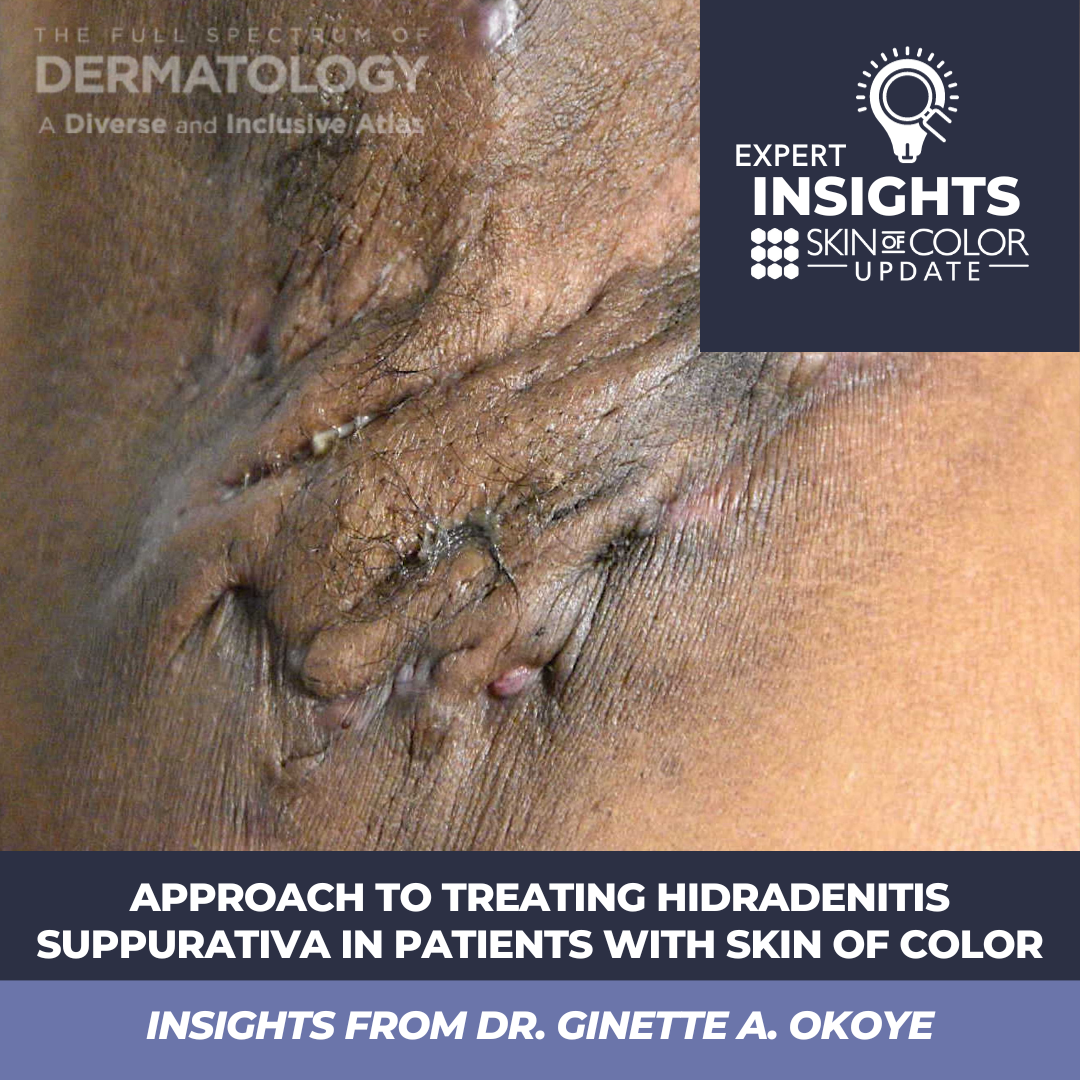 Hidradenitis Suppurativa (HS) is a challenging dermatological condition characterized by painful, recurrent, and often disfiguring skin lesions. In this article, we will explore the expert insights of Dr. Ginette Okoye, Professor and Chair of the Howard University Department of Dermatology, as she discussed her approach to and experience with treating patients with HS at the 2023 Skin of Color Upd …
  INTRODUCTION
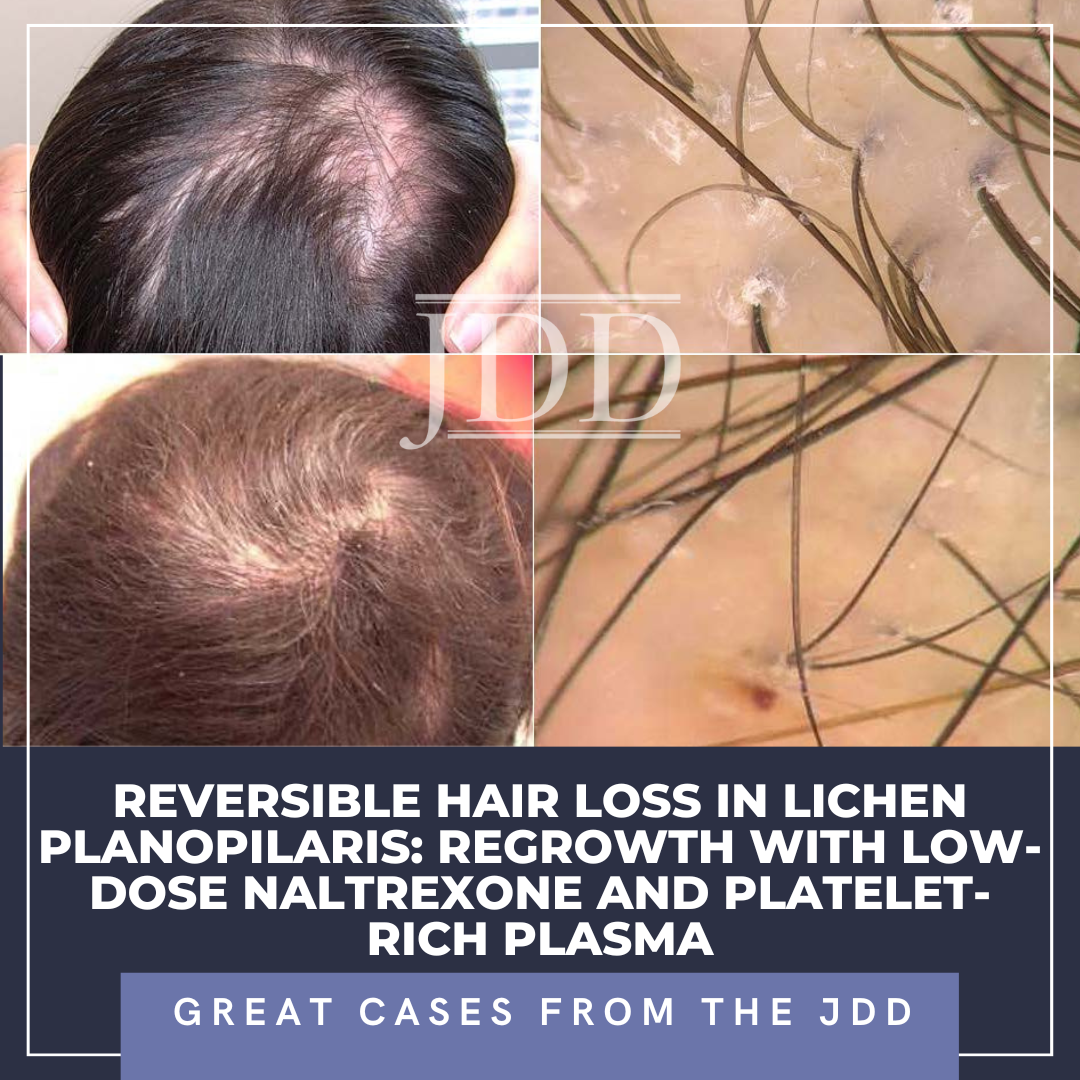
Lichen planopilaris (LPP) is a cicatricial alopecia that presents with patchy or diffuse hair loss at the vertex or parietal scalp. Although there is no gold standard therapy, most interventions are immune modulating and aimed at reducing inflammation and terminating the scarring process to prevent further fibrosis.3 Even amongst patients who respond to therapy, hair loss at alopeci …
INTRODUCTION
Lichen planopilaris (LPP) is a cicatricial alopecia that presents with patchy or diffuse hair loss at the vertex or parietal scalp. Although there is no gold standard therapy, most interventions are immune modulating and aimed at reducing inflammation and terminating the scarring process to prevent further fibrosis.3 Even amongst patients who respond to therapy, hair loss at alopeci … 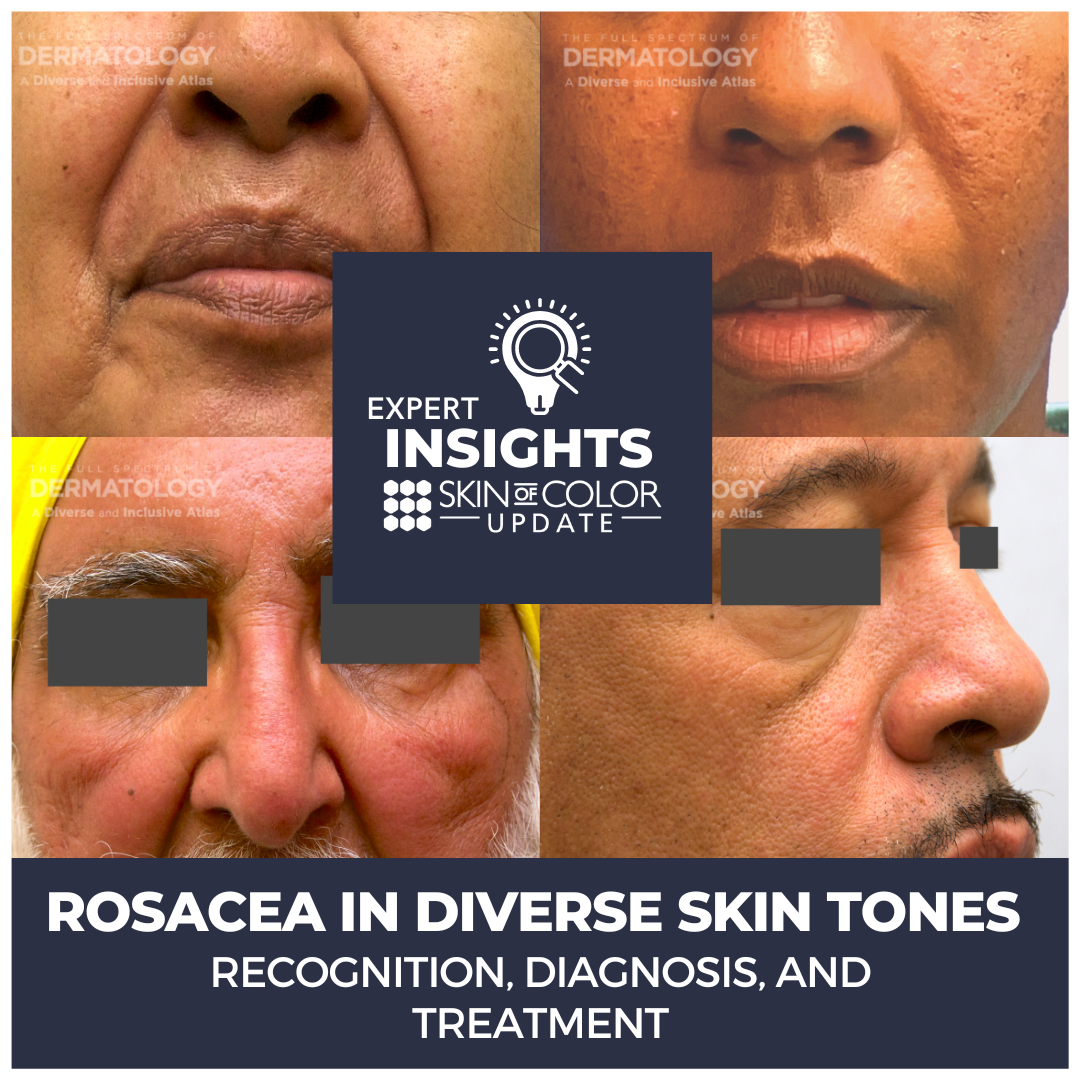 We have probably all seen a patient with rosacea. After all, it is quite common in middle-aged, fair-skinned women. Here, however, we will explore a talk given by Dr. Hilary Baldwin (Medical director of the Acne Treatment & Research Center in Morristown, NJ and Brooklyn, NY, and Clinical Associate Professor of Dermatology at Rutgers Robert Wood Johnson Medical Center) at the 2022 Skin of Color …
 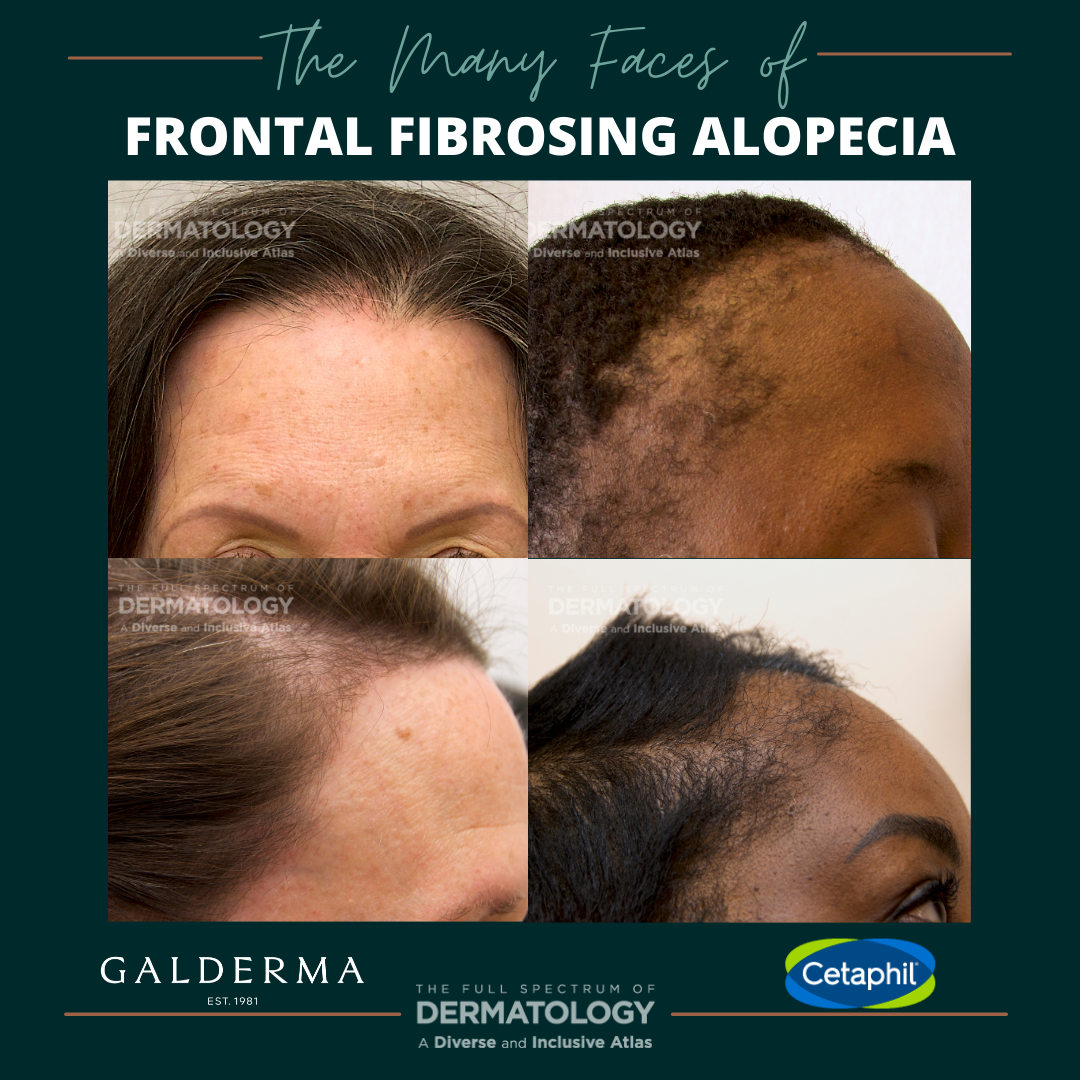 Before concluding a patient with thinning edges has traction or androgenic alopecia, take a closer look at the scalp, face, and other hair bearing areas of the body to complete the picture. You might be missing signs and symptoms of Frontal Fibrosing Alopecia. As seen in the images, FFA can have various presentation patterns on different skin tones and hair textures.
Frontal Fibrosing Alopecia …
Before concluding a patient with thinning edges has traction or androgenic alopecia, take a closer look at the scalp, face, and other hair bearing areas of the body to complete the picture. You might be missing signs and symptoms of Frontal Fibrosing Alopecia. As seen in the images, FFA can have various presentation patterns on different skin tones and hair textures.
Frontal Fibrosing Alopecia …