












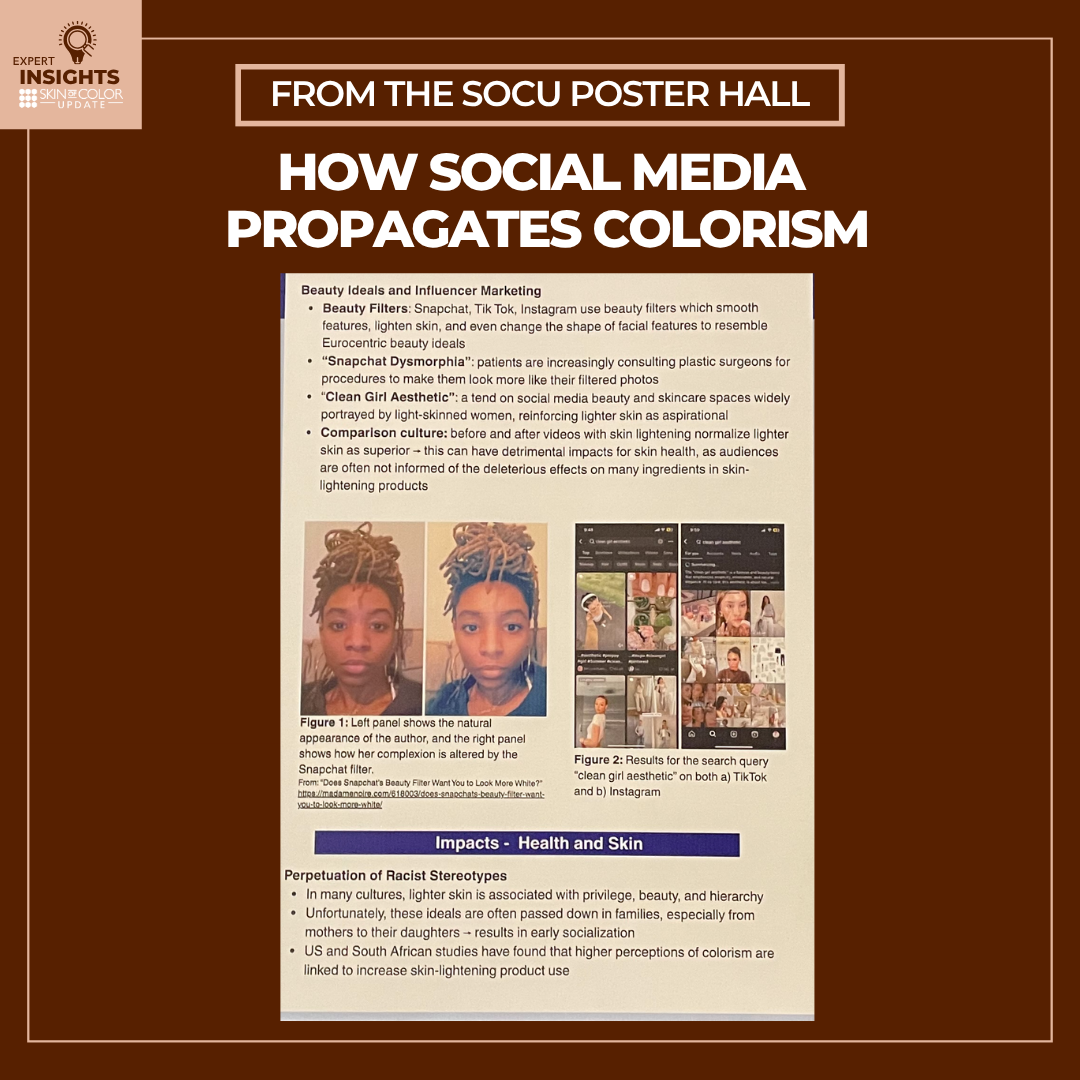
Colorism is a long-held belief that is common in certain cultures or ethnic groups where lighter skin is considered more desirable than darker skin. While modern mainstream culture is more accepting of brown and black skin tones, colorism persists, particularly in African-American, East Asian, Hispanic and Middle Eastern cultures. Transmitted from one generation to another, colorism is a reason why teen girls and women with darker skin tones may experience lower body image and why they may seek to lighten their skin through dangerous means.
Yet a new vector has emerged in colorism: social media. A poster abstract titled “Beauty, Colorism, and Algorithms: How Social Media Propagates Colorism, Skin Bleaching, and Unhealthy Beauty Ideals in People of Color” featured at Skin of Color Update outlines how colorism presents on social media and the impacts of coloristic content on teens and children with darker skin tones. I interviewed the poster’s lead author, Sara Omari of the William Carey University College of Osteopathic Medicine.
What is colorism and how is it demonstrated across a variety of cultures?
Colorism is skin tone-related discrimination, with lighter skin tones being given more privilege than darker ones. In contrast to racism, colorism typically occurs within the same racial or ethnic group. Lighter skin is usually associated with greater amounts of beauty, social status, and success.
What led you to want to study the role of social media in propagating colorism?
I’ve always been interested in how social media can influence the way we view ourselves and the way we relate to one another. I was curious as to how algorithms on sites like TikTok and Instagram reinforce long-standing colorist ideals. I wanted to raise awareness about how damaging these social media sites can be to the health of young people of color.
How did you conduct your review, and what did you find?
We conducted a narrative review of dermatologic and sociologic literature and supplemented our findings with social media content analysis. We found that biased algorithms, misinformation driven by influencers, and beauty filters promote fair skin as aspirational. This has led young people of color to resort to often harmful skin-lightening procedures to change their complexion.
Who is most impacted by colorism propagated on social media?
Youth and young adults of color are disproportionately affected. The literature suggests that 70% of Black and Latinx youth use social media regularly. This places them at risk for anxiety, depression, and greater exposure to colorist content.
Colorism didn’t begin with the advent of social media. In what other ways is colorism continued today?
In addition to social media, colorism persists through socialization within the family (such as from mother to daughter), cultural beauty norms, biases in the workplace, and cosmetic marketing.
Why should dermatology clinicians be concerned about colorism? What’s so dangerous about it?
Colorism has a direct impact on patient health by fueling demand for harmful skin lightening products, including mercury, hydroquinone, and corticosteroids. Complications include ochronosis, nephrotoxicity, skin atrophy, and infections. Colorism contributes to body dysmorphia and diminished mental health, especially in young patients.
What role can a dermatology clinician have in combating colorism?
Dermatologists may provide counseling, confront misinformation, screen for harmful skincare practices, and actively advocate against harmful beauty ideals and standards. Dermatologists are trusted healthcare professionals and can promote inclusive representation in media.
Is there anything else dermatology clinicians should know about beauty, colorism, and algorithms?
Algorithms are not something that we as consumers fully understand as app developers may not always release information about how the algorithm works. Patients should be encouraged to recognize how social media constructs and reinforces ideals of beauty, and dermatologists have a critical role in helping to dismantle these colorist traditions.
Additional authors of the poster include:
Sumra Din, William Carey University College of Osteopathic Medicine
Mashal Zaide, William Carey University College of Osteopathic Medicine
Sreshta Jannu,, William Carey University College of Osteopathic Medicine
Radhika Misra, Rowan-Virtua University School of Osteopathic Medicine
Daniel Thompson, William Carey University College of Osteopathic Medicine
Stuti Prajapati, St. John’s Episcopal Hospital