












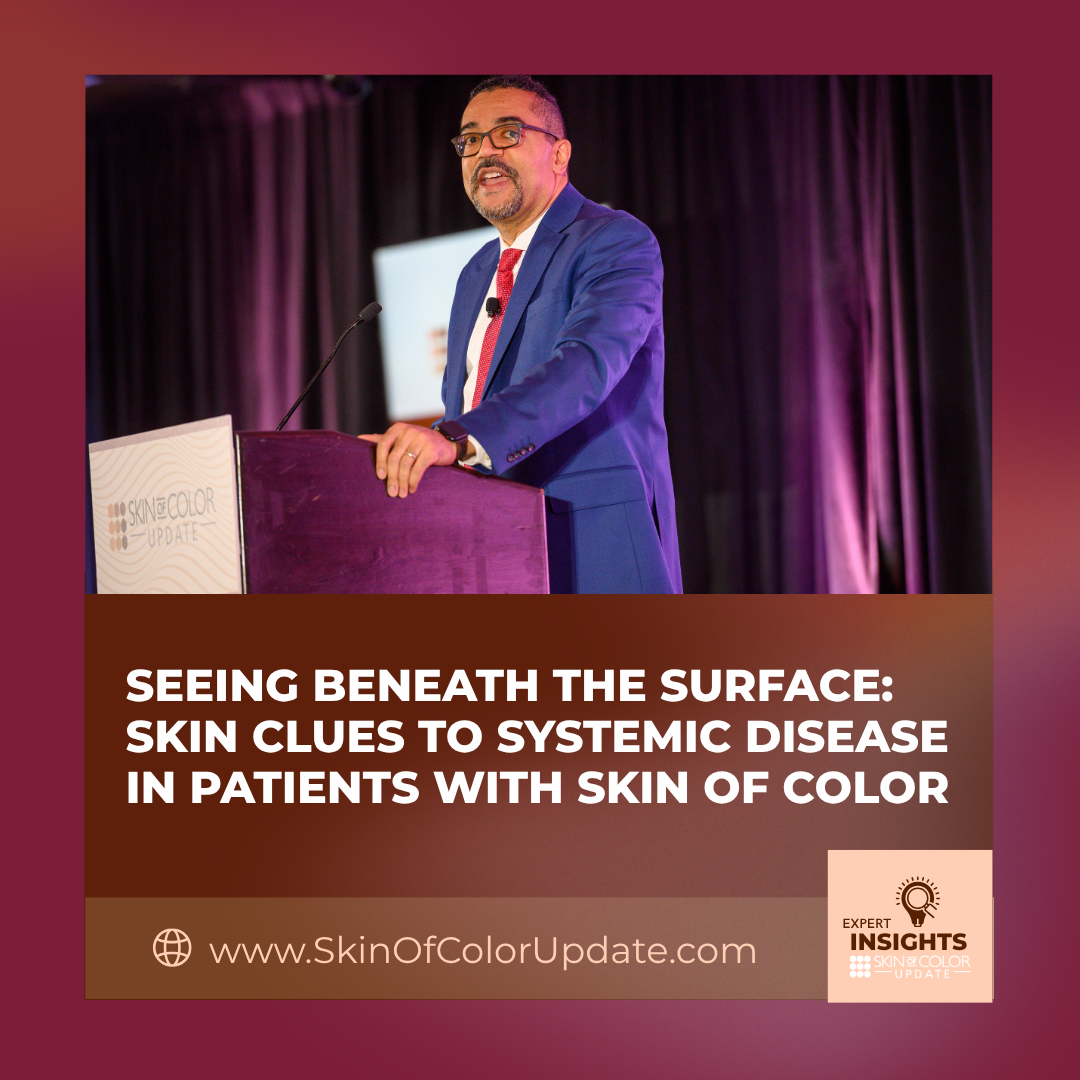
There is more than meets the eye when it comes to diagnosing dermatologic disease. At the most recent Skin of Color Update conference in New York City, co-chair Dr. Andrew Alexis gave a case-based presentation on dermatologic clues to systemic disease in patients with skin of color. The cases highlighted how subtle pigmentary and textural changes in the skin can be the first presenting sign of multisystem disease, particularly in patients with darkly pigmented skin where classic erythema or inflammation may appear more subtle.
Case 1: Hypopigmentation Reveals Sarcoidosis
A 67-year-old man presented with “uneven skin tone” on the face and scalp persisting for over a year. The differential diagnosis included seborrheic dermatitis, psoriasis, atopic dermatitis, vitiligo, sarcoidosis, leprosy, discoid lupus, and scleroderma. A biopsy confirmed sarcoidosis. Treatment with hydroxychloroquine, adalimumab, phototherapy, and topical tacrolimus led to improvement in the patient’s hypopigmentation and atrophy.
The case is a good example of the “great mimicker” sarcoidosis presenting as dyspigmentation and masquerading as common inflammatory disorders in skin of color.
Case 2: Scarring Alopecia and the Sarcoidosis Spectrum
A 55-year-old African American man presented with patchy hair loss and a dry “scaly scalp” unresponsive to corticosteroids. The exam showed erythematous plaques with atrophy, raising suspicion for psoriasis, discoid lupus, or tinea capitis. Histopathology again revealed sarcoidal granulomas, confirming cutaneous sarcoidosis.
Dr. Alexis emphasized that scalp sarcoidosis can mimic both psoriasis and discoid lupus, often leading to diagnostic delay. It can present as perinasal and perioral dermal papules, nasal plaques (also known as lupus pernio), or as scarring alopecia. He also noted that sarcoidosis disproportionately affects Black patients, with an annual incidence of 35.5 per 100,000 (three times higher than in White populations) and is linked to more severe systemic disease and poorer prognosis (note: please add reference).
Case 3: Atypical keloids
A woman presented with indurated, sclerotic/keloidal plaques on the upper back and flanks, without preceding trauma or acne. The absence of “claw-like” keloid extensions and lack of itch or pain symptoms prompted biopsy, which revealed scleroderma.
Dr. Alexis discussed recent reports describing keloidal (nodular) scleroderma and keloidal morphea, rare variants that can mimic keloids particularly in patients with darker skin tones. Clinicians should consider scleroderma in atypical keloid presentations lacking typical morphology and/or response to treatment.
Case 4: Scalp Hypopigmentation and Erythema
A patient presented with “uneven skin tone” on the scalp characterized by hypopigmented round to oval (discoid) plaques. Closer inspection showed subtle erythema and follicular plugging. Biopsy confirmed a diagnosis of discoid lupus erythematosus (DLE).
Dr. Alexis presented other cases demonstrating external ear involvement and lesions at the cutaneous-mucosal lip border as other presentations of DLE. Non-healing ulcerated lesions on the lip should be biopsied to rule out keratinocyte carcinoma. About 20% of patients with DLE have a positive antinuclear antibody (ANA), and up to 5% may develop systemic lupus erythematosus (SLE). Early recognition and treatment with photoprotection, corticosteroids, and antimalarials are key to preventing progression.
Case 5: Hyperpigmentation and Induration: A Clue to Scleroderma
A 69-year-old man with Fitzpatrick type VI skin developed progressive darkening and thickening of the hands and forearms. On further exam, there were indurated hyperpigmented plaques with surrounding erythema in the axillae and inguinal folds, sclerodactyly, and periungual telangiectasias. Biopsy confirmed scleroderma, and the patient improved with mycophenolate mofetil and topical therapies.
This case underscored how hyperpigmentation, rather than pallor or sclerosis, may be the presenting sign of scleroderma in darker skin tones.
Case 6: Pretibial Myxedema as a Window into Thyroid Disease
A patient presented with progressive dyspigmentation and indurated plaques on the lower legs for over a year. The differential diagnosis included lipodermatosclerosis, erythema nodosum, or other panniculitis. Biopsy demonstrated pretibial myxedema, and serology revealed elevated thyroid peroxidase and thyroglobulin antibodies, prompting endocrinology referral.
Dr. Alexis also showed other cases in which thyroid-associated dermopathy presented as plaques, nodules, or even elephantiasis-like changes on the lower legs.
Case 7: Salt-and-Pepper “Vitiligo”
A woman with loss of pigmentation and asked if this could represent vitiligo. On further exam, she was found to have sclerodactyly, nailfold telangiectasias, and skin induration, all of which are features of scleroderma.
The “salt-and-pepper” pattern of dyspigmentation, caused by perifollicular pigment retention within hypopigmented lesions, is a common clinical feature of scleroderma in patients with skin of color. Unlike areas of vitiligo with follicular repigmentation, these lesions are indurated thin plaques as opposed to patches. Dr. Alexis mentioned these pigmentary changes may improve with mycophenolate therapy.
Summary and Clinical Pearls
-
- Not all pigmentary changes are benign. Hypo- or hyperpigmentation may be a sign of systemic disease.
- Have a low threshold to biopsy atypical keloids. Consider scleroderma or morphea in indurated, non-traumatic lesions.
- Scalp sarcoidosis can mimic psoriasis or discoid lupus; atrophy and dyspigmentation are key findings.
- Salt-and-pepper pigmentation suggests scleroderma, not vitiligo. Check for induration, nailfold changes, and other signs of scleroderma.
- Pretibial myxedema warrants thyroid workup and referral to endocrinology.
References
-
- Ntiri M, Nazarian A, Magro C, Alexis AF. Nodular (keloidal) scleroderma: A case series of 5 patients. JAAD Case Rep. 2024;49:135-139. Published 2024 Apr 25. doi:10.1016/j.jdcr.2024.04.026
- Syder NC, Saizan AL, McKenzie S, De Clerck B, Hurtado ACM, Elbuluk N. Keloidal Morphea: A Unique Variant of Morphea Presenting in a Black Female. J Drugs Dermatol. 2025;24(2):203-204. doi:10.36849/JDD.7960
This information was presented at the 2025 Skin of Color Update conference by Andrew F. Alexis, MD, MPH, FAAD. The above highlights from this lecture were written and compiled by Riyad N.H. Seervai, MD, PhD.