












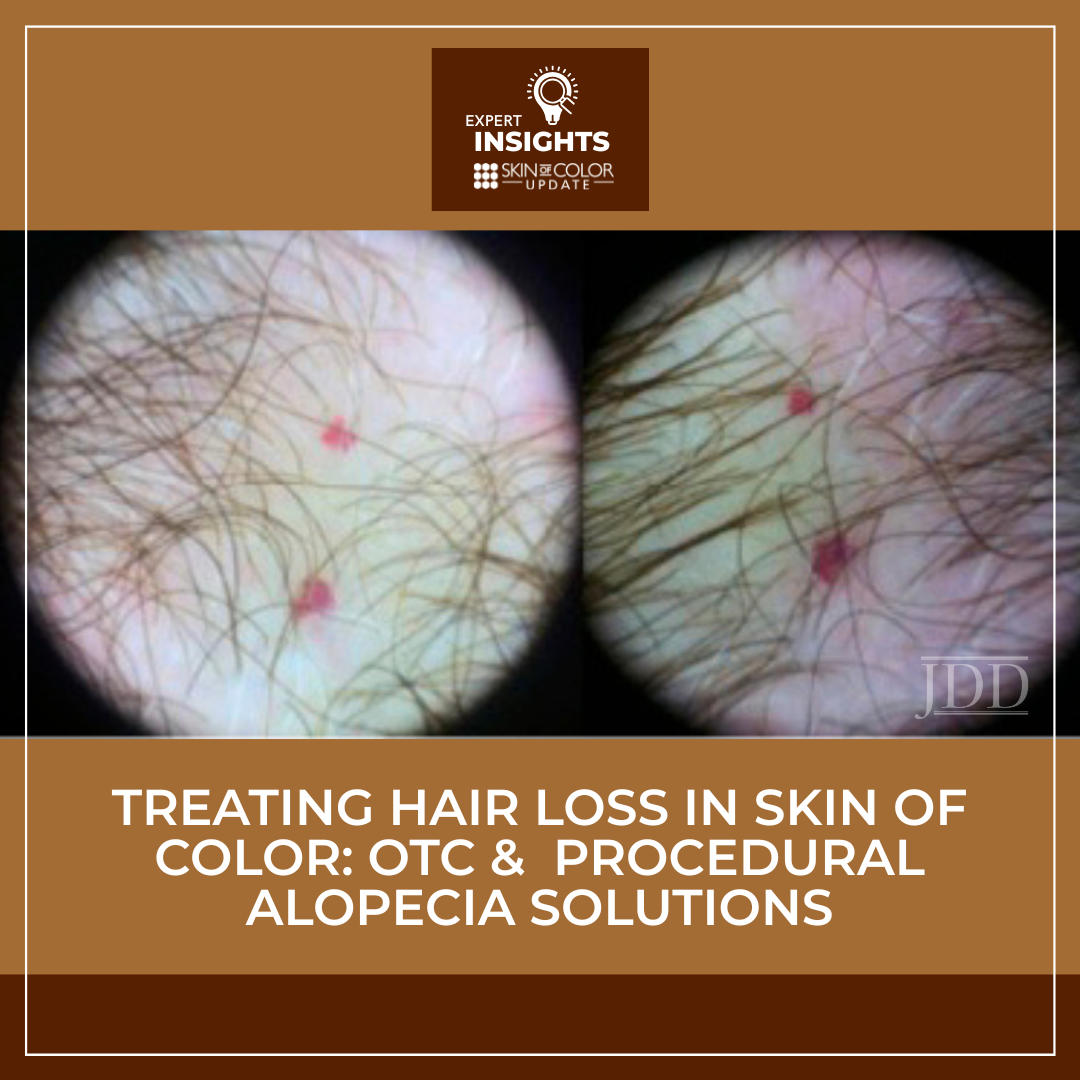
Managing hair loss in patients with skin of color requires a nuanced understanding of both medical and supplemental therapies. In a detailed presentation, Maryanne Senna, MD, explored the evidence behind over-the-counter (OTC) and procedural interventions for various alopecias. As patients increasingly seek supplemental and at-home options, clinicians must be equipped to distinguish between scientifically backed treatments and those with limited clinical utility.
Nutritional and OTC Supplementation
Dr. Senna emphasized that while patients often turn to supplements first, the range of truly effective options is limited. She generally recommends that patients obtain essential nutrients from a balanced diet, as many supplements are poorly utilized by the body.
-
-
Iron and Vitamin D: These are recommended due to their established roles in hair health. A ferritin level below 40 ng/mL is considered a sensitive marker for iron deficiency in the context of hair loss; patients below this threshold often respond poorly to standard treatments. Vitamin D was also discussed, referencing animal studies in which knockout of the vitamin D receptor led to significant hair loss, reversible upon receptor replacement.
-
The Case Against Biotin: Biotin is not recommended due to a lack of proven efficacy and its known potential to interfere with critical laboratory tests. Patients who insist on taking it should discontinue use for several days to a week before any blood work.
-
Topical and Light-Based Therapies
Practicality and patient comfort are key factors in adherence, especially when selecting topical agents for hair regrowth.
-
-
Topical Minoxidil: Dr. Senna noted that foam formulations are often preferred as they lack propylene glycol, reducing the risk of allergic contact dermatitis or irritation. Once-daily application is generally sufficient and more convenient for patients.
-
Low-Level Laser Light Devices (LLLD): Available as combs or hats, these devices have shown efficacy comparable to minoxidil. However, their effectiveness may be limited in patients with thick, dark hair, as the light must reach the scalp directly to work.
-
Anti-Dandruff Shampoos: For patients with concomitant seborrheic dermatitis, Dr. Senna reviewed several options. She noted that skin of color patients often find ketoconazole too drying; for those with oily scalps, selenium sulfide or ciclopirox may be better tolerated.
-
Procedural Interventions: PRP and Microneedling
When traditional topicals are insufficient, procedural options like Platelet-Rich Plasma (PRP) and microneedling are often considered, though their benefits vary by alopecia type.
-
-
Platelet-Rich Plasma (PRP): While positive outcomes have been observed with PRP monotherapy, Dr. Senna noted that similar results might be achievable with prescription medications. For scarring alopecias like frontal fibrosing alopecia (FFA) and lichen planopilaris (LPP), the evidence for PRP remains limited.
-
Microneedling: This has demonstrated efficacy in male androgenetic alopecia (AGA). Regarding depth, studies suggest that 0.6 mm may be more effective than 1.2 mm. For Alopecia Areata (AA), combining microneedling with aminolevulinic acid photodynamic therapy (ALA-PDT) has shown greater improvement than ALA-PDT alone.
-
A Note on At-Home Devices: Dr. Senna cautioned against at-home rollers due to risks of infection and the inability of most patients to tolerate the depth required for clinical efficacy.
-
Other adjunctive measures, such as scalp massages or hydrodermabrasion, are unlikely to cause harm but also unlikely to provide significant clinical benefit. Ultimately, Dr. Senna’s approach highlights the necessity of individualized care and an evidence-based perspective when navigating the wide array of available alopecia treatments.
This information was presented at the 2025 Skin of Color Update conference by Dr. Maryanne Senna. The above highlights from her lecture were written and compiled by Jay Nguyen, DO.