












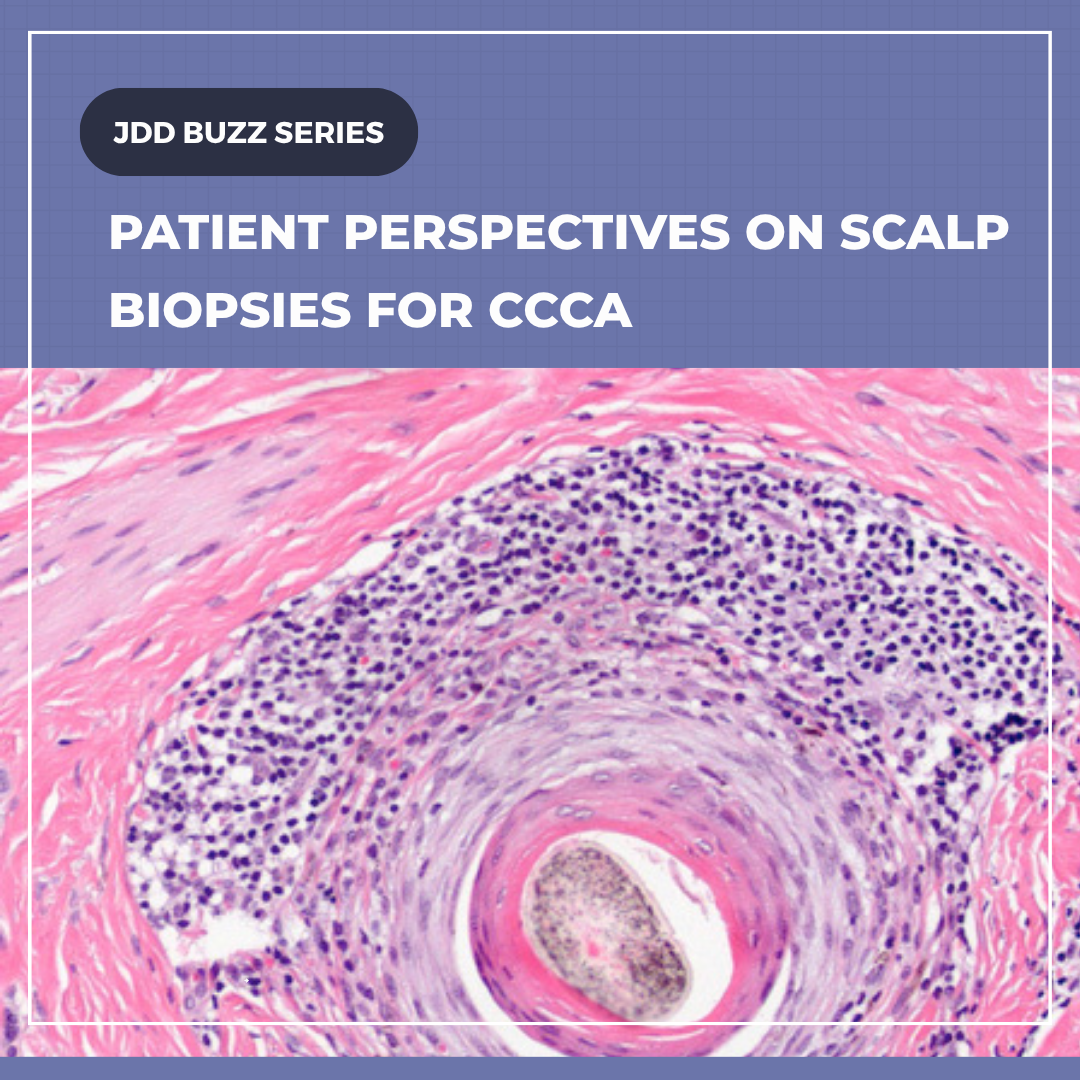
Scalp biopsies are an important tool in diagnosing central centrifugal cicatricial alopecia (CCCA), especially in atypical presentations where making an accurate diagnosis through other means is challenging. Even though a biopsy-confirmed diagnosis could lead to hair-saving treatment, hair loss patients sometimes balk at the recommendation to biopsy. The authors of a brief communication published in the March Journal of Drugs in Dermatology wanted to discern why.
Researchers distributed an anonymous survey to CCCA patients to assess patients’ knowledge, attitudes, and concerns about scalp biopsies, as well as the factors that influence the decision-making process. For insight into how these results should impact a dermatology clinician’s approach when recommending a scalp biopsy, I interviewed author Temitayo A. Ogunleye, MD, professor of clinical dermatology at the Perelman School of Medicine at the University of Pennsylvania.
What led you to investigate how patients view and understand biopsies for CCCA?
Despite its diagnostic importance, particularly in atypical presentations, many patients are hesitant to undergo biopsy, and little is known about how patients with CCCA perceive this procedure. Given this gap, we sought to evaluate patient knowledge, attitudes, and decision-making around scalp biopsy to inform more effective, patient-centered communication and care.
The research team surveyed CCCA patients at the University of Pennsylvania-associated dermatology clinics. Why was it important to survey both those who underwent scalp biopsies and those who did not?
It was important to include both groups to capture the full spectrum of patient perspectives and decision-making around scalp biopsy. Patients who underwent biopsy provide insight into facilitators such as trust, understanding, and perceived value, while those who declined highlight barriers, including knowledge gaps, concerns, or misconceptions. Comparing these groups allows us to identify modifiable factors to help improve care.
What were some of your key findings?
Patients who underwent biopsy demonstrated greater understanding of its purpose and value, with most viewing it as necessary, while those who did not often reported neutral or limited understanding, suggesting knowledge gaps rather than true opposition. Importantly, many patients who initially declined biopsy remained open to it if their condition worsened, indicating an opportunity to improve uptake with clearer counseling and education.
How did the results reveal the importance of patient education in CCCA biopsies?
The results highlighted that patients who had greater understanding of the purpose and value of a biopsy were more likely to consent to the procedure. This suggests a pivotal opportunity to engage in clear and straightforward education with patients when discussing diagnostic options.
How should these results inform a dermatology clinician’s approach to biopsy, including the timing and explanation of the biopsy’s importance?
Clinicians should introduce the idea of a biopsy early, connecting the biopsy to outcomes patients care about, including preventing further hair loss, avoiding irreversible scarring, and selecting the most appropriate therapy. Emphasizing that biopsy reduces uncertainty and can change management helps patients understand its value.
What do these results tell us about how to improve shared decision-making in CCCA diagnostics?
Clear patient education is essential to effective shared decision-making. Patients cannot make truly informed choices without a clear understanding of the risks, benefits, and how a biopsy-informed diagnosis may influence treatment options and outcomes
What else should dermatology clinicians know about how patients view and understand CCCA biopsies?
Many patients who decline biopsy are not strongly opposed but instead have gaps in understanding the purpose of the procedure. Those who undergo biopsy tend to have greater trust in their clinician and a clearer understanding of its purpose, underscoring the impact of effective communication. Common concerns such as pain, scarring, and additional hair loss should be proactively addressed. Additionally, many patients remain open to biopsy over time, and revisiting the need for biopsy in future visits may be helpful.
For more updates on diagnosing and treating hair and scalp conditions, join us on Saturday, June 27, for a virtual, one-day conference. Hair and Scalp Disorders: The Rx Pad and Beyond provides a full-spectrum perspective, from diagnosis to therapeutics to nutrition and lifestyle factors. Led by recognized experts, including co-chairs Adam Friedman, MD, and Amy McMichael, MD, every session emphasizes practical tools, decision-making, and real-world implementation. Register today!