












Aryl Hydrocarbon Receptor Agonists in Atopic Dermatitis
 It’s an exciting era for topicals in atopic dermatitis with several non-steroidal treatment options, including aryl hydrocarbon receptor agonists. In an interview with Next Steps in Derm, in partnership with Skin of Color Update and with support from Organon, Mona Shahriari, MD, FAAD, shares how tapinarof, an aryl hydrocarbon receptor agonist, addresses the two pillars of atopic dermatitis mana …
 Continue reading "Aryl Hydrocarbon Receptor Agonists in Atopic Dermatitis"
 St. Ives Apricot Scrub was one of the most iconic skincare products of the 1990s, and the debate over its use continues 30 years later. Some swear by the walnut shell scrub, while others think it’s too abrasive, especially when used on the face. Parade interviewed three dermatologists who say the scrub may be appropriate for some skin types provided that it’s used occasionally and with minimal …
 Chronic urticaria is a common dermatologic condition, yet according to a recent survey, one in five clinicians deviates from known management guidelines. Researchers at the George Washington University (GWU) School of Medicine and Health Sciences Department of Dermatology surmised that the lack of confidence in workup and management of chronic urticaria and lack of adherence to guidelines may stem …
 Hair loss visits are common but, if you’re like me, it can still give pause in a busy clinic. During a session titled Strands of Clarity: Mastering the Hair & Scalp Exam at the ODAC Dermatology conference, Dr. Ronda Farah— nationally and internationally recognized in hair loss and serving as an Associate Professor in the Department of Dermatology at the University of Minnesota—focused on …
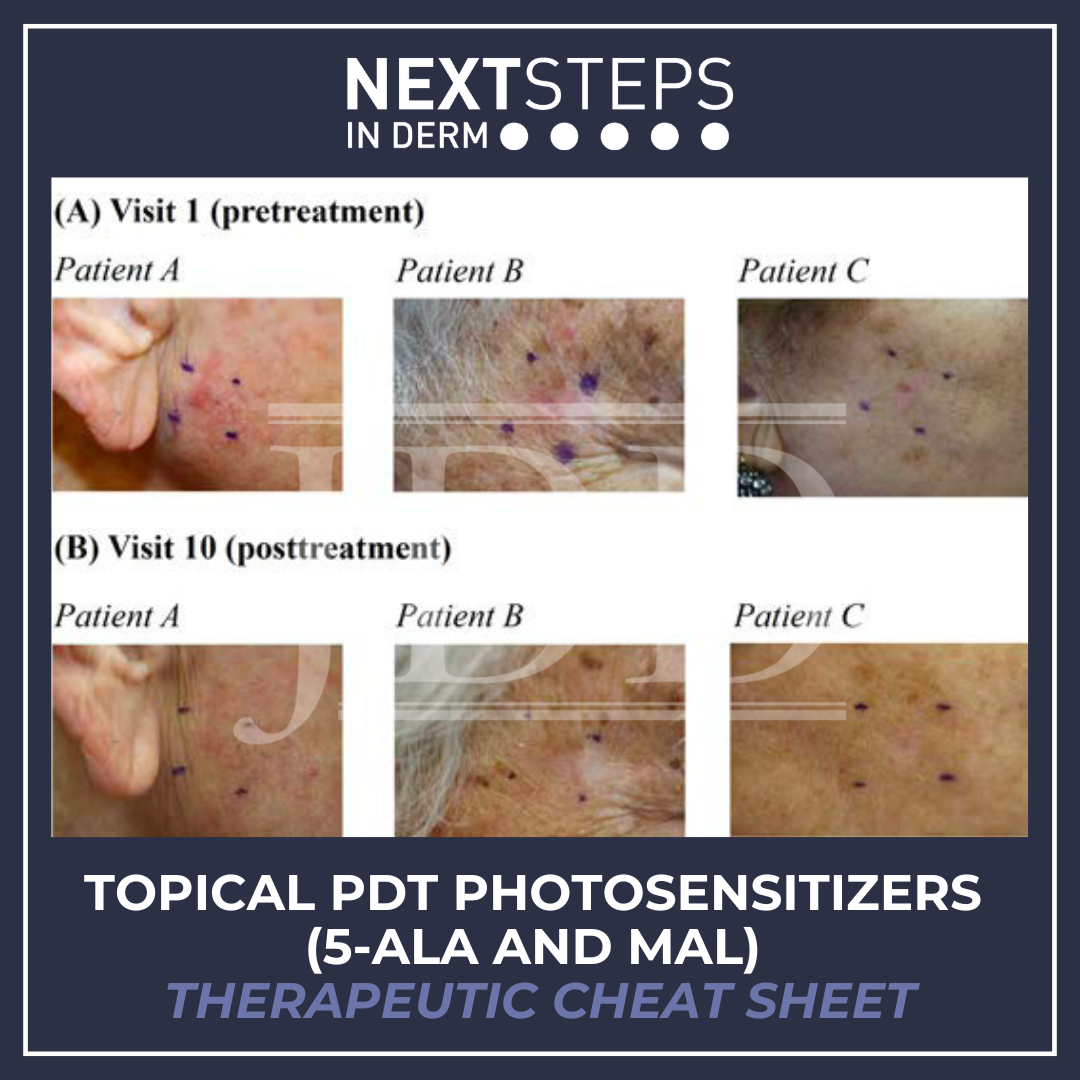 5-aminolevulinic acid (5-ALA) is an FDA-approved prodrug used in combination with light therapy for treatment of actinic keratosis and superficial basal cell carcinoma. It is a naturally occurring amino acid that is an intermediate of the heme biosynthesis pathway which cells convert into the photosensitizing metabolite protoporphyrin IX (PpIX). This compound has been applicable in two specific cl …