











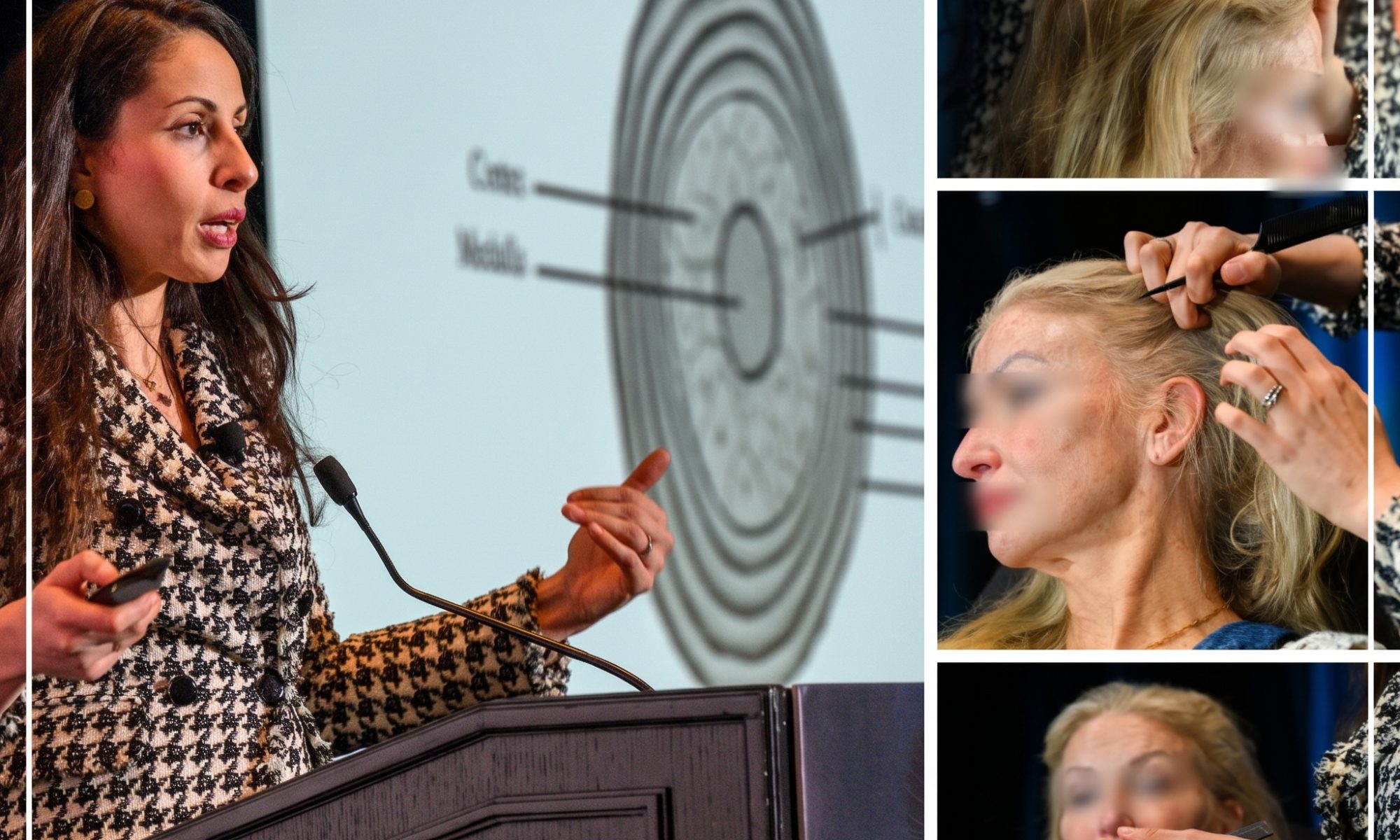
Hair loss visits are common but, if you’re like me, it can still give pause in a busy clinic. During a session titled Strands of Clarity: Mastering the Hair & Scalp Exam at the ODAC Dermatology conference, Dr. Ronda Farah— nationally and internationally recognized in hair loss and serving as an Associate Professor in the Department of Dermatology at the University of Minnesota—focused on a topic that patients often say did not occur at prior visits (i.e., a careful and thorough hair and scalp examination). Dr. Farah emphasized that a structured exam not only improves diagnostic accuracy but also helps patients feel that their hair concerns are being taken seriously. She walked us through her approach via a live patient demonstration. Here’s a summary of key points I took from her session and plan to implement in clinic.
Starting With the Hairline and Face
Before even parting the hair, Dr. Farah emphasized that the exam should begin at the frontal hairline and face. This step can provide early clues to certain diagnoses, especially frontal fibrosing alopecia (FFA). When at the hairline, it is important to evaluate for a combination of erythema, atrophy, and discoloration. It was simplified to “red, white, and blue” in which these findings have been described as the trichrome sign.
The presence of facial papules and the importance of evaluating the eyebrows was also stressed as they may signal involvement beyond the scalp. Microblading or tattooing of the eyebrows require further questioning as this may signal that FFA has been present for a while. Don’t forget to assess for terminal hairs because this may clue into the polycystic ovarian syndrome.
Clinical Pearl: Always examine the face when evaluating hair loss — facial papulosis and sparse eyebrows can point toward FFA.
Paying Attention to Products and Skin Care
During the facial portion of the exam, attention should also be given to makeup and skincare products that can often extend into the hairline. When it comes to hair loss to the frontal hairline, patients are often advised to move these products away from the front of the scalp to prevent further damage to the hair follicle. Dr Farah recommends switching to physical sunscreens as they may also contribute to damage of the hair follicle.
Examining the Entire Hairline
Another point emphasized during the session was the importance of examining beyond the frontal scalp. Disease processes often hide along the ophiasis scalp. In addition, multiple processes can occur at the same time. Androgenetic alopecia, iron deficiency anemia and thyroid dysregulation, for example, is frequently present alongside other types of hair loss.
Don’t Forget the Fingernails
Other clues of certain types of hair loss may be found on examination of the nail. For instance, the presence of pitting and well-circumscribed alopecia is a tell-tell sign of alopecia areata.
Documenting the Hair Part
Capturing the hair part with photos is an underutilized tool. Integration of photos in the treatment of hair loss helps with classification as well as monitoring changes over time. A scale of choice should be utilized when examining the hair part. Dr. Farah uses the Ludwig scale in her clinic. Remember to assess for signs of inflammation such as perifollicular erythema. In all, these findings often help guide treatment.
Clinical pearl: Evaluating and photography of the hair part is the most important part of hair loss assessment.
Evaluating Hair Growth Patterns
Dr. Farah also discussed looking at the layers of hair growth across the scalp. Ideally, healthy regrowth is relatively even, in which she likened it to grass cut to a similar length. The presence of different layers means that hair growth is asynchronous and may allude to insufficient hair growth.
Performing the Hair Pull Test
The hair pull test remains a useful tool in clinic. Thetechnique involves a slow, steady pull throughout the scalp. This can especially be seen in telogen effluvium, where hairs are repeatedly released during the test. When alopecia areata is suspected, performing the test near the border of a patch can also help determine where treatment may be most helpful.
Clinical pearl: Don’t only focus evaluation within the apparent patch of hair loss. Make sure to evaluate the surrounding area.
Examining the Hair Shaft
After assessing the scalp, consider shifting your focus towards the hair shaft itself. Dr Farah often asks about coloring, bleaching, or other chemical processing practices that could cause hair fragility. This is because repeated chemical treatments can damage the cuticle and lead to breakage, which may sometimes be mistaken for primary hair loss.
Evaluation also includes assessment for “hair weathering” and whether the hair shaft is dry. In terms of hair shaft health, she recommends shampoo application to the scalp since application to the hair can lead to hair shaft damage due to the presence of detergents. Conditioner application to the tips and hair shaft is also recommended to reseal and protect the hair shaft and cuticle from weathering. Conditioner tends to contain silicone products including dimethicone that protects hair shaft. This is especially important to discuss in patients with androgenetic alopecia since miniaturized hairs tend to be more fragile.
The Hair Tug Test
Lastly, the hair tug test helps evaluate hair shaft strength. The aim of this maneuver is to attempt to break the hair shaft between the fingers. If the hair breaks easily, it suggests structural damage rather than follicular damage alone. Distinguishing this can help guide counseling around hair care practices.
A Reminder About Hair Loss Visits
The session ended with a reminder that hair loss visits often require consistent follow-up and adjustments to treatment over time. For thorough examination, Dr Farah notes that, in her practice, a minimum of 2 years is required for comprehensive evaluation. Although not required, in some practice’s newer tools such as AI-assisted hair analysis are being used to track changes in hair density and shaft diameter. Ultimately, the goal is to ensure that patients feel their scalp has been carefully examined and that a thoughtful plan is in place to treat their hair loss concerns. Remember, treat the person and not the hair.
Did you enjoy this article? Find more on Medical Dermatology here.