












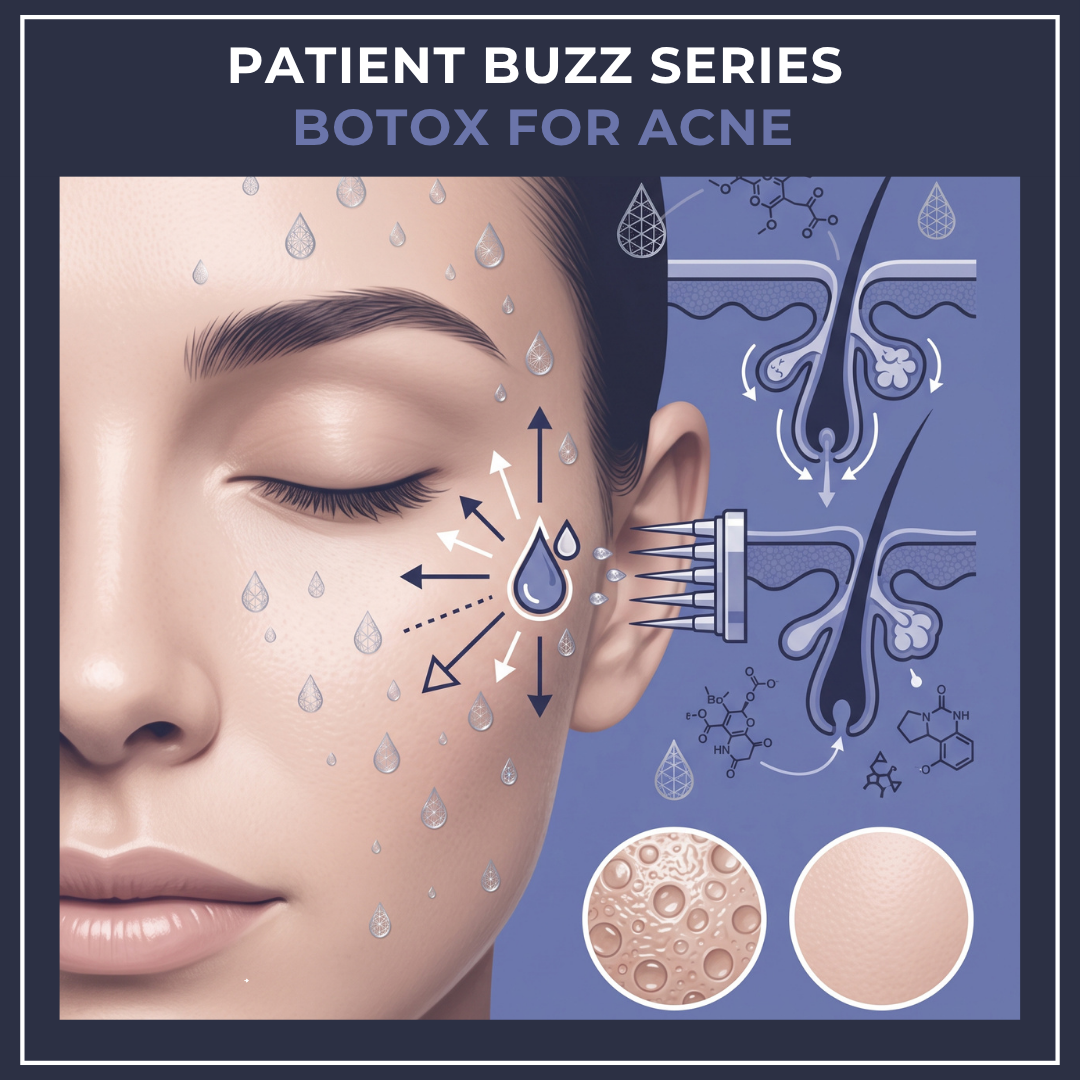
While botulinum toxin is well-known as a treatment for acne scars, an article by Women’s Health profiles a lesser known approach: using botulinum toxin for preventing and treating acne. The article focuses on delivery of botulinum toxin via an Aquagold microinfusion treatment. Tiny channels are created in the skin’s superficial layers to deliver botulinum toxin and other beneficial ingredients, such as antioxidants, growth factors, and PDRN. Dermatologist Dr. Alexandra Bowles touts benefits including reducing oil production and decreasing shine, making it a helpful treatment for patients with oily skin and enlarged pores who have mild-to-moderate acne or frequent breakouts with inflammation. (The article mentions a Journal of Drugs in Dermatology study on the intradermal injection of microdroplets of diluted incobotulinumtoxinA, which showed a 4-week decrease in oil production.) Frequency of treatments, according to the Women’s Health article, is recommended for every four to six weeks.
Health asked whether or not exercise reduces the effectiveness of botulinum toxin injections, specifically Botox. Dermatologist Dr. Geeta Yadav says theoretically this could be the case, though research into the impact of exercise on longevity of the injections is limited. In her practice, Dr. Yadav finds that her most active patients tend to return for maintenance injections more quickly than her average patient. She points out that it’s important for patients to understand that the benefits of exercise to the body outweigh concerns over the durability of Botox injections.
An article in TIME addresses the social media trend of consuming carrot-dense salads as a way of “eating retinol.” Dermatologist Dr. Rajani Katta, who is an expert on nutrition and the skin, finds the “retinol salad” moniker misleading. Dermatologist Dr. Lawrence Green points out that topically applying retinol or a retinoid is significantly more helpful for the skin than ingesting large quantities of beta-carotene. The skin benefits of a “retinol salad” come from the antioxidants in the salad’s ingredients, according to Dr. Green, and not the potential to consume retinol.
It’s never a dull moment in dermatology news. Check out these recent skin, hair, and nail health articles in the consumer press:
-
- BlackDoctor: How to reverse traction alopecia
- Ebony: LaRoche-Posay Young Investigator Grant
- Everyday Health: Micro habits for healthier skin
- Everyday Health: Skincare mistakes that could worsen facial AD
- Everyday Health: Questions to ask about AD care for darker skin
- Glamour: How to get rid of dandruff and itchy scalp
- Health: Collagen vs. retinol for aging skin
- HuffPost: Crepey skin
- Men’s Health: Sleep and the skin
- NewBeauty: Facial changes during menopause
- Prevention: How to get rid of an in-ear pimple
- Prevention: Sun protection for the scalp
- Prevention: Sunscreen sticks vs. liquid sunscreen
- Prevention: White spots on the nails
- Real Simple: 30-second face washing trick
- Real Simple: Foods for healthier skin
- TODAY: Summer skin problems
- Verywell Health: Signs of high blood sugar in the fingernails
- Verywell Health: Vitamin C’s role in sun protection
- Women’s Health: Microdosing Accutane
Did you enjoy this Patient Buzz listing? You can find more here.