












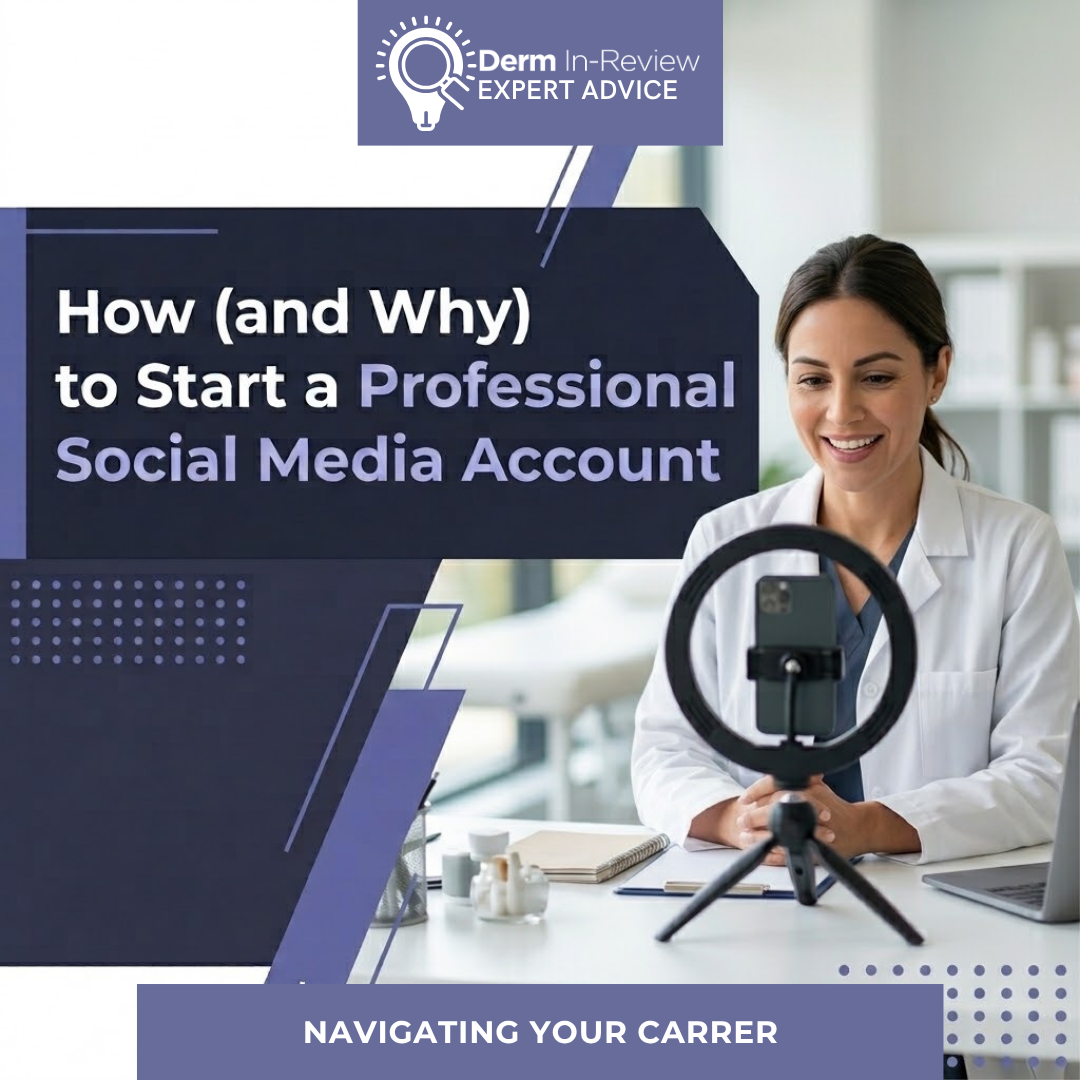
Some might think you need to become an influencer to benefit from having a professional social media presence. But that couldn’t be further from the truth. For dermatologists, social media can be an extension of your practice, a way to educate patients, and a tool for establishing trust and building your professional brand.
In an increasingly digital world, people turn to social media not only for entertainment, but also for news, education, and answers to their health questions. As dermatologists, we have an opportunity to meet patients where they are, provide credible, evidence-based information, and help counter the misinformation that can easily spread online. Social media also offers a way to connect with prospective patients before they ever walk through your door. Think of it as an extension of your brand: a place where people can learn about your expertise, see your face, hear your voice, and get a sense of who you are as a physician. Choosing a dermatologist is personal, and patients want to feel confident not only in your qualifications, but also in the person behind them. And you don’t need a massive following, viral videos, or a perfectly curated feed to accomplish any of this. You simply need to show up with intention, share what you know, and let your personality and expertise speak for themselves!
How to Get Started
Step 1: Choose Your Platform
The first step is simple: create an account. Instagram and TikTok are two major options, and you can certainly use both. But you don’t need to start everywhere at once. Choose one platform, become comfortable with it, and expand later if it makes sense.
If you already have a personal account, decide whether you want to combine your personal and professional content or keep them separate. While this is ultimately a personal choice, there is value in having a dedicated professional account. It allows you to maintain boundaries, be intentional about what you share, and create a space that reflects your professional identity.
Instagram and TikTok also have different strengths. TikTok tends to favor more casual, short videos, while Instagram offers a variety of formats, including reels, carousels, single-image posts, and stories. Think about which platform and format feel most natural to you. The best platform is the one you will actually use.
Step 2: Decide What You Want Your Account to Accomplish
Before you start posting, ask yourself: What do I want this account to do for me? For some dermatologists, it may function primarily as a digital introduction where prospective patients can learn about their practice and credentials. Other dermatologists may use a social media account to focus on medical education, cosmetic dermatology, skin-care products, or insights into life as a dermatologist.
Your account can serve multiple purposes, but having a general sense of your goals will help guide your content. You don’t need to have everything figured out from day one. Your goals can evolve as you gain experience and discover what you enjoy creating.
Step 3: Build a Brand That Feels Authentic to You
Your professional account is an opportunity to build your brand, but that doesn’t mean you need to manufacture a persona or imitate someone else’s online presence. Start by thinking about what makes you you as a dermatologist. What are you passionate about? What do you enjoy teaching? What questions do patients frequently ask? What do you want people to associate with your name? Your answers can shape your content. You might create short videos explaining common skincare myths, educational posts about clinical conditions, or share cosmetic treatment discussions or product reviews. All of these approaches can work. You don’t need to force yourself to make videos if you hate being on camera or turn every post into a highly produced presentation. Start with what feels natural to you.
That said, remember that patients are ultimately coming to see you. They want to know who you are, not just what you know. Showing your face, speaking in your own voice, and allowing your personality to come through can help people feel connected to you. Video can be particularly effective, but authenticity can shine through in written posts and photographs, too. Your brand isn’t just a logo, color palette, or consistent template. It’s the combination of your expertise, values, communication style, and the experience people associate with you. Your social media presence should reflect that.
Step 4: Use AI to Make the Process Easier
We are fortunate to be building our professional platforms at a time when AI can make content creation much more accessible. Consider sitting down with an AI tool and having a genuine brainstorming conversation. Explain who you are, what interests you, and what you hope to accomplish with your account. Bounce ideas back and forth, explore different directions, and ask for help identifying themes that might resonate with your audience. AI can help you brainstorm post ideas, develop content calendars, outline educational carousels, draft captions, and adapt a single idea into multiple formats. For example, you could take a common question about acne and turn it into a reel, an educational carousel, and a caption.
The key is to use AI as a tool, not as a replacement for your own voice or judgment. Your expertise and personality should remain at the center of your content, and you are responsible for verifying medical claims, ensuring accuracy, and protecting patient privacy. Used thoughtfully, AI can lower the barrier to entry and make it easier to create content consistently without spending every free moment doing so.
Step 5: Focus on Consistency, Not Perfection
One of the biggest obstacles to getting started is the feeling that every post needs to be perfect. You might spend hours choosing a font, refining a caption, or wondering whether anyone will find your content interesting. Meanwhile, the account remains empty. So just start posting! Your first few posts may not look exactly how you want them to, and that’s okay. Creating content is a skill, and like any skill, it gets easier with practice. Consistency matters more than perfection. You don’t need to post every day, but establishing a realistic schedule (even one thoughtful post a week) can help you build momentum.
Keep a running list of content ideas so you’re not starting from scratch each time. Think about common patient questions, misconceptions you encounter in practice, interesting clinical pearls, or topics you wish more people understood. And remember, not every post needs to be groundbreaking. Sometimes a clear explanation of a common skin condition is exactly what someone needs.
The Bottom Line: Just Start
Starting a professional social media account can feel intimidating, especially if creating content doesn’t come naturally to you. It’s easy to overthink the platform, the aesthetic, the messaging, and whether anyone will engage with your posts. But you don’t need to have everything figured out before you begin. Choose a platform, identify a few topics you enjoy discussing, and start creating. Experiment with different formats, learn what feels natural, and refine your approach along the way. You may discover that your account becomes a valuable resource for patients, a way to connect with colleagues, or a platform for opportunities you hadn’t anticipated.
There is no single formula for success, and your version of success doesn’t have to look like anyone else’s. Ultimately, the goal isn’t to become someone different online: it’s to make your expertise more accessible and give people a better sense of the physician you already are. Stay authentic, keep learning, and start posting. The more you do it, the more natural it becomes, and the people who connect with your approach will be more likely to find you.
Did you enjoy this article? Find more on Navigating Your Career here.